


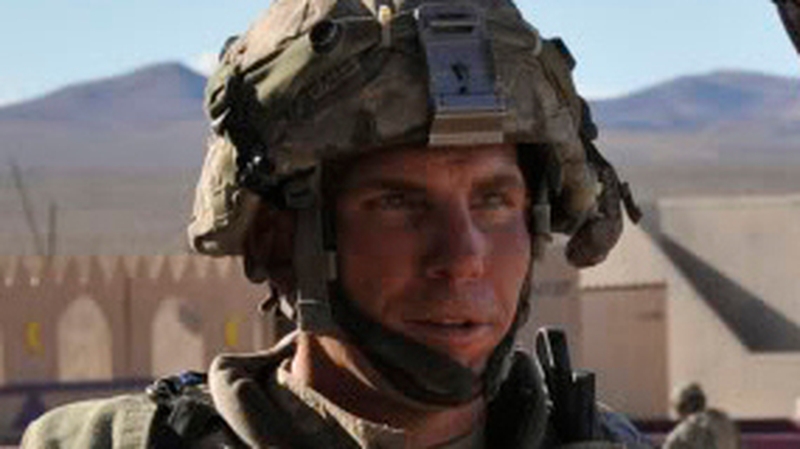
US soldier Robert Bales has been sentenced to life in prison without the possibility of parole for killing 16 Afghan civilians.
Army Staff Sergeant Robert Bales, a veteran of four combat tours in Iraq and Afghanistan, admitted to killing the villagers, mostly women and children, in attacks on their family compounds in Kandahar province in March 2012.
Bales pleaded guilty to the killings in June in a deal that will spare him the death penalty.
The jury of six military personnel decided his fate.
Both sides made closing arguments this morning at the conclusion of sentencing proceedings at Joint Base Lewis-McChord near Tacoma in Washington state.
"He wiped out generations and he ruined lives forever," said prosecutor Lieutenant Colonel Jay Morse.
"He should be known by one official title from this day until the day he dies: inmate."
Bales's civilian defence attorney Emma Scanlan said that in seeking the possibility of parole for Bales, who apologised for the murders on Thursday, she was "not asking you to set him free".
Army prosecutors have said Bales acted alone and with premeditation when, armed with a pistol, a rifle and a grenade launcher, he left his outpost twice during the night, returning in the middle of his rampage to tell a fellow soldier, "I just shot up some people".
The killings marked the worst case of civilian deaths blamed on a US soldier since the Vietnam War and further eroded strained US-Afghan relations after more than a decade of conflict in Afghanistan.
Defence attorneys said Bales carried out the killings after suffering a breakdown under the pressure of the last of his four deployments to Iraq and Afghanistan.
They said he suffered from post-traumatic stress disorder and a brain injury even before shipping off to Kandahar province.
