


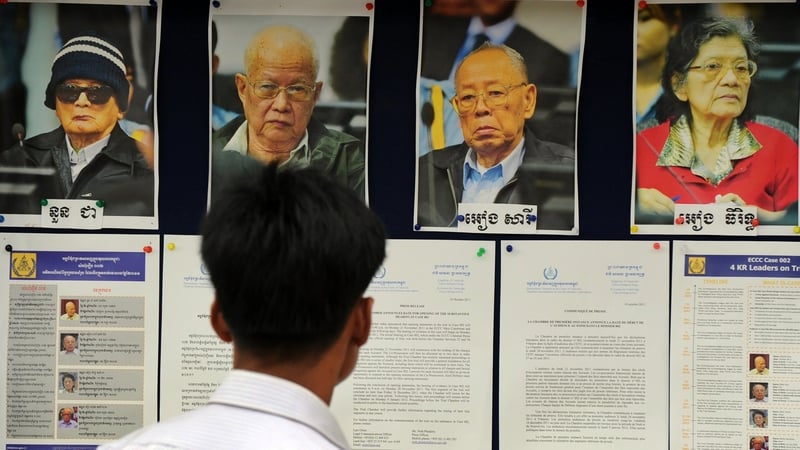
Three top Khmer Rouge leaders have gone on trial for genocide at a UN-backed tribunal in Cambodia, accused of "brutality that defies belief".
Hundreds of Cambodians packed into a Phnom Penh courtroom to hear the opening statements, seen as a key moment in the nation's quest for justice following the Khmer Roug reign of terror in the 1970s that left up to 2m dead.
Defendants "Brother Number Two" Nuon Chea, ex-head of state Khieu Samphan and former foreign minister Ieng Sary have denied charges of genocide, war crimes and crimes against humanity.
Today in court, the regime's most senior surviving members appeared to listen intently to the accusations made against them relating to the communist movement's 1975-1979 rule.
"The Communist Party of Kampuchea turned Cambodia into a massive slave camp, reducing an entire nation into prisoners living under a system of brutality that defies belief to the present day," said Cambodian co-prosecutor Chea Leang in her opening address.
Regime survivors, monks, students and former cadres were among those who filled the public gallery, while parts of the long-awaited proceedings were broadcast live on television.
"It's a major milestone that finally this trial has started," said court spokesman Lars Olsen. "Many people never thought it would happen."
Nearly 4,000 victims are taking part in the legal process.
"I feel very happy. I came here because I want to know the story and how it could have happened," said 75-year-old farmer Sao Kuon, who lost 11 relatives under the Khmer Rouge.
Missing from the session was the fourth accused Ieng Thirith - the regime's "First Lady" and the only female leader to be charged by the court - after she was ruled unfit for trial last week because she has dementia.
Judges have ordered her release, but she remains locked up while an appeal by the prosecution is considered. It is expected to take two weeks.
Led by "Brother Number One" Pol Pot, who died in 1998, the Khmer Rouge emptied cities, abolished money and religion and wiped out nearly a quarter of the population through starvation, overwork and execution in an attempt to create an agrarian utopia.
