


The IMF has warned that Greece must make painful choices in order to receive the next part of its €110bn bailout which the country needs in order to avoid a debt default.
The President of the European Commission Jose Manuel Barroso, said that such a default would have serious implications for Ireland.
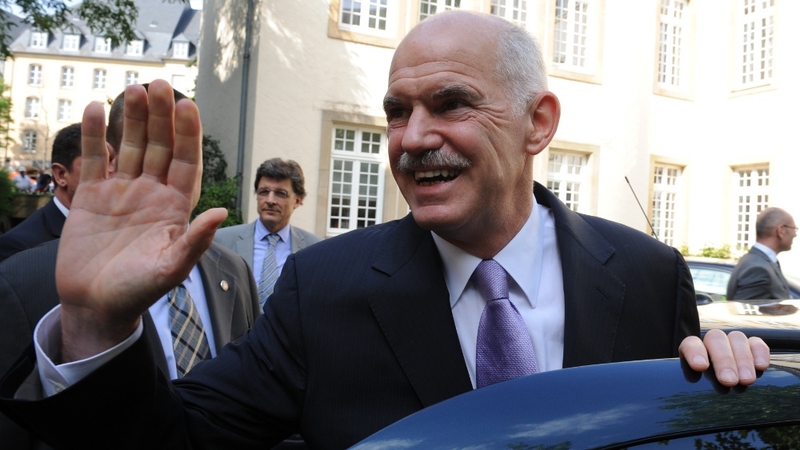
The Greek Prime Minister was trying to persuade doubters in the ruling Socialist party to back a new bailout deal with the European Union and International Monetary Fund.
The IMF has said that the country could not afford to slacken the pace of reforms.
Unrest is growing in the governing PASOK party about a deal struck last Friday with Greece's international lenders, under which Athens has promised a new wave of austerity and faster privatisation in return for the new bailout.
Finance Minister George Papaconstantinou got a rough ride when he tried to sell the plan to a committee of senior PASOK members at a marathon meeting, the latest stage in a drive to get the government's medium-term economic plan through parliament this month.
Public hostility is strong to the idea of yet more austerity, on top of measures agreed under Greece's original €110bn bailout last year, which have helped to send unemployment soaring to almost 16%.
More than 80,000 Greeks vented their anger at a protest in central Athens on Sunday.
Today's committee meeting went on for so long that a meeting of the PASOK political council due later in the day was postponed until tomorrow.
A cabinet meeting supposed to sign-off on the plan and send it to parliament was likewise put back by a day from tomorrow to Thursday.
Prime Minister George Papandreou says that clinching the new bailout, which still needs to be approved at an EU summit later this month, is crucial for the future of the nation.
Mr Papandreou told cabinet: 'The following days and weeks are critical.
'Today our decisions and our stance on the way to the summit will decide the future of our country, as negotiations with our partners have not been completed.'
Mr Papaconstantinou told politicians today that the extra austerity measures, amounting to €6.4bn this year alone, were necessary not because the government had failed but because the recession was deeper than expected.
Greece is in its third year of recession, and economic output is forecast to shrink about 3% this year.
