


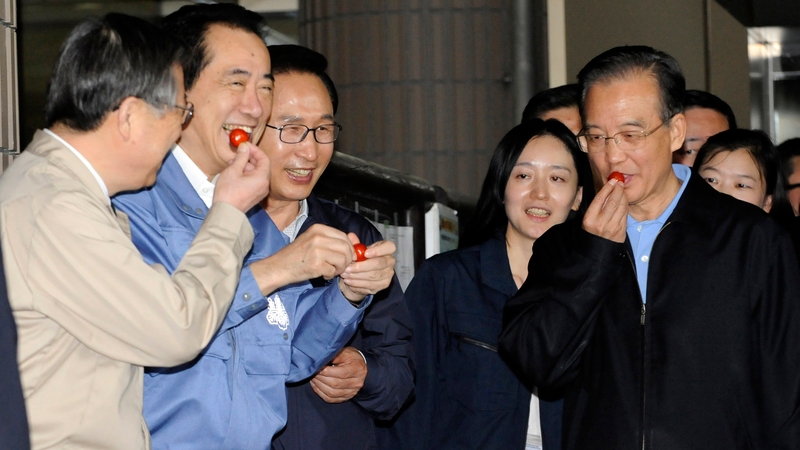
The leaders of Japan, China and South Korea travelled to Fukushima in a show of solidarity over the ongoing nuclear crisis.
They visited evacuees left homeless by the massive earthquake and tsunami on 11 March.
Ahead of a three-way summit, Japan's Prime Minister Naoto Kan, Chinese Premier Wen Jiabao and South Korean President Lee Myung-Bak arrived at a shelter some 60km away from the Fukushima Daiichi nuclear plant.
The power station has leaked radiation into the air, sea and land since it was crippled by the huge disasters, in what has become the world's worst nuclear disaster since Chernobyl.
Tokyo's neighbours have been concerned by the leak and its impact on food safety across the region. However, today's visit focused on paying respects to the lives and homes lost in the disasters.
Mr Lee also visited an evacuation centre in Natori, Miyagi prefecture, northeast of Fukushima, which was among the areas hit hardest by the disasters.
Wearing a navy-blue workman's outfit, he placed a bouquet of flowers and offered a prayer before the sea of debris.
He offered Seoul's support to children who have been traumatised by the disaster and spoke of his hope that Japan will recover as quickly as possible, according to national broadcaster NHK.
The Chinese Premier separately visited evacuees in Miyagi before moving to Fukushima and voiced his condolences to the victims.
Around 24,000 people were left dead or missing by the earthquake and tsunami along the country's northeast coast, according to the latest police count.
At the weekend summit, to begin later in Tokyo, the visiting leaders are expected to reaffirm their support for Japan's efforts to recover from the triple disaster, government sources said.
Nuclear safety, cooperation in disaster preparedness, and food safety are expected to top the agenda, alongside trade discussions.
The three leaders are likely to agree to strengthen cooperation in disaster relief, such as carrying out joint rescue drills and working to create an information-sharing system for emergencies.
