


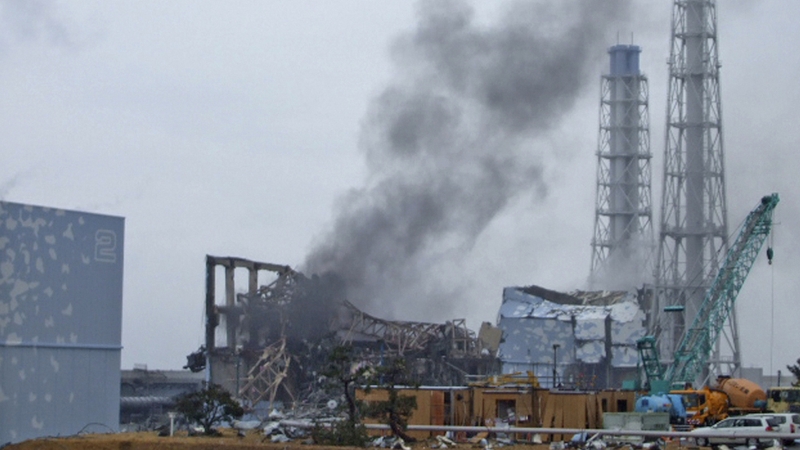
Japan's nuclear watchdog has said that the consistently high levels of radiation found in the sea outside the damaged Fukushima nuclear plant may mean that radiation is leaking continuously.
A senior official of the country's Nuclear Safety Agency also told reporters that regulators and engineers could not pinpoint the exact source of the leaks.
The latest test results show that radioactive iodine in seawater near the drains running from the Fukushima plant was 4,385 times more than the legal limit.
That is a 33% increase on the figures released 24 hours earlier and the highest recorded since the crisis was triggered by the earthquake and tsunami on 11 March.
Both the United Nations nuclear watchdog and Japan's nuclear safety agency said the government should consider widening the 20km zone after high radiation was detected at twice that distance from the facility.
Opposition politicians have criticised Prime Minister Naoto Kan for sticking with the original exclusion area, nearly three weeks after an earthquake and tsunami sparked the world's worst nuclear crisis since Chernobyl in 1986.
More than 70,000 people have been evacuated from the 20km ring around the plant. Another 136,000 who live in a 10km band beyond that have been encouraged to leave, or, if they do not, to stay indoors.
The International Atomic Energy Agency said radiation at Iitate village, 40km from the Fukushima Daiichi nuclear plant, exceeded a criterion for evacuation.
‘We have advised (Japan) to carefully assess the situation and they have indicated that it is already under assessment,’ Denis Flory, a Deputy Director General of the IAEA, said.
Japan's chief Cabinet Secretary Yukio Edano, however, gave no indication the government was poised to widen the zone.
‘At the moment, we have no reason to think that the radiation will have an effect on people's health,’ Mr Edano told a news briefing when asked about the IAEA's findings at Iitate village.
In a much-needed diplomatic boost for Japan, French President Nicolas Sarkozy will visit Tokyo on Thursday and hold talks with Prime Minister Kan.
Mr Sarkozy will be the first world leader to travel to Japan since the earthquake and tsunami, which left more than 27,500 people dead or missing.
France, the world's most nuclear-dependent country, has flown in experts from state-owned nuclear reactor maker Areva, while the US has offered robots to help repair the damaged Daiichi nuclear plants north of Tokyo.
