


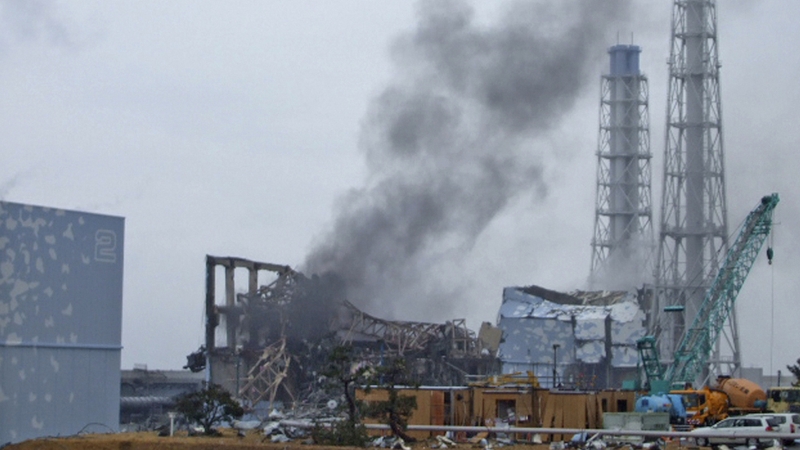
Two workers who suffered burns while trying to cool the Fukushima reactor in Japan were exposed to radiation levels 10,000 times higher than normal.
The pair were installing cables in the basement of the third reactor's turbine building when they stepped into water containing iodine, caesium and cobalt.
The men, aged in their 20s and 30s, were wearing radiation suits but had on ill-fitting shoes, and they had ignored a warning alarm from their dosimeters, 'assuming a problem with the device.'
The high radiation levels could be evidence that the crucial containment vessel for nuclear fuel had been ruptured.
That could mean a serious setback after days of apparently steady progress in containing radiation leaks after the earthquake and tsunami tore through the complex north of Tokyo.
More than 700 engineers have been working in shifts around the clock to stabilise the six-reactor Fukushima plant.
Two weeks after a giant quake struck and sent a massive tsunami crashing into the Pacific coast, the death toll from Japan's worst post-war disaster has topped 10,000 and there is scant hope for 17,500 others still missing.
The tsunami obliterated entire towns. Some 250,000 homeless in almost 2,000 shelters are braving privations and a winter chill, with a degree of discipline and dignity that has impressed the world.
The focus of Japan's fears remained the Fukushima nuclear plant, which was still emitting radioactive vapour that at one point this week made the capital's drinking water unsafe for infants.
China, South Korea and the EU joined the US, Russia and several other nations in restricting food imports from Japan, which itself has ordered a stop to vegetable and dairy shipments from the region near the atomic plant.
Control on food imports from Japan - FSAI
The Food Safety Authority has said Ireland will be adopting controls on imports of food and feed from certain localities in Japan, where production could be affected by the incident at the Fukushima Daiichi nuclear power plant.
The move is in line with European Union measures to limit possible risks to food safety.
All feed and food originating in or consigned from 12 localities of Japan, including the four most affected by the accident will have to be tested before leaving Japan and will be subject to random testing in the EU.
Feed and food products from the remaining 35 localities will have to be accompanied by a declaration stating the locality of origin and will be randomly tested upon arrival in the EU.
FSAI Chief Executive Prof Alan Reilly said Ireland has very few direct imports from Japan.
The regulations do not include products which have been harvested and/or processed before 11 March 2011.
