


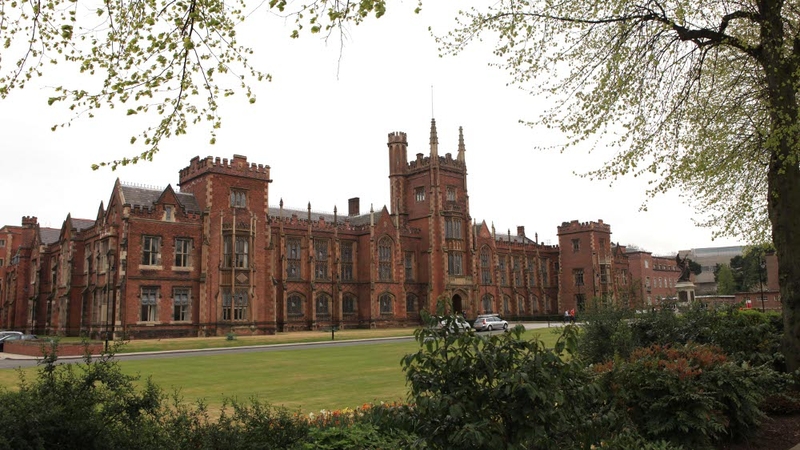
A medical breakthrough at Queen's University in Belfast could help reduce heart failure in cancer patients around the world and ultimately boost survival rates.
Scientists at the Vision and Vascular Centre at Queen's University say they have discovered the role of an enzyme that can cause life-threatening damage to the heart when a patient receives chemotherapy treatment for cancer.
It is understood that by identifying the role of this enzyme, work can take place on reducing the toxic effects of cancer treatment on the heart.
Dr David Grieve, who jointly led the research, has said that until now, scientists were not aware of the crucial role the enzyme plays in causing heart damage associated with chemotherapy.
Dr Grieve said: 'While chemotherapy drugs are highly effective in treating a wide range of tumours, they can also cause irreversible damage to the heart.'
'This means that doctors are restricted in the doses they can administer to patients. In recent years, scientists have been searching for new drugs to prevent these side-effects.'
'Although we have known about the NADPH oxidase enzyme for many years, until now, we were not aware of its crucial role in causing heart damage associated with chemotherapy.'
'Our research findings hold clear potential for the creation of new drugs to block the action of the enzyme, which could significantly reduce heart damage in cancer patients.'
'Ultimately, this could allow for the safer use of higher doses of chemotherapy drugs and make the treatment more effective against tumours. Despite improved treatments, cancer is currently responsible for 25% of all mortality in the western world.'
'By reducing the risk of heart failure associated with chemotherapy, patient survival rates could be significantly increased.'
Scientists at Queen's are concentrating on further studies to define the precise role of NADPH oxidase in the development of heart failure associated with cancer therapies.
It is hoped that these may lead to the development of a drug that would have the potential to save lives among cancer patients.
The research was funded by the British Heart Foundation in Northern Ireland.
