


A Swedish prosecutor attempting to extradite WikiLeaks founder Julian Assange to face sex charges has been accused of having a ‘biased view’ against men.
Retired Swedish appeal court judge Brita Sundberg-Weitman launched an outspoken attack on the authorities responsible for an arrest warrant in the whistleblower's name.
She was flown to London by Mr Assange's legal team to give evidence supporting their argument that extraditing him would be a ‘flagrant denial of justice’.
Speaking in court, Mrs Sundberg-Weitman said she could not understand the ‘attitude’ of prosecutor Marianne Ny.
Mrs Sundberg-Weitman, a published academic and associate professor at Stockholm University, accused Ms Ny of having a ‘rather biased view against men’.
She added: ‘She seems to take it for granted that everybody under prosecution is guilty.
‘I think she is so preoccupied with the situation of battered women and raped women that she has lost balance.’
The claims were made on the first day of a two-day hearing that will decide whether Mr Assange, 39, should be sent to Sweden.
He is wanted by police over allegations he sexually assaulted one woman and raped another during a visit to Stockholm last August.
Mr Assange's legal team argue extradition would breach his human rights and fear he could ultimately be taken against his will to the United States and executed.
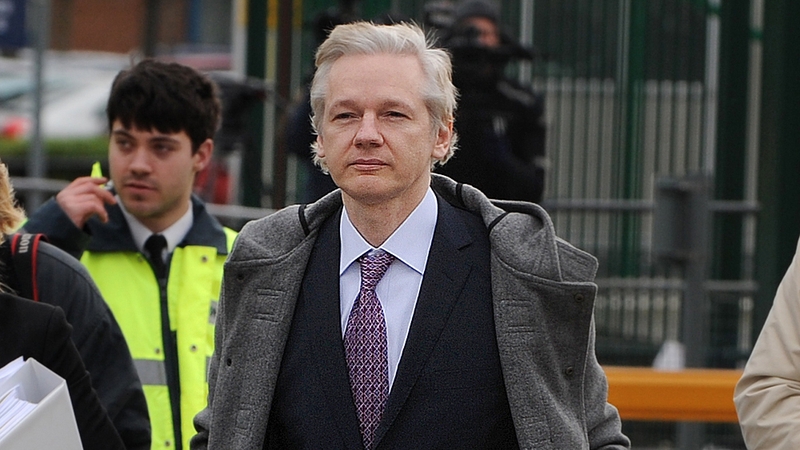
Mr Assange waved cheerfully as he strode into Woolwich Crown Court today, accompanied by a considerable retinue of lawyers.
Supporters of the WikiLeaks founder applauded as he was driven through the security gates in a silver London taxi.
Some of them, dressed in orange Guantanamo Bay-style boiler suits and armed with anti-US placards, had been waiting since 8am.
The re-appearance of the world's best-known whistleblower once again sparked chaotic scenes at the court.
Sweden is seeking Mr Assange's extradition under a European arrest warrant, introduced in 2004 to speed up extraditions between European Union member states.
Grounds for refusing a request are limited, mainly to whether extradition would violate a suspect’s human rights or whether the arrest warrant was drawn up correctly.
The US government is examining whether criminal charges can be brought against Julian Assange over the publication of the diplomatic cables which disclosed sensitive information such as that Saudi King Abdullah repeatedly urged the US to attack Iran's nuclear programme.
US Secretary of State Hillary Clinton has said the US government will take aggressive steps to hold responsible those who ‘stole’ the cables, saying the leaks put lives in danger and threatened US national security.
Mr Assange has also attracted supporters, including activists, celebrities and politicians.
A Norwegian politician said last week he had nominated WikiLeaks for the 2011 Nobel peace prize.
Lawyer Gemma Lindfield, representing Swedish judicial authorities, told an earlier court hearing in London that the extradition case contained allegations of four sexual assaults by Mr Assange against two women in Stockholm in August 2010.
