


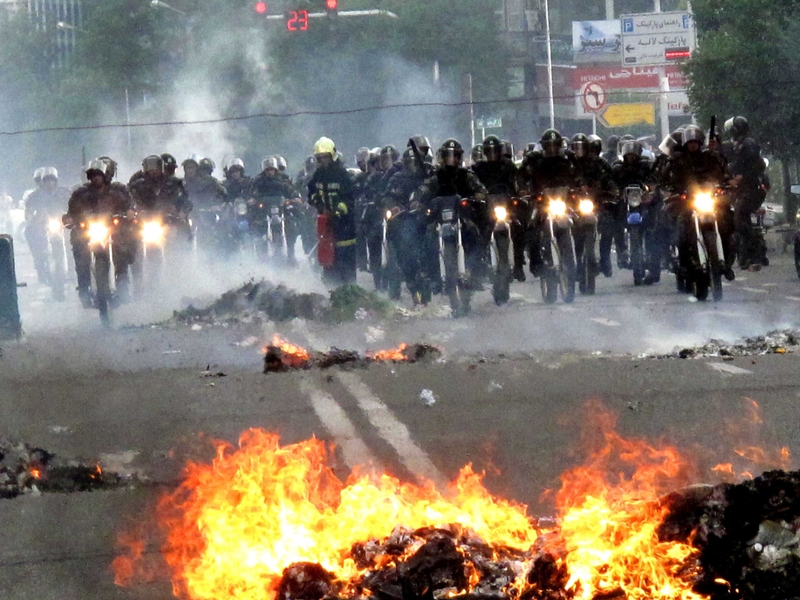
Iranian riot police have clashed with around 1,000 opposition protestors in Tehran.
Riding motorcycles and armed with clubs, police and Basij militia members fired tear gas at demonstrators who had gathered in defiance of an official ban.
The police are also armed with guns used to fire rubber bullets, while helmeted members of the Islamic volunteer Basij militia back them up carrying clubs.
Police arrested 50-60 protestors, witnesses said.
Foreign media are barred from covering the protests.
Iran has accused the West of supporting 'rioters' in the widespread street unrest that has taken place since the disputed presidential election on 12 June.
It has stepped up allegations of foreign interference in its internal affairs after official results handed President Mahmoud Ahmadinejad a landslide victory in the election.
Mr Ahmadinejad's main challenger, Mir-Hossein Mousavi, claims the vote was rigged, a charge that has been denied by the government.
However, the Iranian election supervising body, the Guardian Council, has acknowledged that there were irregularities in 50 districts in the election.
Western governments yesterday rejected charges they were interfering in Iran's affairs, saying it must allow peaceful protests and ensure a fair election result.
Britain's Foreign Secretary David Miliband said foreign countries have played no part in supporting the violent street protests.
Iran's revolutionary guards have said they will confront protestors with 'revolutionary' methods, signalling a harsh crackdown on any further unrest.
'At the current sensitive situation ... the guards will firmly confront in a revolutionary way rioters and those who violate the law,' read a statement on the guards' website.
Helicopters were seen in the evening sky over Tehran yesterday and gunfire was heard in the north of the city, a bastion of support for the reformist former prime minister.
But state radio said this morning that the capital had been calm overnight for the first time since the 12 June election.
