


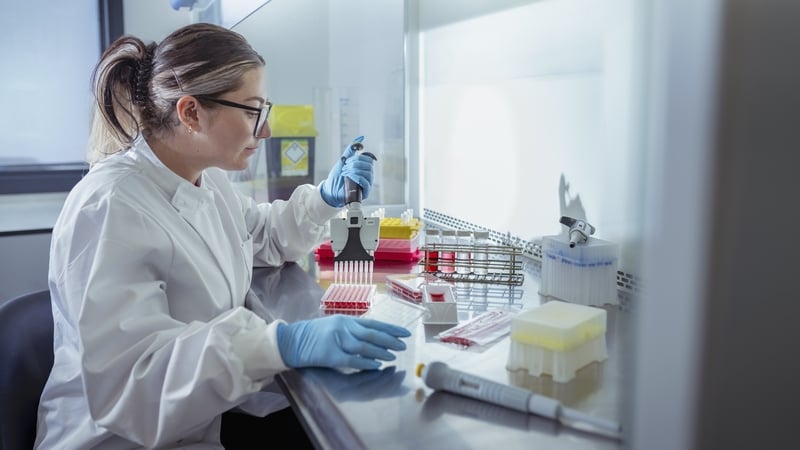

Inside the labs and clinics where founders, physicians and researchers are betting their lives on 'solving' ageing. By Susan Stone of It's a Jungle.
What if ageing isn’t inevitable? What if it’s just an engineering problem we haven’t solved yet?
I first heard that idea at the Longevity Summit in Trinity College Dublin last year - one of Europe’s leading gatherings of scientists, biotech founders and investors all chasing the same impossible-sounding goal: to slow, stop or even reverse human ageing.
Most of the people in that room were working on it professionally. One of them was working on it personally.
Yuta Lee stood out - not because of his credentials (a law and economics degree from UC Berkeley, not a PhD in molecular biology), but because of his urgency. This was not theoretical for him. It was a countdown.
Yuta knows exactly how much time he has left. Not in the abstract way we all know we are mortal, but with the specificity of someone who has watched both parents battle cancer twice each - once in their mid-sixties, once in their mid-seventies. Now 53, he can see the pattern.
"I literally have this much time to try and save myself. 10 to 15 years before something happens to me. I don’t know what it is. But if you look at history, the signs are there."
The difference between Yuta and most of us contemplating our mortality is this: he is not just waiting for the clock to run out. He is trying to stop it.
As founder of Accelerated Biosciences, he has access to what he believes could be one of the most powerful tools in the emerging field of longevity science - human trophoblast stem cells, among the earliest human stem cells that can be ethically sourced, capable of sending regenerative signals throughout the body.
"I have the materials in my hand. So it’s not like I’m completely helpless."
Yuta is not alone in this race. Across laboratories, clinical trials and wellness clinics, a coalition of scientists, entrepreneurs and physicians is working on what was once considered science fiction: not just extending lifespan, but changing the pace of biological ageing itself.
And unlike in most industries, they are not competing. In longevity, as Yuta puts it, if one of them wins, everybody wins.
Over the months following that Dublin summit, I found myself drawn deeper into this world - interviewing researchers, physicians and founders taking radically different approaches to the same problem. This is what I found.
What’s happening inside your body right now
To understand what these founders and researchers are attempting, you first need to understand the biology they are working with.
Every cell you have is constantly sending messages to every other cell - packets of proteins and genetic instructions wrapped in tiny bubbles called extracellular vesicles. Think of them as courier packages being delivered throughout your system at all times.
The problem is that not all of the messages are good ones. As we age, we accumulate what scientists call senescent cells - old cells that have stopped dividing but refuse to die. Instead, they sit around broadcasting pro-inflammatory signals: "Be old. Be inflamed. Be like us."
Cancer cells do something even more insidious. "They’re sending out messages saying: Hey, you don’t have to die. Be like us, be a cancer," Yuta explains. "That’s how they metastasise."
Imagine your body as a battlefield, with old cells and tumour cells trying to recruit healthy cells to their cause. The question driving longevity science is: what if you could flood that battlefield with different messages? Messages that say: "Be young. Be regenerative. Grow. Be healthy."
The discovery made in the operating theatre
The stem cells Yuta works with were discovered accidentally by his father in 2003. Dr Lee was performing a salpingectomy, a procedure to remove an ectopic pregnancy, where an embryo implants in the fallopian tube rather than the uterus. Left untreated, the tube can rupture, and the mother can die from internal bleeding - it remains a leading cause of death in first-trimester pregnancies.
The standard procedure was to remove the mass, confirm the diagnosis with a pathologist and discard the tissue. The embryo was already non-viable - it had been developing without any connection to the mother for weeks.
But Dr Lee looked at what everyone else was discarding and asked a different question.
"Why are we throwing this away? There’s got to be amazing stem cells in here."
He was right. By scraping off just the pre-placental tissue - called the chorionic villi - before handing the rest to the pathologist, he isolated what may be the earliest human stem cells that can be sourced without the ethical controversies surrounding embryonic stem cells from IVF clinics.
The procedure is medically necessary to save the mother. The tissue would be discarded anyway. No potential future pregnancy is being interrupted.
Two years later, Dr Lee handed the discovery to his son - a law and economics graduate whose last biology class had been in high school - and said: "Son, you’re the business guy. Do something with this."
Reprogramming the clock
Yuta’s approach - using the proteins and extracellular vesicles secreted by young stem cells to calm inflammation and senescence - is one of several strategies now converging on ageing.
At Life Biosciences, spun out of Harvard Medical School, they are taking an even more direct approach: reprogramming the cells themselves.
"There’s biology built within us that makes babies from our old cells. Which is pretty profound when you think about it. Somehow, there’s a mechanism that rejuvenates cells."
So explains Michael Ringel, the company’s Chief Operating Officer. He is referring to the work of Shinya Yamanaka, who won the Nobel Prize in 2012 for showing that adult cells can be driven back to a stem-cell-like state using just four transcription factors.
The implication was revolutionary: if you can turn an old cell young again, ageing stops looking like an immutable law of nature and starts looking, as Yuta puts it, "like an engineering problem."
The catch is that complete reprogramming turns an adult cell into something with no identity - not ideal when that cell is still inside your body doing a specific job. Life Biosciences is working on partial epigenetic reprogramming: nudging cells back towards youthfulness without erasing what they are.
"Fundamentally, any age-related disease could be amenable to a therapy based on this. And that’s more than 90% of what kills us."
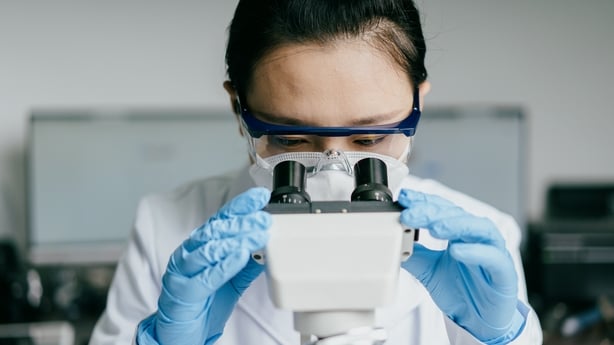
When we first spoke, Life Biosciences was targeting blindness as its first application - the eye being one of the few places where current technology can reliably deliver reprogramming factors into cells. They were aiming to begin human trials by 2026. That timeline has now been hit.
In late January, the FDA cleared their Investigational New Drug application for ER‑100, a gene therapy using partial epigenetic reprogramming to treat optic nerve diseases. The first-in-human Phase 1 safety trial is now beginning, enrolling people with open-angle glaucoma and a related condition called non-arteritic anterior ischaemic optic neuropathy.
It is being widely described in the longevity field as the first true cellular rejuvenation therapy based on partial reprogramming to reach human testing. If you can safely rejuvenate cells in the eye, the thinking goes, you may eventually be able to rejuvenate cells anywhere.
The opposite of medicine
If adding youthful signals and reprogramming old cells represent two strategies, Lou Hawthorne, CEO of Nanotics, is pursuing a third: subtraction.
"We’re developing a new class of medicine. It’s the opposite of a drug. For 2,000 years, drugs have had one thing in common: they all add molecules to your blood. This takes things out."
Nanotics has developed absorptive nanoparticles - each roughly the size of a virus - that can be biochemically programmed to soak up specific molecules from the bloodstream. Within seconds of injection, tens of trillions of these particles spread throughout your circulation, latching onto their targets and clearing them.
The applications are startling. Take cancer: rather than targeting tumour cells directly, you could strip away the immune-suppressive signals that tumours secrete to protect themselves. "Cancer can’t survive without inhibiting your immune system," Lou explains. "If you take the inhibitors out, your immune system will kick the s**t out of the tumour."
He pauses. "Can I say that? Because that’s what it’ll do."

Their biggest target is sepsis - an immune overreaction to infection that is estimated to kill more people worldwide each year than any single form of cancer, and which came to wider public attention during Covid-19. The inflammatory molecules involved are known. They circulate in the blood. And in preclinical work, Nanotics’ particles can bind and neutralise specific targets within seconds.
"We don’t target cells. We target the communication between cells. Sometimes that communication is bad, and you have good cells that do bad things because they’re getting bad information. Kind of like good kids in a bad neighbourhood. They’re not bad kids."
The company is aiming for a roughly 18-month timeline to human trials, dependent on funding and regulatory sign-off, with the hope of accelerated pathways for sepsis and other life-threatening conditions if early results are strong.
What you can do while the science catches up
Clinical trials and FDA approvals are still years away for most of these therapies. So what can the rest of us do in the meantime?
The honest answer, according to Dr Vishal Patel - a physician, geneticist and former Chief Science Officer at Sensei wellness retreats - is to start paying attention to the data your body is already generating.
Right now, the most accessible entry point is sleep and lifestyle tracking. Wearables like Oura and Whoop have made it possible for ordinary consumers to correlate their behaviours with their health outcomes - and the findings are changing how people live.
"Oura users noticed a correlation between alcohol and poor-quality sleep," Vishal says. "Now guests on vacation no longer want a cocktail - they want a non-alcoholic cocktail, because they’re interested in how they’re going to feel the next day."

Small changes, grounded in your own biology rather than general advice, compound over time.
If you want to make a plan personal to your own health, ask your GP about longevity-relevant bloodwork beyond standard panels. The markers that matter most to this field - inflammatory markers like high-sensitivity CRP, metabolic markers like haemoglobin A1C, and cardiovascular risk indicators like LP(a) - are the same ones that show up in preventative health research across ageing, heart disease and cancer.
Many of these are available through your GP within the public system; others may require private testing or referral, depending on your risk factors and local services. Knowing your baseline now gives you something to measure against.
In the next three to five years, it is likely that the therapies described in this piece - cellular reprogramming, nanoparticle clearance, trophoblast stem cell treatments - will move from preclinical research into early human trials.
If successful, Life Biosciences’ eye trial could be a proof of concept for rejuvenation therapies across other organs. Ireland’s growing biotech sector and the fact that Dublin is now hosting one of Europe’s leading longevity summits suggest these conversations will increasingly happen closer to home.
"It’s not enough to have data for its own sake. If you just provide data or a biomarker without a plan, it can actually be really disenchanting and disempowering."
The goal isn’t to optimise yourself into anxiety. It’s to understand your own biology well enough to make choices that compound in your favour.

As long as one of us wins
Back at that summit in Dublin, Yuta explained why the longevity community feels so different from other industries.
"There’s a very significant difference between this sector and everything else. In all the other sectors, there’s a lot of competition. But in this one, we’re all pointing the same way."
His own approach - human trophoblast stem cells - is, as he puts it, just "my ticket in the hat." There are thousands of other technologies. He supports every single one of them.
"Because as long as one of us wins, everybody wins. That’s what’s different about longevity."
The timelines are starting to crystallise. Life Biosciences has received FDA clearance to begin trials of ER‑100 for age-related vision loss this year. Nanotics is aiming to reach the clinic within around 18 months, dependent on funding and regulatory sign-off.
Accelerated Biosciences is partnering with major US hospital systems, targeting chronic fatigue syndrome and inflammatory conditions first, with longer-term ambitions around preventative treatments that could keep tissues biologically younger for longer.

Some scientists in the field talk about reaching "longevity escape velocity" - the point at which we add more than a year of healthy life for every year that passes - potentially within the next decade or two. For Yuta, that 10-15-year window is not a thought experiment; it's his personal deadline.
"We kind of grew up being set into this very fatalist mindframe that we are going to die. It’s going to take a lot to get an entire generation of people to change their philosophies. But come in. Learn. Hang out. Change your mind about it."
As we finish our interview, Yuta makes me a promise - the kind of thing that would sound absurd in almost any other context, delivered with the earnest confidence of someone who has bet his entire career on making it true: "I’m going to make you look like you’re 24 for eternity."
We shake on it. And for the first time, it doesn’t sound entirely impossible. The researchers are doing their part. The least we can do is start understanding our own biology well enough to meet them halfway.
This article is for information only and is not a substitute for medical advice. Always discuss any health decisions with your own doctor.
The views expressed here are those of the author and do not represent or reflect the views of RTÉ.
