


With allergy season coming into full swing, it’s that time of year when a hanky is your best friend… as hay fever sniffles start to reach fever pitch.
And when the wind picks up, holding your own against a high pollen count can feel like going into battle against the elements; only by heading indoors is there temporary respite.
But tree and grass pollen have a way of filtering indoors; while our homes should be a safe sanctuary, those irritating symptoms can persist.
Here, Caroline Mills, head of brand at Safestyle, shares some top tips to help pollen-proof your space…

Opening and closing windows
Every home needs a breath of fresh air, and windows are our main defence against the outdoors. She says knowing when to open them and when to keep them shut is key to the air quality inside.
"We all want fresh air, but letting it in at the wrong time invites pesky pollen in too," warns Mills.
"Pollen counts tend to be highest in the early morning, and again in the early evening.
"So, during these peak times, try to keep your windows closed. It can help keep pollen from drifting in," she advises.
If you need to ventilate the house – and you should, to prevent condensation – do it in the mid to late afternoon when pollen counts often dip, suggests Mills.
"Another great time to open a window is right after a heavy rain shower," she adds. "The rain washes the pollen out of the air, making it safer to let a breeze in."

Dusting is your first defence
Chances are seasoned hay fever sufferers already have microfibre cloths to hand. "Dusting away the pollen is a key part of keeping sneezes away – but there is one place some forget," underlines Mills.
As she explains: "Cleaning the glass on your windows is standard, but if you have hay fever, the frames are just as important.
"Pollen, dust, and grime settle into the corners of your uPVC frames… and sit there until a breeze disturbs them."
Take five minutes to open your windows and wipe down the internal frames, she advises, paying close attention to the tracks and mechanisms where dirt builds up.
"A simple wipe with a damp cloth gets the job done, but if there’s stubborn build-up, use a vacuum with a nozzle attachment to suck it out before wiping.
"If you have a steam cleaner, even better," says Mills. "The heat helps dissolve grease, dirt, and grime… and keeps bacteria away."
She continues: "Keeping this area clean can prevent pollen from blowing into the room every time you open the window."

Cue curtains, carpets and upholstery
Unfortunately, soft furnishings are magnets for dust, pet dander and pollen, highlights Mills.
"The fabric fibres trap microscopic particles, holding onto them until you sit down – and sends them airborne again."
"You probably vacuum your carpets, but when was the last time you did the curtains?
"Every time you draw the curtains, you shake loose settled dust," she warns.
Fortunately, you don’t need to take them down to wash them constantly. "Just use the upholstery attachment on your vacuum cleaner."
"Run it over the fabric from top to bottom, as it helps to remove the surface layer of dust and pollen without the hassle of a washing machine cycle."
She suggests trying to do this once a week during high-pollen season to keep levels manageable.
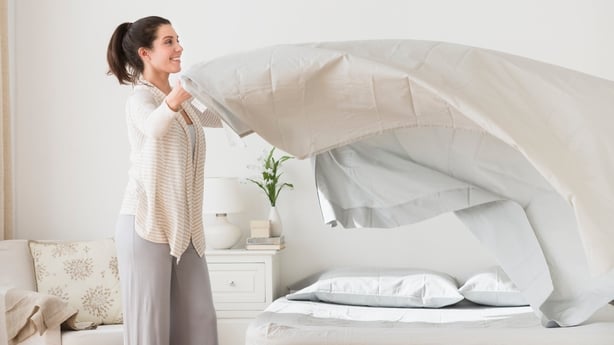
Pollen and sheets are natural bedfellows
While our bedrooms should be a safe sanctuary from allergens, they can transfer to bedding without you realising…
As Mills puts it: "We spend a third of our lives in bed, so make sure yours isn’t making you sneeze.
"Pollen sticks to hair and skin during the day, which means it ends up on your pillow at night."
Wash your bedding frequently, ideally once a week, she advises. "A hot wash at 60C is best for killing dust mites, and removing sticky pollen residues.
"If you can, avoid drying your sheets on the line outside on high-pollen days – they act like a giant net for allergens," she warns.
And suggests using a clothes horse indoors, or tumble dryer instead.

Coming in from the outside
Sometimes cleaning and decluttering isn’t enough, notes Mills, and creating pollen-proof barriers can help… especially if you live in a high-pollen area with grassy spaces, or lots of trees.
"When you come in from outside, you bring the season with you," highlights Mills. "Pollen clings to coats, shoes, and bags, so don’t walk these allergens through the home."
If you don’t have an entryway, she suggests setting up a ‘drop zone’ near the front door for shoes and coats.
"Taking shoes off immediately stops you from tracking pollen into carpets and rugs.
"And if you’ve been out for a long walk, or doing the gardening, get changed as soon as you come in – and put your clothes straight in the wash."
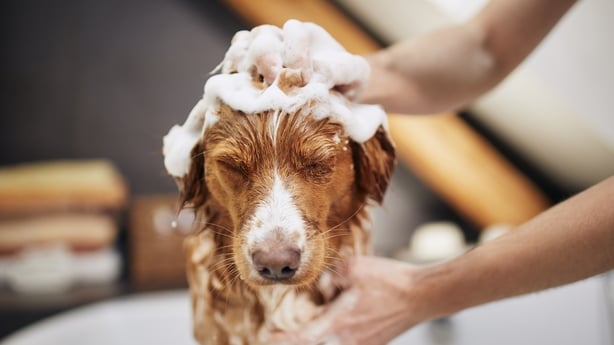
Protect pets from pollen
Pets love sniffing around outside, and chances are you might be toying with keeping them out of certain rooms, suggests Mills.
But if the idea of restricting your four-legged friends from particular rooms to avoid spreading pollen isn’t feasible, she suggests wiping their paws and brushing their fur in the same ‘drop zone.’
At the end of the day, she says it’s all about stopping the pollen filtering further down the line… and minimising the triggers that set hay fever symptoms off in the first place.
"Get these simple basics right, and you’ll be free to enjoy spring as it should be – fresh air, sunshine, and far less sneezing."
