


Drivetime's Cormac and Sarah were joined by Dr. Fiona Skelly, a Lecturer in Sport and Health Sciences at TUS. Listen back above.
According to Dr. I-Min Lee, a Professor in the Department of Epidemiology at Harvard Medical School, our focus should be on the amount of time we spend moving, not the number of steps we get in. In fact, the expert in health guidelines says that we only need between 2,000 - 3,000 steps per day.
Dr. Fiona Skelly joined the discussion on RTÉ Radio 1 to reflect on the findings.
"The 10,000 steps a day isn't probably a proven research threshold," she explains, "but the overall message would be [that] if you can do more steps, and the more steps you can do, the better it will be for you. You don't have to stop at 10,000."

Using her own exercise regime as an example, Sarah told Dr. Skelly that she only had 5,000 steps done for the day, but that she had spent some time in the gym doing weights that morning. Is that regime ok despite fewer steps?
"Yes, for sure," says Fiona. "Our main public health guideline is to get 150-300 minutes of moderate intensity exercise over a week. Moderate intensity would be something that brings your heart rate up, brings your breathing rate up, and makes you sweat a little bit - we do want to achieve that from a health perspective."
"If you can get that in and, with that, minimise sedentary behaviour and accumulate extra steps, that is still good."
According to Dr. Skelly, sedentary behaviour is anything you do that involves sitting or lying down while you're awake. Even if you don't feel relaxed, if you're driving, sitting at your desk, or horizontal on the couch, you are sedentary.
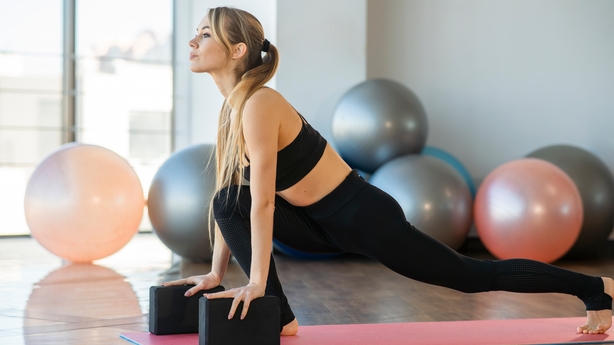
Using his own evening as an example, Cormac told Dr. Skelly that when he watches TV in the evenings, he gets up every so often to have a stretch. Does that count as breaking up sedentary behaviour?
"Yes," Dr. Skelly told a thrilled Cormac. Although we don't have specific guidelines on how often we should break up our sitting time, Dr. Skelly insists that simply standing up and stretching even for a minute is better than sitting for two hours straight.
Although she encourages everyone to up their step count where possible, Dr. Skelly insists that we should shift our focus to finding an exercise regime that is realistic in the long term.
"The main thing is for people to find something that they like. The more they like it, the more they'll do it. If it's yoga or cycling, it doesn't have to be all about steps."
Listen back to the interview in full at the top of the page.
