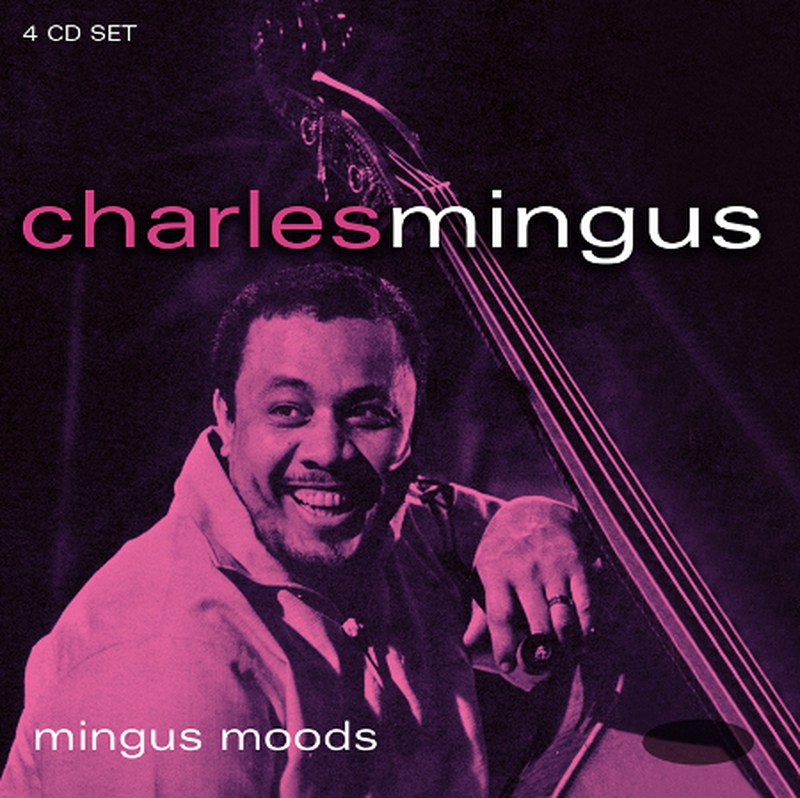
Bassist and composer Charles Mingus (1922-1979) was a colossus of jazz , whose legacy is alive and well, not least through the performances of the Mingus Big Band which celebrates his music on tours around the world. The band played to an enthusiastic, capacity crowd at Dublin’s Vicar Street venue in 2000.
There was an early apprenticeship with Louis Armstrong between 1941-1943. This 4-CD anthology, however, draws on the key recordings the American musician made between 1956 and 1960
His instrument was the double bass, but Mingus used a piano to show his many accompanists how to play what he wanted them to play. Amongst the line-up playing across these four discs are the saxophonists and Eric Dolphy, pianist Bill Evans, trumpeter Clarence Shaw, trombonist Jimmy Knepper and drummer Dannie Richmond.
A thirty-two page booklet accompanying the release tells the Mingus story, which included an expression of angry protest about the racial prejudice. Fables of Faubius was originally accompanied by a lyric, whose presumably flagrant message was not allowed by producer or record company, given the sensitivities of the time. The piece is intended as a condemnation of the Governor of Arkansas, Orval Faubus. Faubus made a stand against school desegregation in Little Rock in 1957, summoning the National Guard to do so.
Mingus had a trademark sound, which sometimes has the effect of a swiftly-moving vessel that's losing its contents. He worked with as many as nine musicians and the music seems to lurch, or reach ahead of itself (as though that could ever have been the case, banish the thought.) It's almost like Mingus deconstructs the Big Band sound. Of course, you have to know something very well before you deconstruct it. He played with both Lionel Hampton and the Duke Ellington orchestra.
As a boy, Mingus would have known the call and response thing from his regular attendance at church with his mother. That heritage informs the bustling, rumbustious classic Wednesday Night Prayer Meeting. But he could be wistful too, notably on Memories of You and Celia, one of two pieces written for the lady of the title who was one of his wives..
Listen to Cryin' Blues and hear the master himself on a rare bass solo, as he curves and bends the spare notes, for all the world like a blues-man.
Paddy Kehoe