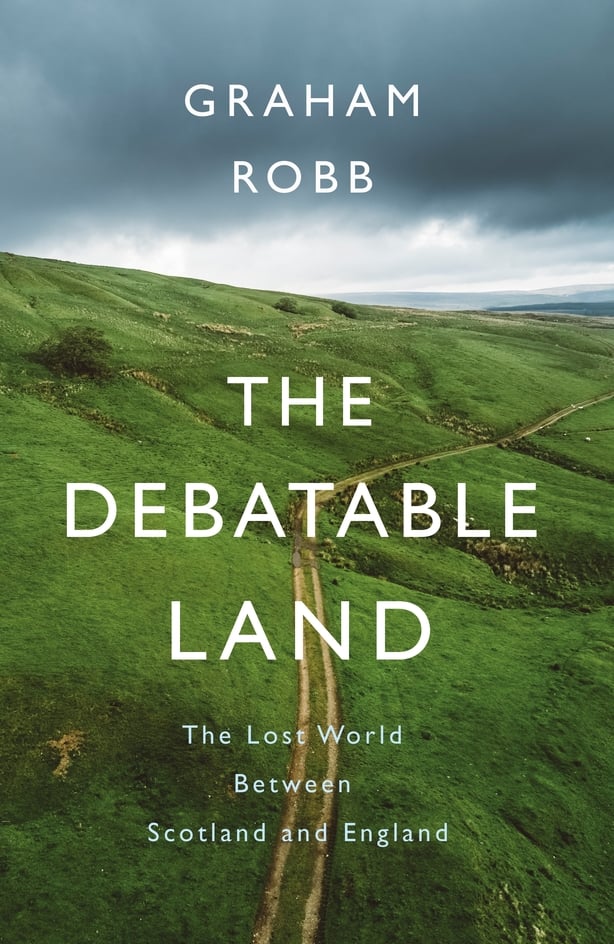
Acclaimed biographer of Rimbaud and Victor Hugo Graham Robb turns his hand to the land on his doorstep, what was once known as Debatable Land, which enclosed an independent territory and the bloodiest region in Great Britain five centuries ago.
The Debatable Land in question – ‘debatable’ in this context actually means land that is good for fattening cattle - was some 50 square miles, which was fiercely fought over by the monarchs Henry VIII, Elizabeth I and James V. Following the Union of the Crowns, most of its population was slaughtered or deported, and it was in fact the last part of the United Kingdom to come under state state control.
East-West wise, The Debatable Land – the subtitle of this fascinating 239-page story is The Lost World Between Scotland and England - stretches in the lee of the Cheviot hills along the valley of the Tweed, from the Solway Firth to the North Sea, a few miles north of Berwick. Three rivers, the Liddel, Esk and Sark form a natural boundary with sea access along a mile of the Solway coast.
Some years ago, the author, who is of Scots ancestry, left the dreaming spires of Oxford to move to his present residence, close to what was once the Southern border of the Debatable Land. He now lives in what he describes as "a lonely house on the very edge of England", so close to Scotland that the region begins where his own patch of land ends. Walking and cycling, traversing the landscape, Robb gleaned accounts of violent events that once mauled the territory. Once upon a time, the population had acquiesced with a border that had in split in two and did not become one again until the issue was resolved in the 1600s. Prior to that, the land belonged to neither the English or the Scots, certainly a state of affairs to conjure with, so taken are we with borders now in this Brexit age.
A keen football fan, Robb notes how old attitudes survive in a chant that is declaimed at Brunton Park, the home of Carlisle United. It espouses the verdant charms of North Cumbria – the land that’s mountainous and green. The target of this vocal vituperation is the grim post-industrial landscape of Newcastle and the north-east, the home of ‘Geordie scum.’ Unpalatable Land perhaps, in this instance.