
The 60-year-old lady protagonist of Violette Leduc's classic novella, La Femme au Petit Renard, first published in 1965 by Gallimard, is fading away to nothing, physically and spiritually.
Intense hunger, an arctic loneliness and the inevitable tendency to hoard things in her tiny room drive her outside every day where she is in thrall to banal sightings in the streets of Paris.
She becomes reliant on her own rituals, making sure to be near a certain station for the overhead roar of the metro. The lady spends her precious few francs buying a metro ticket so she can be seated on a station platform to see a fellow lost soul at a certain time of the day, but they never speak. Otherwise, she clutches her few coffee beans as though they were prayer beads.
Your reviewer took his time reading this 80-page curiosity, as the sentences demanded pause and reflection. The Lady and the Little Fox Fur is akin in spirit to poetry that plunders the exotic to dramatically heighten what might otherwise be a drab tale.
Leduc (1907-1972) transcended realism in her fiction and one senses perhaps the influence of French Symbolist poetry on the idiosyncratic story, which that may not be purely coincidental. Whatever the case, this is not the naturalistic prose of Mauriac or Camus.
Here are two examples: The street after misfortunes. The eternal cinema that revives us with the spangled promise of its screen. Or elsewhere, Leduc writes: Chasing one another, squeaking through her entrails ran the rats.
The narrative is third person mode embedded with an internal stream of consciousness and the lady does not do self-pity, opting instead for a rueful survivor's triumphalism. She is a hunger artist, so to speak, suffering a hallucinatory starvation, haunted by childhood and unhinged by the loss of her long-lost mother. She is unmoored from reality, with her own peculiar logic. She is too unfamiliar with the social graces, in fact she challenges them.
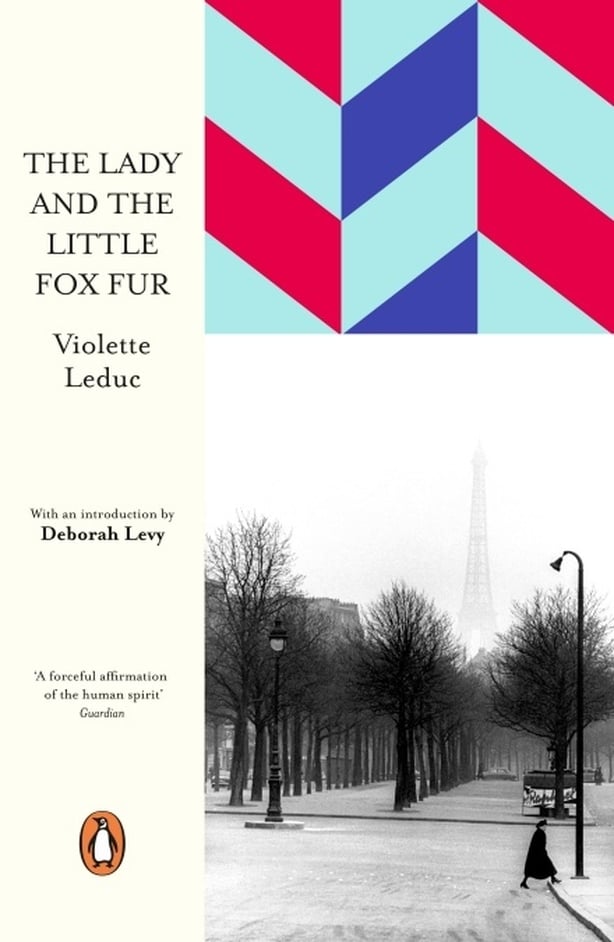
In her euphoric vocation for merely existing, she bears some resemblance to one of Beckett's fictional protagonists. It would never strike her to beg to survive until she ends up doing so almost by accident - she is the very opposite of pragmatic or calculating. You could not say of her, for instance, that she lives by her wits because her wits are in fact shot. Deborah Levy has written an introduction to this handsome Penguin edition, which has been translated by Derek Coltman.
One can assume a measure of privation and hardship, corresponding somewhat with the life of her protagonist, in the life of the lady's creator, Violette Leduc. She was born in Arras, in France, in 1907, the illegitimate daughter of a servant girl. She was sent to boarding school after the First World War but was expelled when a love affair with a female pupil came to light, along with a dalliance with one of her female teachers.
Her memoir, La Bâtarde, (The Bastard) first published in 1964, was a succès de scandale with its tales of lesbian love. The memoir sold a handsome 150,000 copies in the first year of its publication and was praised by Simone de Beauvoir, Jean-Paul Sartre and Albert Camus. The 2003 film Violette was based on the writer's life.