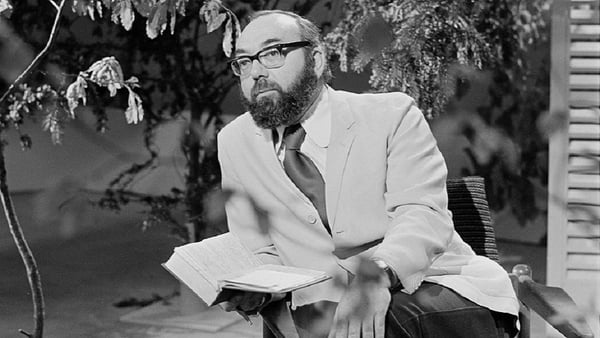

It's a tough subject, but Andrew Motion has boldly stepped up to the plate and tackled serious illness in a harrowing sequence of poems which recall the coma in which his mother lay following her fall from a horse.
Motion, the former English Poet Laureate, wrote what is unquestionably one of the most heartfelt and impressive childhood memoirs ever published in English. The work in question, In The Blood, which appeared in 2006, had a pivotal trauma at its core, his mother's riding accident, after which she lived for 30 years, beset by serious, debilitating illness. During much of the first nine years following the accident she was in a coma.
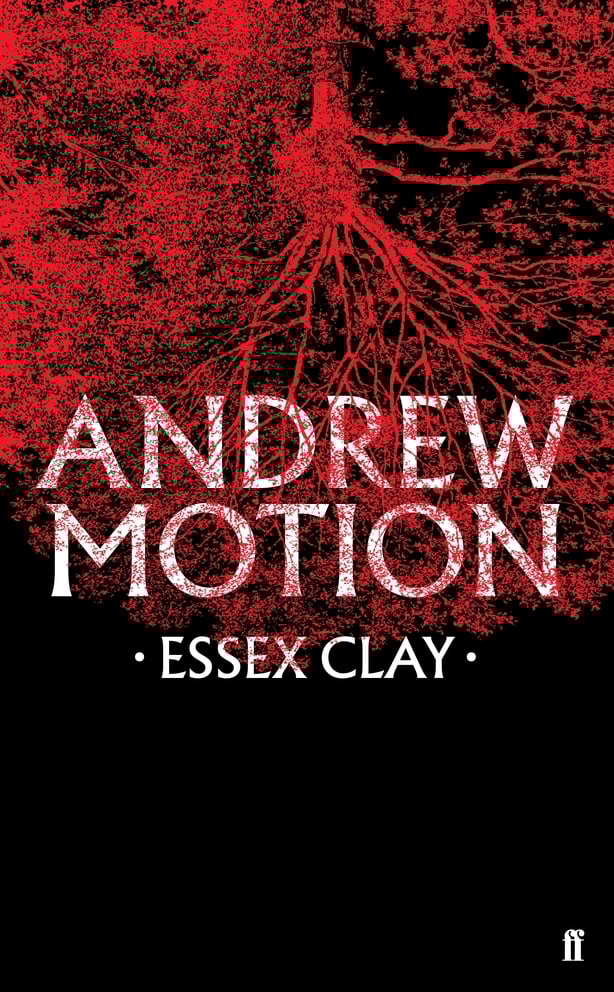
The poet's desire in the 62 pages that comprise the first part of the three-part poem sequence, Essex Clay, is to replicate in the finest detail the nuanced whispers and sightings of the fateful day when his mother was thrown or fell from her horse.
Is there a comfort in this for the poet, one wonders? By revivifying the memory of his mother and her passing into the shadowlands of unconsciousness in a second extended work does he somehow administer the kiss of life? Clearly there is something of this going on.
Throughout his careful reflections, the poet has been conscious of the flinty Essex clay as a primeval force lurking below the mechanical world of the buses and cars which transport him as a young 17-year old boy during the days after the dreadful event. And below this the clay six feet deep, he writes as though the clay itself was already malevolently plotting the digging of his mother's grave, a burial which would not in fact occur for three decades.
The poet shows his own mind under pressure, the gears clicking in and out as he attempts to manage grief through a feat of deliberate recall. He walks around the family home trying to mentally photograph everything from the "ancient longways-splitting block of grainy soap " used by his father in the downstairs washroom to a painting hanging on a wall.
The latter's quaint scene offers a brilliant paradigm for the serious domestic disprution which has just occurred.
The picture in the hallway of a horse leaping over/ a gate with the gate broken but the gate’s shadow not
He will recall his mother henceforth in binary fashion perhaps. She will be as a sturdy gate, healthy and intact while yet a shadow in the memory bank. Then she will be as a broken gate to the world in the all-too-real present, a gate through which he will no longer be led by her as he negotiates his way into the adult world.
He glimpses his father through the two glass panels of the front door, as he returns from a visit to his mother in hospital in Chelmsford.
My father he asks himself my father/have we met.
Dark grey London overcoat/pale grey face/hair white-grey at the temples/ and head bowed under the dome of the outside light.
Back at school, he comes to another new accommodation.
He finds himself afloat/in a new gravity/thinking about thinking/ about living in sadness.
He contemplates too the months spent in his mother's womb and has her recall his gestation in his wounded imagination.
She remembers light years away/in miniature/ in a splintering dream tunnel/how he stretched towards her.
Yet the poet knows about rescue too and he lightens the burden of his plight with examples of regenerative nature, like the Soft fawn club-headed grasses/curtseying at the curbside or that breeze across the ponies’ field frisking/ the chestnut tree/the tree with the downward swooping branch/and patch of shiny bark
Part two revisits his father's grief and final illness. It is indeed a deeper draught, a less palpable relationship, a less resolved crux, as it were, as is the case with many a father-son relationship. Male poets sometimes write about their fathers because things were left unfinished, or there was a mad scramble towards intimacy in the final years. It can be different with mothers, by nature the first nurturers. In ideal circumstances, resolution can occur in real time and tensions may be smoothed out earlier between mother and son. The caveat, of course, is that no glib generalisations are possible, and certainly not in the case of this particular poet's relationship with his mother, so cruelly compromised by his mother's serious accident which occurred when he was still in his mid-teens.
The final third section of Essex Clay brings a kind of tangential closure to the narrative as the poet meets up after forty years with the girlfriend he was tentatively courting when he got news of his mother's fall.
Essex Clay at times is not easy reading, nor is it by any means a companion piece to the aforementioned memoir In the Blood. The family catastrophe involving Andrew Motion's mother impelled that memoir in similar fashion and lent it a fraught intensity, but it had room in expansive prose to roam and the story could brighten in a delightful pastorale.
This ambitious verse sequence is of its nature more focused on painful events, its insights into the nature of stoic resignation, of caring for a sick loved one and the ensuing grief after his mother's passing are unavoidable and must be faced head on. There is little pastorale.