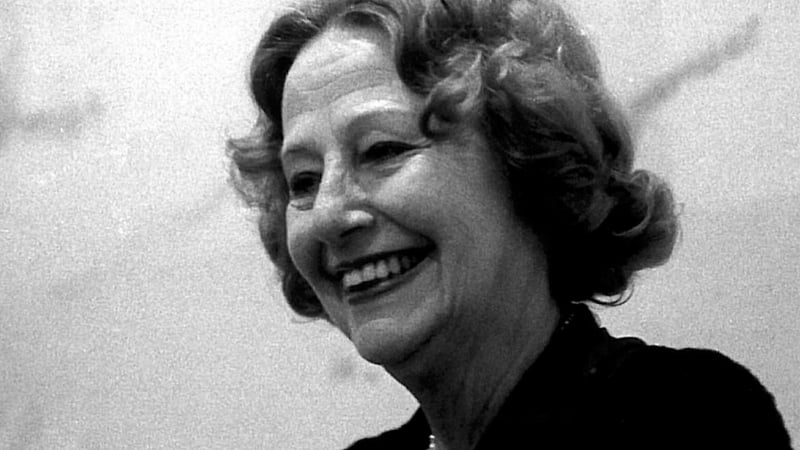

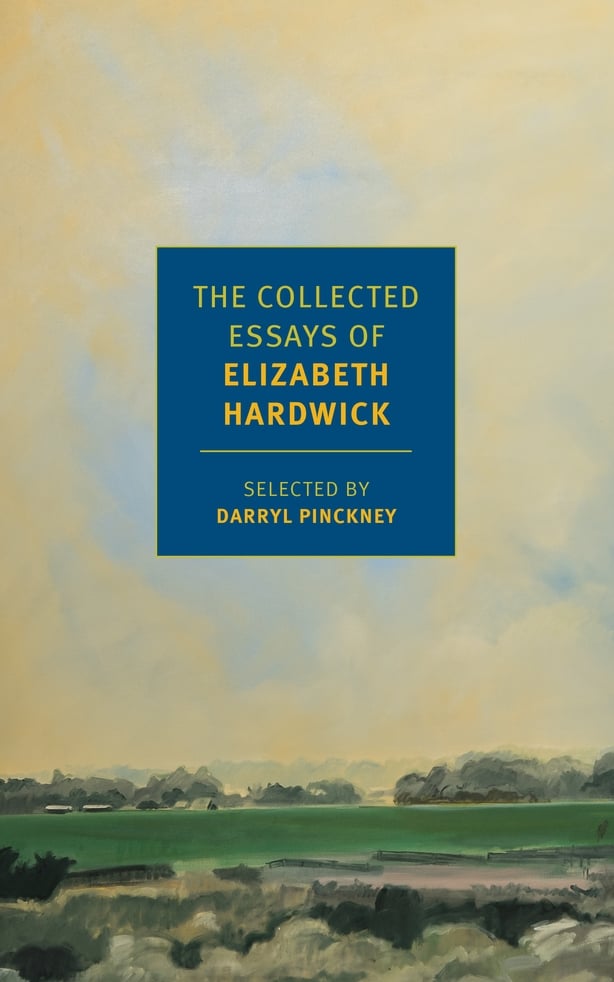
Hardwick's most piquant, stimulating essays, many initially commissioned by the New York Review of Books (NYRB), are reproduced in this vibrant 600-page collection.
In The Subjection of Women (1953) the author penned a long, highly-nuanced review of Simone de Beauvoir’s seminal tome on feminism, The Second Sex. In general, Hardwick is an enthusiast for the seminal tome, but with reservations: 'Like woman’s life, The Second Sex is extremely repetitious and some things are repeated more often than others, although nearly every idea is repeated.'
She wants to correct the slant of the book too: 'Most men, also, are doomed to work of brutalizing monotony. Hardly any intellectuals are willing to undertake a bit of this dreadful work their fellow beings must do, no matter what salary, what working conditions, what degree of "socialist dignity" might be attached to it.'
The critic writes perceptively about venerable American writers, such as Henry James, Thomas Wolfe, Herman Melville, Truman Capote, Edmund Wilson, William Faulkner and Russian-American Vladimir Nabokov. She surveys with her judicious eye the authorial standpoint of Simone Weil, George Eliot Katherine Ann Fuller, Gertrude Stein and Edith Wharton.
It’s not all Americans, either - Graham Greene is the subject of a shrewd assessment. Nor indeed is it all writers and politics, and Hardwick spreads her net wider than that. She wrote a piece entitled Sad Brazil, which was published in 1974, following a visit to the eponymous country: 'Droughts and floods, fertility and barrenness seem to reside in each individual citizen, creating an instability of spirit that is an allurement and a frustration, a mixture that was formerly sometimes thought of as feminine.'
Take this too, unlikely to be penned nowadays by anyone: 'Very few women writers can resist the temptation of feminine sensibility; it is there to be used, as a crutch, and the reliance upon it is expected and generally admired.' Presumably a few readers batted an eyelid or two back in 1961 when the above observation was included in Hardwick’s essay on the novelist Mary McCarthy.
Or how about the following from her aforementioned review of The Second Sex: 'Women have much less experience of life than a man, as everyone knows.' But does she actually mean this? One senses on occasion that Hardwick is sometimes paraphrasing pre-Mad Men drawing room commentary for the journalistic frisson or cheeky fun to be gained from it.
These stimulating essays, selected and introduced by novelist, playwright, and essayist Darryl Pinckney, should be read not as period pieces but as fearless declarations that are still relevant.