

Analysis: With two Dáil seats vacant in Dublin Central and Galway West, Ireland's asks voters for multiple preferences to help decide who is elected
On the 22nd of May 2026, there will be two bye-elections in Ireland. A bye-election is held when a Dáil seat becomes vacant. This can happen for various reasons, such as the death of a TD. In 2026, there are two vacancies: one in Dublin Central caused by Paschal Donohoe's move to the World Bank, and one in Galway West caused by Catherine Connolly's election as president. This results in two constituencies which must fill one seat each.
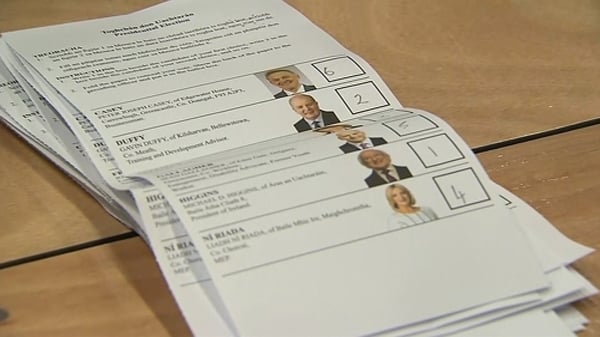
The point of voting is to summarise the opinions of a group of people and make a decision. For these bye-elections, the decision is which candidate should fill the empty seat. Different voting systems use different information about voters' opinions. The UK's first-past-the-post system asks for only one piece of information: all things considered, who do you prefer. It then awards the seat to the person with the most votes. In Irish elections, we get to provide more information and are asked for multiple preferences.
You write "1" beside the candidate you want the most, "2" beside the one you would choose if your number 1 was not an option, and so on. This makes counting more complicated but has the advantage that it has more information about the voter's opinion. The rules for running Dáil elections are mostly set out in the 1992 Electoral Act. The rules are applied by the Returning Officer for each constituency, who acts like a manager for the count.
We need your consent to load this rte-player contentWe use rte-player to manage extra content that can set cookies on your device and collect data about your activity. Please review their details and accept them to load the content.Manage Preferences
From RTÉ Radio 1's Morning Ireland, Sinn Féin & Social Democrats battle for top spot in Dublin Central bye-election poll
The rules for a bye-election are basically the same as those for a general election, but you usually have just one seat to fill. In unusual circumstances, it is possible to have a bye-election with more than one seat. This happened in 1925 when multiple TDs from the same constituencies resigned at the same time.
Surprisingly, the first step of counting the votes is to mix them up. In constituencies where there are multiple seats to be filled there is the possibility of redistributing the "surplus" votes of a candidate who has been elected. Mixing the votes in advance means that the surplus votes are not all taken from one part of the constituency. Since there is usually only a single seat available in a bye-election, surpluses are not often transferred.
The next step is to sort the votes into piles according to their first preference. This is also where the spoiled (invalid) votes are counted. There are four ways a vote can be invalid: 1) if it hasn't been stamped at the polling centre, 2) if there is no first preference, 3) if there are multiple first preferences, or 4) if something has been written on the ballot that could be used to identify the voter.
Number 3 is surprisingly common: if you write a 1 and a 7 that look similar, you can accidentally spoil your vote! The invalid votes are usually shown to the candidates' representatives at the count centre, to make sure there is agreement about what is spoiled. With the spoiled votes removed, the remaining valid ballot papers are used to find the quota.
We need your consent to load this rte-player contentWe use rte-player to manage extra content that can set cookies on your device and collect data about your activity. Please review their details and accept them to load the content.Manage Preferences
From RTÉ Radio 1's This Week, what you need to know about the Galway West Bye-Elections
The quota is the number of votes a candidate must receive to be elected. If, after a round of counting, a candidate has more than the quota, then they are declared elected. Finding the quota uses a mathematical idea called the pigeonhole principle. The quota is calculated as: (number of valid ballot papers)/(number of available seats+1) + 1, and then rounding down. For example, if there are 60,000 valid votes in Galway East and one seat, the quota is 30,001.
Why? Because two candidates could not possibly have 30,001 votes, and that prevents us electing two candidates to one seat. Similarly, for two seats and 60,000 valid votes, the quota would be 20,001 because three candidates couldn't have this number of votes and tie for the two seats. At this stage, if any candidate is over the quota, they are declared elected. Otherwise, the count continues, usually with the "elimination" of the candidate with the lowest number of votes.
Here, this candidate's votes are sorted according to the next available preference and moved to the corresponding candidate's pile of votes. If multiple candidates have already been eliminated/elected, this might mean skipping down the list of remaining preferences. If a vote has no preferences left who are still in the running, then the vote is put in a special pile called "non-transferable papers not effective" and it has no further influence on the process. If a candidate is elected by reaching the quota, and all the seats are filled, then the counting stops and we know who is elected.
We need your consent to load this rte-player contentWe use rte-player to manage extra content that can set cookies on your device and collect data about your activity. Please review their details and accept them to load the content.Manage Preferences
From RTÉ Radio 1's Morning Ireland, Samantha Libreri, Eastern Correspondent, and Daniel McConnell, Editor of the Business Post, discuss the forthcoming Dublin Central bye-elections.
If there are multiple seats available, which is not the case in the 2026 bye-elections, then the count can continue after someone is elected. In this case, any votes the candidate has beyond the quota can be redistributed. The rules involve re-examining all the votes received on the count when someone was elected and distributing them in representative proportions. While these rules are complicated, the aim is the same as when a candidate is eliminated: you want to take into account the next available preferences of the voters who have not yet elected a candidate.
There are rules to help the returning officer decide what should happen if elimination or surplus redistribution are options. There are also rules saying who should be eliminated if two candidates are tied on the lowest number of votes. Thankfully, the rules say that if the number of candidates left matches the number of seats left, then counting can stop.
Note that bye-elections are not the only way that we replace elected representatives. In the case of local elections, a candidate is usually replaced by a nominee of their party. For the European Parliament, candidates provide a list of replacements to be used in the case a stand-in becomes necessary.
Follow RTÉ Brainstorm on WhatsApp and Instagram for more stories and updates
The views expressed here are those of the author and do not represent or reflect the views of RTÉ