
Analysis: The reasons for this rise in adaptation for television and major streamers reflect how we as audiences are consuming culture differently
Normal People by Sally Rooney may have sparked off numerous trends and fandom, GAA shorts and gold chains chief among them, but in recent years we have seen a growing trend in the adaptation of books and stories by leading Irish writers for the small screen.
While feature-length adaptation from Irish writing has won acclaim from audiences and Hollywood in recent years, from Claire Keegan's Foster (adapted as An Cailín Ciúin) and Small Things Like These to Colm Toibín’s Brooklyn and Emma Donoghue’s Room, reasons for this rise in adaptation for television and major streamers reveal interesting insights into how we as audiences are consuming culture differently, and also how more traditional methods, such as serialisation, is being used to new effect in the digital era.
Adaptation involves taking a story or piece of work in one format, such as a novel or story, and re-working and interpreting the original, in part or in whole, into a new piece of work in a new format. This process and medium of storytelling is multi-disciplinary and increasingly collaborative.
We need your consent to load this rte-player contentWe use rte-player to manage extra content that can set cookies on your device and collect data about your activity. Please review their details and accept them to load the content.Manage Preferences
From RTÉ 2FM's Morning with Laura Fox, Laura chats to champion reader, Jenny Claffey about books to read before they hit the big screen!
The imagination of the reader manifests the character and their world in their mind’s eye – from the voice of the character to their clothes and environment setting, as well as their physical mannerisms. Meeting those facets on screen from off the page can offer an entirely new and different perspective on the form and personality of each character, and present new ways to experience the story that we are already familiar with.
Rónán Hession’s 2019 novel, Leonard and Hungry Paul, is a charming and deeply moving portrayal of two friends, Leonard, and Hungry Paul, as we encounter them and the quirks of their lives, families, and workmates (awkward date with Head of Marketing being just one example). Both aged in their early 30s, Leonard writes for a publisher of children’s encyclopaedias, while Hungry Paul takes his role as a relief on-call postman with gusto before joining the National Mime Association.
The world Hession creates on the page is populated by small moments often filled with happy solitude or comfortable silences between the two titular characters. We see them navigate their own personal worlds and plot ways through some choppier paths of work, relationships, and grief, as well as the trust and implicit connection of their friendship.
We need your consent to load this rte-player contentWe use rte-player to manage extra content that can set cookies on your device and collect data about your activity. Please review their details and accept them to load the content.Manage Preferences
From RTÉ Radio 1's Arena, Alex Lawther on starring in the BBC's new six-part comedy drama series, Leonard and Hungry Paul.
"The two friends then settled into one of the long pauses that characterised their comfort in each other’s company. They could sit quietly for extended periods without the need to hurry back to whatever it was they were doing, allowing the silence to melt away in its own time."
In moving their story to the screen, so much is dependent on maintaining Leonard and Hungry Paul’s offbeat and often darkly hilarious humour ("his [Leonard] father tragically died during childbirth") with the more subtle and private moments of quiet friendship of the two leads, and their circle of people, including Leonard’s relationship with workmate Shelly (Derry Girls’ Jamie-Lee O’Donnell).
More difficult to get across on screen is what is unsaid on the page – the mannerisms and internalised awkwardness in some social situations. The adaptation works so well on screen due to the great care and skill in which Alex Lowther and Laurie Kynaston as the titular duo, supported by O’Donnell, Lorcan Cranitch, Paul Reid, and Helen Behan and others manifest the characters from Hession’s text.
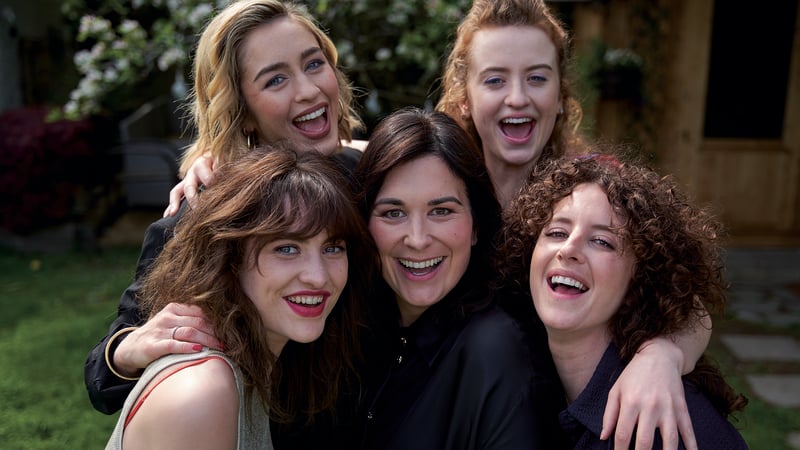
From RTÉ on YouTube, trailer for The Walsh Sisters which follows five Irish sisters navigating life's messiness
The Walsh Sisters, based on books by Marion Keyes, was commissioned by RTÉ in late 2024. Stefanie Preissner and Kefi Chadwick, took a slightly different approach in making The Walsh Sisters by adapting two of Keyes's books, Rachel's Holiday and Anybody Out There, (from a wider series of five 'Walsh Sisters’ books by Keyes) adapting both for television as part of this series directed by Ian FitzGibbon. Stefanie Preissner, who also acted in the series, spoke of her process and challenges of adapting from multiple books, thousands of pages of text, into one television series:
"I was trying to work out how I can bring together these sisters with their key storylines from their book into the same world. That was the hard work of adapting it."
Trespasses came to the small screen via the 2022 novel by Louise Kennedy and adapted by Ailbhe Keogan. The drama, set in 1970s Belfast was made for Channel 4 and starred Lola Petticrew, Tom Cullen, and Gillian Anderson.
The story focuses on Cushla, a young school-teacher in her mid-twenties who must navigate the stresses and trauma of the ongoing conflict, news of which filters into the family pub where she also works, as well as balance the care for others in her life – her mother who suffers from PTSD, her affair with Michael, an older Protestant lawyer who defends young Catholics in Troubles court cases, as well as the home lives of the young boys in her class.
We need your consent to load this rte-player contentWe use rte-player to manage extra content that can set cookies on your device and collect data about your activity. Please review their details and accept them to load the content.Manage Preferences
From RTÉ Radio 1's The Ray D'Arcy Show, Louise Kennedy discusses her new book Trespasses
Kennedy’s novel deftly deals with the story and struggles of Cushla’s relationships, at home, with Michael, and at work, while never letting the major backdrop of the Troubles dominate the plot or the narrative. It is a love story first, and a love story during the Troubles second, with neither element dominating over the other. On-screen, it firmly becomes a period drama to the viewer’s eye. The almost sepia-toned 1970s Belfast setting, the accurate costuming, and interior design allow the viewer to visualise Kennedy’s story in multi-dimensional way. Star-casting with the likes of Gillian Anderson can both hinder or help any screen production. Anderson instead reminds of how versatile an actor she is, bringing a naturalism to her character’s anguish and trauma.
Tana French’s Dublin Murders is a television series created by British screenwriter Sarah Phelps, who has worked on numerous adaptations for television. The crime drama series is based on the Dublin Murder Squad books by Irish-American writer Tana French, and broadcast on BBC and RTÉ in 2019. The first series, consisting of eight episodes, is adapted from two of French’s first novels In the Woods (2007) and The Likeness (2008) with the gritty atmosphere and visual tone of the novels offering a compelling backdrop to the plot and pacing on the story on-screen.
This task of producing the natural world on screen though a single shot often involving a large crew and cast on site for filming is a key element in lifting to writer’s words from the page, French’s atmospheric crime novels lend themselves to screen in no small part to her detail and description of place and character.
We need your consent to load this rte-player contentWe use rte-player to manage extra content that can set cookies on your device and collect data about your activity. Please review their details and accept them to load the content.Manage Preferences
From RTÉ Radio 1's The Ryan Tubridy Show, Sarah Phelps, writer & Executive Producer of Dublin Murders, joins us alongside the star of the show, Killian Scott.
As readers of stories, the turn of the page or ‘just one more chapter’ keeps us engaged. In our era of podcasting and on-demand content streaming, coupled with a global drop in cinema attendance, shorter-form entertainment suits the rapid pace of modern life, with rolling episodes direct to our living rooms to watch when we choose.
The short-form series adaption suits this format and lifestyle well, allowing us to watch the chapters, stories, and characters from our favourite writers unfold on our screens and on our schedules. While feature film success for Irish writers and their works is far from abating, its smaller cousin of small screen adaptation is proving a hit with audiences and crucially also helping Irish writing find new audiences in new formats.
Follow RTÉ Brainstorm on WhatsApp and Instagram for more stories and updates
The views expressed here are those of the author and do not represent or reflect the views of RTÉ