

Analysis: As the billions invested in AI fail to show a return, there can be little doubt that jobs cuts will be the default response to investor pressure
Back in early 2023, the argument was straightforward: layoffs had become a tool of financial engineering rather than a sign of business failure. The short-term interests of investors, expressed through financial ratios and quarterly earnings, had overtaken the interests of longer term, sustainable growth. The mechanism was financialisation and the target was employee headcount, disguised in corporate language about efficiencies and rightsizing.
That analysis has not dated, but the story has moved on. Financialised business models are bringing a new wave of layoffs and Irish workers may be caught in a trap with no exit.
The AI investment problem
The current dominant narrative in global business is artificial intelligence. Corporations have committed staggering sums. Global corporate AI investment reached $252 billion in 2024, with Gartner forecasting worldwide AI spending approaching $1.5 trillion in 2025. The enthusiasm has been almost entirely supply-side: spend now, returns will follow.
We need your consent to load this rte-player contentWe use rte-player to manage extra content that can set cookies on your device and collect data about your activity. Please review their details and accept them to load the content.Manage Preferences
From RTÉ Radio 1's The Business, economist Ann Pettifor, someone with a good track record in predicting global financial issues, discusses if AI is a bubble and when it might pop
But the returns have largely not arrived. Only 14% of CFOs surveyed by professional services firm RGP in late 2025 reported a clear, measurable impact from their AI investments. MIT research on the generative AI divide found that 95% of organisations have seen no measurable return, with only 5% of integrated pilots producing real financial impact. Gartner predicted that at least 30% of generative AI projects would be abandoned after proof of concept by end of 2025. The average timeline for organisations expecting to recover upfront costs now sits at 28 months, far longer than the seven to 12 month payback periods typical for technology investments.
This matters because of what it means for investors. After three years of experimenting and spending, and as talk of an AI bubble looms, enterprises are starting to demand results, with 61% of CEOs saying they are under increasing pressure to show returns on their AI investments. In a financialised economy, organisations complete to push out mind boggling narratives of future growth and returns. When the growth side of the ratio fails to materialise on schedule, business leaders do what the logic of financialisation has always trained them to do: they reduce the denominator and cut costs. And the most controllable cost remains labour.
There can be little doubt that layoffs will be used as the default response to investor pressure. Spring 2025 saw Intel, Workday, TikTok, Stripe and Salesforce spin a narrative about strategic refocusing with the same end outcome for workers.
We need your consent to load this rte-player contentWe use rte-player to manage extra content that can set cookies on your device and collect data about your activity. Please review their details and accept them to load the content.Manage Preferences
From RTÉ Radio 1's The Business, Ciara O'Brien from the Irish Times on TikTok's decision to lay off hundreds of workers worldiwde due to a move to AI moderation
Layoffs are not just harmful to individual workers. They are self-defeating at a systemic level. Workers are also consumers. Strip enough purchasing power from enough people, and you hollow out the very consumer markets that sustain corporate revenues. Each round of cuts makes the next round more likely because the underlying conditions, weak consumer demand, sluggish growth, undelivered ROI, are worsened by the cure.
The story in Ireland
Ireland's exposure to this dynamic is structural. Our small, open economy has staked its prosperity on the presence of the world's most heavily financialised corporations. The tech sector alone accounts for 9.6% of wages, 6.4% of employment and just under a quarter of corporation tax revenue. According to the CSO, almost 6,000 IT workers lost their jobs in 2024
Around 300,000 employees work in IDA-client multinationals using Ireland as an export platform. US-owned firms account for 70% of employment in these firms and over 80% of capital investment. The Central Bank of Ireland has noted that Ireland has the highest concentration of US multinational activity of any EU country, a structural dependency that forecloses alternatives and we have certainly dropped the ball on alternatives, so much for resilience.
We need your consent to load this rte-player contentWe use rte-player to manage extra content that can set cookies on your device and collect data about your activity. Please review their details and accept them to load the content.Manage Preferences
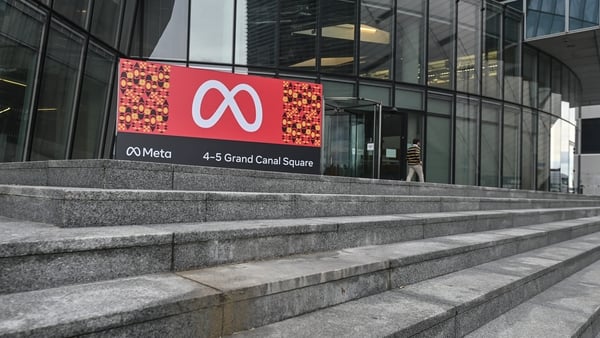
From RTÉ Radio 1's Mormning Ireland in 2022, Dr Jean Cushen on layoffs at Meta's Irish HQ
Ireland's headline productivity figures are cosmetically sustained by a small number of highly capital-intensive multinational operations. Strip those out, and the domestic economy, the indigenous firms, the SMEs, the sectors that most Irish workers actually inhabit, is falling further behind. The road leads one way. Chief economist at Bank of Ireland Conall Mac Coille has stated plainly that multinational sector employment has barely expanded over the past three years: "The days of 5 or 6 per cent growth in the multinational sector are behind us."
Youth unemployment has edged up to almost 14%, with employment among 15-to-29-year-olds in high-AI-risk sectors like tech and financial services falling 20% between 2023 and 2025. Ireland's Department of Enterprise has noted that the share of job postings mentioning AI almost doubled between November 2024 and November 2025, having already doubled in the preceding year. Furthermore, it described Ireland as likely to be "among the first countries to face more widespread AI-driven labour market disruption."
The Irish trap
What makes Ireland's position particularly precarious is the structure of the trap. The AI investment story creates two distinct scenarios for workers, and neither is benign. If AI is a bubble, the reckoning will come. Shareholders who have watched billions committed to AI infrastructure will demand returns. The mechanism for delivering those returns is already well understood: headcount reduction, outsourcing, restructuring. Labour pays. In Ireland's case, this will translate into job losses concentrated in precisely the sectors, technology, financial services, professional services, where well-paying employment is most clustered.
We need your consent to load this rte-player contentWe use rte-player to manage extra content that can set cookies on your device and collect data about your activity. Please review their details and accept them to load the content.Manage Preferences
From RTÉ Radio 1's The Business, what are the jobs that AI can't do?
But if AI is not a bubble and the technology delivers on its productivity promises, the outcome for workers is different in form but similar in consequence. Organisations that genuinely automate significant portions of knowledge work will need fewer people to do it. Workday and Meta layoffs were largely framed in these terms, prioritising innovation investments in AI and platform development.
The CWU, a union more familiar with postal workers than software engineers, has seen its tech sector membership double in a year. Ian McArdle, the union;'s deputy general secretary, described a sector "riddled with restructuring, with outsourcing, with mass redundancies." These workers are drawing their own conclusions about which side of the AI dividend they are on.
And then there is the productivity paradox which punishes Ireland's domestic economy regardless of which scenario unfolds. AI productivity gains, when they materialise, are likely to accrue disproportionately to the same large, capital-rich multinationals already leading on adoption. Ireland, with the highest share of STEM graduates per capita in the EU and a labour market described as "at the global frontier of AI adoption," is the country most likely to experience AI-driven disruption first.
Without state policies requiring upskilling and reskilling, the choice facing Irish workers is between two versions of the same outcome
The domestic economy, which cannot compete on AI infrastructure investment, may see labour displacement without the compensating productivity dividend. Workers outside the multinational sphere will bear the indirect costs, downward wage pressure, weakened consumer markets, reduced public capacity, while the benefits flow to the foreign sector and ultimately to investors.
Why workers never win with financialised business models
In 2023, I argued that employees were already paying the price for financialisation. Two years on, the instrument has changed, but the logic has not. AI has become the new narrative through which investor expectations are managed, restructuring is justified and the burden of financial promises is transferred onto workers. Ireland, more dependent than almost any other economy on the continued goodwill of highly financialised multinationals, has less room to manoeuvre than it might appear.
Without state policies requiring upskilling and reskilling, the choice facing Irish workers is between two versions of the same outcome: a bubble that punishes workers on the way down, or a technology that punishes them by making their labour redundant on the way up. This is a cul-de-sac and not a fork in the road. The language will differ and press releases will speak of 'AI transformation pivots', 'optimised agentic workflows' and 'better futures'. But the financial ratios will be improved, as they often are, through the denominator. In Ireland, our financialised economy means the labour market is the denominator.
Follow RTÉ Brainstorm on WhatsApp and Instagram for more stories and updates
The views expressed here are those of the author and do not represent or reflect the views of RTÉ