

Analysis: Research finds that women face additional demands compared to their male counterparts and these have negatively impacted their careers
Women are underrepresented at senior levels in Ireland and globally. Many organisations strive to improve the gender balance of senior managers, but find too few women available, when senior level positions need to be filled.
The practitioner perspective frequently attributes the underrepresentation of women in senior positions to women choosing family over their careers. However, many studies discount such findings as most women intend to return to work after having families. Another practitioner perspective suggests that the underrepresentation of women at senior levels may be due to women having less aspirations for career progression.
While research found that the aspirations of men and women were the same at college stage, another study found the aspirations of female accountants being far lower (24%) than those of male accountants (46%) for progressing to partnership level. Such findings provide the opportunity to further explore individual women's perspectives of their career aspirations.
From RTÉ Archives in 1969, women in Ireland are looking for equality in the workplace in terms of job opportunities and pay.
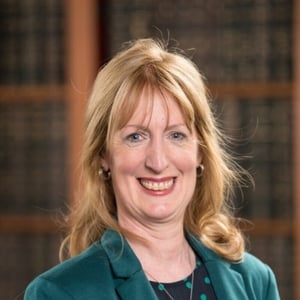
My study interviewed female accountants working in practice in Ireland. These women are in the age category of 46+ and possess significant lived career experiences to draw from. While the interviewees stories indicate strong ambition, these women generally expressed little desire to progress into a more senior position from that which they currently held.
Considering the possibility that these accountants may have felt that they had already reached their career potential, this study specifically asked them whether this was the case. What is interesting is that most interviewees believe that they have not reached their career potential, yet largely they possess little desire to progress further. Delving deeper, interviewees say additional demands are placed on them as women that are not placed on their male counterparts.
Narratives describe having to constantly work harder and prove themselves. Brenda explains, "I think it [being a woman] was a huge block to me along the way and I had to prove myself harder and work harder". Kelly echoes this belief, "…we [women] are always trying to …you are trying to prove yourself and that…and even that could be subconscious too as well. But you are all the time trying to prove yourself that, I am capable of doing this job as good as he can".
We need your consent to load this rte-player contentWe use rte-player to manage extra content that can set cookies on your device and collect data about your activity. Please review their details and accept them to load the content.Manage Preferences
From RTÉ Radio 1's The Business, Dr Michelle Cullen from Accenture on results of a survey about burnout among women
Alice backs up this perception, "Whether it was accurate or not I don’t know, but I felt you had to try harder and prove yourself more, than a man might have, in a similar situation. Because you always felt judged".
An opportunity to progress to CEO level was coming up In Linda’s organisation and she was "asked would I like the role". While she would welcome the challenge of this position, she believes the demands of the role are simply excessive for her, "but I’m not interested… I want a challenge but not one that takes over my life".
It appears that the expectations inferred on women in the workplace eventually dissuades women from aspiring to further progress. Julie explains that "over the course of time it’s [career aspirations] been knocked out of me". A survey of MBA students in the United States suggests that women may overestimate the difficulties associated with senior positions.
We need your consent to load this rte-player contentWe use rte-player to manage extra content that can set cookies on your device and collect data about your activity. Please review their details and accept them to load the content.Manage Preferences
From RTÉ Radio 1's Ray D'Arcy Show, how more reserved characteristics can mean being a better boss.
However, in this current study, these female accountants have been progressing throughout their careers and are likely to fully comprehend the expectations associated with progressing to the next level, to that which they currently hold. It appears that while these female accountants have largely not reached their career potential, they no longer desire further progression due to the greater expectations and demands placed on women in the workplace.
These female accountants believe that additional progression will prevent them having any life outside of work, which they greatly value. This cannot be explained away by women simply choosing family over their career.
If women are unable to reach their career potential, this can result in a lack of career fulfilment for individuals. Susan describes how she was "keen and mean and hungry for all of that [aspiring to progress] up until I was in my early 40s. I worked like a dog. I worked so hard to get up the slippery pole and all that". However, after losing a very close family member, Susan reassessed the huge demands of her career. She decided to step into a less demanding role and stop seeking further career progression.
We need your consent to load this rte-player contentWe use rte-player to manage extra content that can set cookies on your device and collect data about your activity. Please review their details and accept them to load the content.Manage Preferences
From RTÉ Radio 1's The Business, a Fórsa report shows the average male worker earns 21% above their female counterparts.
However, this decision to relinquish her aspirations was very difficult for Susan, "It was actually a hard decision because I had been very focused for a long number of years, and I was very energetic and I actually love accounting. I love the discipline of it; I love the symmetry of it. I really, really like it". Later, Susan again mentions the difficulty of not reaching her potential, when she sees others succeed and knows that she was more than capable of doing the job. "Now the downside was that I was thinking, so and so got that job, I could’ve done that, I'm much better than they are".
As well as the impact on individuals, there are wider repercussions. If women are prevented from reaching their career potential, this acerbates the widespread problem of female underrepresentation in senior positions. Former Taoiseach Leo Varadkar speaks about this in the Balance for Better Business report of 2023, where he stresses that when women are not fairly represented on leadership teams, organisations are disregarding half of the available talent pool.
A career is and has been very important for all these women and their enthusiasm shines through in their narratives. Most identify strongly as accountants, as described by Elizabeth. "I’m totally defined……I am an accountant to the tips of my fingers. My brain works that way". Despite the importance of their careers in their lives, most of these women feel they have not achieved their career potential. The perceived additional expectations on them as women have negatively impacted their career aspirations.
Follow RTÉ Brainstorm on WhatsApp and Instagram for more stories and updates
The views expressed here are those of the author and do not represent or reflect the views of RTÉ