


Analysis: The EU has longstanding diplomatic, economic and security interests in the wider Middle East so retaining influence will be essential
By Giovanni Parente, UCD
On 1 July, Ireland will take over the rotating presidency of the Council of the European Union, a tenure which will begin amid a rapidly evolving geopolitical crisis. If the war that erupted in Iran on 28 February continues, Dublin could find itself chairing some of the European Union's most consequential foreign policy discussions in recent years. This possibility raises an important question: what role can the country play in shaping the European Union’s response to such a major conflict in the Middle East?
The rotating presidency is frequently described as a primarily procedural role. Over six months, the presiding member state is responsible for organising and chairing the Council's meetings, facilitating negotiations among member states and advancing the Union’s legislative and policy agenda. The presidency exercises some agenda-setting influence by opening new dossiers. The country holding the chair can set the tempo and direction of the Union’s policy deliberations by structuring ministerial discussions, convening extraordinary meetings, and encouraging compromise among governments.
We need your consent to load this rte-player contentWe use rte-player to manage extra content that can set cookies on your device and collect data about your activity. Please review their details and accept them to load the content.Manage Preferences
From RTÉ Radio 1's Today with David McCullagh, Business Post Brussels correspondent Sarah Collins previews Ireland's upcoming EU presidency
While these tasks can be demanding in calmer periods for smaller member states, they become particularly significant in times of international crisis. For instance, the war in Iran possesses implications that extend far beyond the immediate regional theatre. The conflict is certainly affecting global energy markets, the rising cost of living and freedom of navigation in the Strait of Hormuz.
On another note, the conflict raises broader questions about regional stability since it has involved several other countries in the Middle East, and the role of external actors in crisis management. For the European Union, these developments intersect with longstanding diplomatic, economic and security interests in the wider Middle East.
Consequently, the issue is likely to feature prominently in meetings of the Foreign Affairs Council, the body that preserves the "unity, consistency and effectiveness of the European Union's external action", which Ireland will chair during the second half of 2026. While the presidency does not determine European Union foreign policy on its own, it can influence how those discussions are organised and maintained. Maintaining unity among 27 governments with diverse strategic views can be challenging at times, especially during complex international crises.
We need your consent to load this rte-player contentWe use rte-player to manage extra content that can set cookies on your device and collect data about your activity. Please review their details and accept them to load the content.Manage Preferences
From RTÉ News, experts are warning of a jump of up to 10% in food prices as a result of sustained cost rises for farmers due to the conflict in the Middle East
In this context, the Irish diplomatic tradition may prove particularly valuable. For decades, the country has cultivated a vocation as a credible advocate of dialogue, multilateralism and international law. Part of this reputation stems from the country’s long-standing policy of military neutrality and its consistent participation in United Nations peacekeeping operations in some of the world’s most complex conflict zones, particularly in the Middle East. The Irish peacekeeping experiences reinforce the country’s identity as a state that prioritises de-escalation, diplomacy and humanitarian concerns.
There is no doubt that Ireland is a very credible diplomatic interlocutor. In recent years, for example, the country was elected to the United Nations Security Council as a non-permanent member for the 2021-2022 period for the fourth time. In that role, Ireland sought to amplify themes that resonate strongly with its foreign policy tradition, such as the protection of civilians, respect for international humanitarian law and the strengthening of multilateral institutions. These themes remain central to Irish foreign policy and are likely to inform the country’s approach during its European Presidency.
Simultaneously, the European Union remains an important diplomatic actor in relation to Iran and the wider Middle East, having played a role in nuclear non-proliferation negotiations. Ensuring that the Union itself maintains a coherent diplomatic position will therefore be essential if it is to retain influence in a rapidly evolving regional environment.
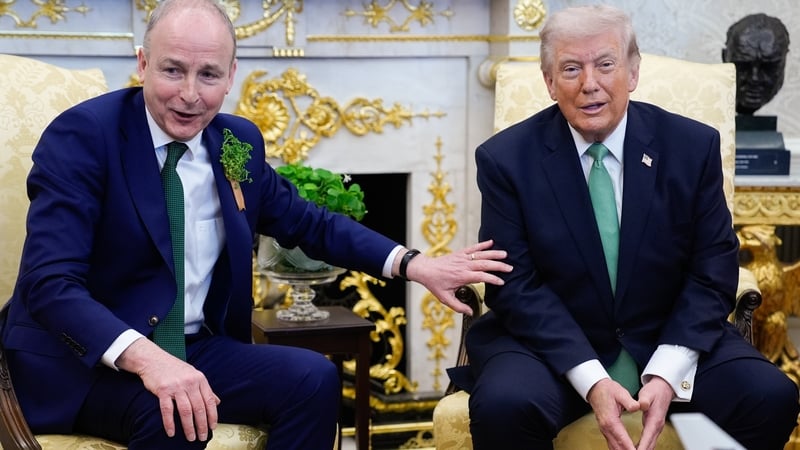
From RTÉ News, Taoiseach's defence of Starmer, Europe and peace during St Patrick's Day White House meeting with US president Donald Trump
In this vein, the presidency’s coordinating role is particularly important, given that the war has been ongoing for over four weeks now and may continue for some time. Ireland can help sustain a structured European response to developments in the region by setting meeting agendas, facilitating ministerial exchanges and encouraging consensus among member states. The presidency also provides opportunities to convene high-level discussions and ensure that foreign ministers regularly assess the evolving situation.
In the traditional St Patrick's Day gathering at the White House, Taoiseach Micheál Martin was vocal in calling for a peaceful resolution to the conflict. Ireland now has an opportunity to demonstrate how principled foreign policy traditions can contribute to European leadership during turbulent times.
Throughout its history, the country has built a strong reputation for integrity and constructive dialogue. If the war in Iran continues, the Foreign Affairs Council will require Ireland to help the Union speak with greater coherence. The ongoing situation requires a diplomatic solution to the conflict, and no nation is better positioned to deliver it than Ireland within the European Union.
Follow RTÉ Brainstorm on WhatsApp and Instagram for more stories and updates
Dr Giovanni Parente is a Research Ireland Postdoctoral Research Fellow at UCD and an Adjunct Assistant Professor of Political Science at TCD.
The views expressed here are those of the author and do not represent or reflect the views of RTÉ
