

Analysis: BrewDog disrupted the craft beer industry, but its financing model demonstrated the hazards of mixing marketing, fandom and investment.
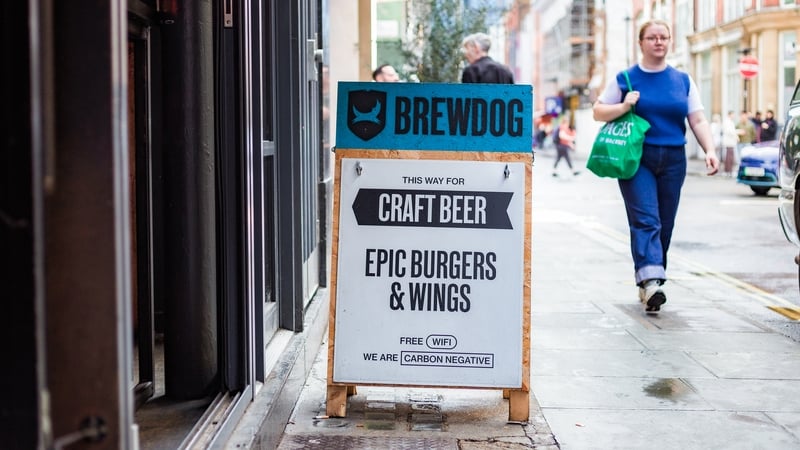
When BrewDog launched its first crowdfunding campaign in 2009, it promised something radical. Fans of the Scottish craft brewer were invited to become owners through a programme called "Equity for Punks".
Instead of relying on banks or traditional investors, BrewDog would raise money directly from the people who drank its beer and the pitch proved irresistible. The company's founders, James Watt and Martin Dickie, presented BrewDog as a rebellious challenger to the global brewing giants. Investing was framed not just as a financial decision, but as joining a movement, a craft beer revolution fuelled by community.
Over the following decade more than 200,000 people bought shares, contributing more than £100 million to the business. BrewDog became one of Europe’s most famous crowdfunding success stories. Yet the story has ended in a way few of those early investors could have imagined. In 2026, BrewDog was sold out of administration for just £33 million. For retail investors, BrewDog offers a powerful lesson in how enthusiasm, branding and financial reality often diverge.
We need your consent to load this rte-player contentWe use rte-player to manage extra content that can set cookies on your device and collect data about your activity. Please review their details and accept them to load the content.Manage Preferences
From RTÉ Radio 1's Today With David McCullagh, the rise and Fall of BrewDog
The rise of "community capitalism"
BrewDog’s "Equity for Punks" model was genuinely innovative. Crowdfunding was still relatively new and it allowed ordinary consumers to invest directly in a fast-growing consumer brand. The pitch blended investment with belonging. Shareholders received perks such as discounts in BrewDog bars, invitations to shareholder events and exclusive beers brewed for investors. Some enthusiasts went even further, getting BrewDog tattoos that entitled them to lifetime discounts in the company's bars. In effect, BrewDog blurred the line between a loyalty programme and an equity investment. Fans became shareholders, and shareholders became brand ambassadors.
In theory, shareholders also play an important role in corporate governance by holding management accountable for strategic decisions and financial discipline. In practice, however, BrewDog’s highly dispersed base of small retail investors had little collective power to influence the company’s direction. Investors who loved the brand may have been less inclined to scrutinise the financial structure behind their investment or fully understand it. The Annual General Meeting, typically a key moment for accountability, took the form of a fanatic music festival.
The deal that changed everything
The turning point came in 2017 when US private equity firm TSG Consumer Partners invested £213 million in BrewDog for a roughly 22% stake. Until then the company had little meaningful external oversight. The deal made the founders multimillionaires, with James Watt and Martin Dickie reportedly cashing out about £50 million each, and valued BrewDog at around £1 billion.
We need your consent to load this rte-player contentWe use rte-player to manage extra content that can set cookies on your device and collect data about your activity. Please review their details and accept them to load the content.Manage Preferences
From RTÉ Radio 1's Today With Claire Byrne, how crowdfunding works
However, TSG’s shares carried a liquidation preference and an 18% annual compound return, ensuring the firm would be paid ahead of ordinary shareholders. While common in private equity, the terms meant BrewDog would need extremely high valuations before retail investors saw meaningful returns. Even as concerns grew about the company's finances and ambitious valuation, many loyal "Equity Punks" continued investing in later funding rounds.
Chasing the unicorn
During the late 2010s BrewDog’s ambitions became increasingly global. The company opened flagship bars, launched hotels and expanded into spirits while continuing to promote headline-grabbing marketing campaigns. Watt framed the strategy bluntly: BrewDog would either become a global success or "crash and burn".
For a time, the strategy appeared to work, with rapid revenue growth and valuations claimed to reach £1.8 billion. But expansion proved expensive. The company diversified aggressively and pursued rapid international growth while profitability remained elusive. Internal tensions also emerged, with private equity investor TSG reportedly warning that management was spending heavily in an attempt to justify what it viewed as an unrealistic valuation.
We need your consent to load this rte-player contentWe use rte-player to manage extra content that can set cookies on your device and collect data about your activity. Please review their details and accept them to load the content.Manage Preferences
From RTÉ Radio 1's The Business, angel investing in Ireland
When the capital structure matters
As BrewDog’s financial situation deteriorated, the terms of the 2017 investment became increasingly significant. TSG’s claim on the business continued to grow each year because of the compounding return built into its preferred shares. By 2024, the private equity firm was reportedly owed more than £700 million under the terms of the deal alongside significant additional loans.
When BrewDog finally collapsed into administration, the outcome illustrated a fundamental principle of corporate finance which few punks understood: in a distressed company, the order in which investors get paid matters. Creditors and preferred shareholders are typically first in line. Ordinary shareholders, the category that includes most retail investors, come last. By the time the company was sold for £33 million, there was little or nothing left for them.
Lessons for retail investors
BrewDog’s story does not mean crowdfunding is inherently flawed. Many companies have successfully raised money from retail investors, and community investment can play an important role in supporting new businesses. But the case highlights several lessons for investors.
First, enthusiasm for a product or brand should not replace financial analysis. Consumers and investors often approach companies from very different perspectives.
Second, the structure of an investment matters as much as the story behind it. You may not be first in line should things not go as planned. Retail investors should also recognise that share ownership carries governance implications: when a company’s ownership is fragmented among thousands of small shareholders, meaningful oversight of management can be weak or effectively absent.
Third, liquidity, the ability to buy and sell your shares, is an often-overlooked factor. Shares in crowdfunded companies are typically difficult to sell, meaning investors may have to hold them for years with little ability to exit. In BrewDog’s case, shareholders could only trade their shares occasionally through a specialised platform, and even then, there was no guarantee of finding a buyer.
BrewDog genuinely disrupted the craft beer industry and built a global brand from humble beginnings. But its financing model also demonstrates the hazards of mixing marketing, fandom and investment. For retail investors, the lesson may be simple: even in a craft beer revolution, capital structure still matters.
Follow RTÉ Brainstorm on WhatsApp and Instagram for more stories and updates
The views expressed here are those of the author and do not represent or reflect the views of RTÉ