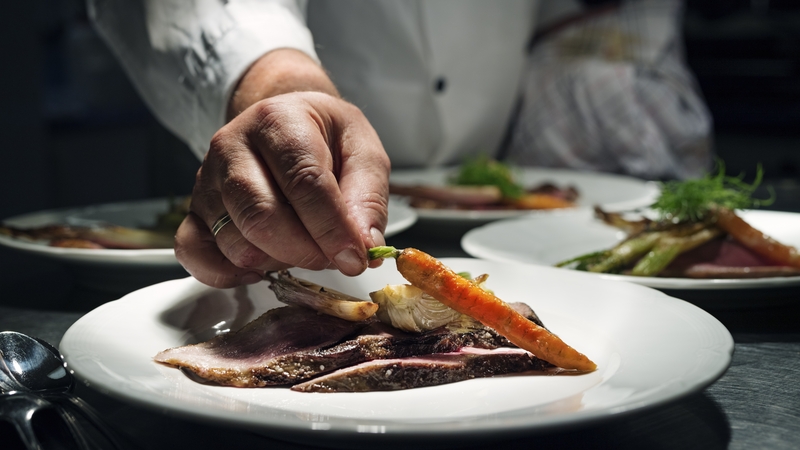


Analysis: We're steadily heading in the right direction with an internationally aware and critically reflective generation of culinary talent
The food scene in Ireland has dramatically transformed in the last thirty years. Ireland experienced a new sense of confidence as the Celtic Tiger years and the peace process led to prosperity. Returning emigrants, increased international travel and cultural exchange all established increased demand for fine dining. Eating out in restaurants moved from being for special occasions to becoming a regular past time.
In 2018, I predicted Ireland would become a top global destination for dining within a decade. As that deadline approaches, how have we progressed and what has the influence of culinary education had on this development?
Restaurants are peculiar enterprises. American sociologist Gary Alan Fine noted in 1982 that cooks negotiate conflicting ideologies that force them to be artists, professionals, businesspeople and manual labourers, often simultaneously. Classically trained professional chefs such as Colin O'Daly or Stephen McAllister have run many award-winning restaurants and hospitality businesses. Enthusiastic amateurs such as Myrtle Allen or Catherine Healy never attended culinary school but have successfully opened and operated food ventures.
We need your consent to load this rte-player contentWe use rte-player to manage extra content that can set cookies on your device and collect data about your activity. Please review their details and accept them to load the content.Manage Preferences
From RTÉ Radio 1's Morning Ireland, two Irish restaurants earn their first Michelin stars in 2026
The etymology of 'amateur’ is someone who loves what they do. Whether college-trained or not, a love for food and cooking is a prerequisite for success. Significant players in both the Irish and international food world are graduates of Cathal Brugha Street and TU Dublin. For nearly 30 years, my main role as a culinary arts lecturer has been to instil a love for the topic, while developing critical thinking skills among my students, along with confidence in their ability.
A brief history of Irish culinary education
It's 85 years since culinary education began in Dubln with the opening of St Mary's College for Domestic Science, Cathal Brugha Street in 1941, which became the Dublin College of Catering in the 1950s. The Council for Education, Recruitment, and Training (CERT) began in 1963. Regional Technical Colleges opened in the 1970s and 1980s. Advanced City and Guilds courses began in Cathal Brugha Street in 1977.
In the mid-1980s, the first level 6 post-leaving certificate programme in professional cookery (Cooking for Health) started in response to the openings of the Blackrock Clinic and the Mater Private. In 1986, there were only two Michelin-starred restaurants in Ireland: Dunderry Lodge in Navan, Co Meath and the Park restuarant in the Park Hotel, Kenmare, Co Kerry
We need your consent to load this rte-player contentWe use rte-player to manage extra content that can set cookies on your device and collect data about your activity. Please review their details and accept them to load the content.Manage Preferences
From RTÉ Radio 1's The History Show, Dr. Máirtín Mac Con Iomaire and Elaine McMahon on iconic Dublin restaurant Jammet's and the golden age of haute cuisine in the city
The City of Dublin Vocational Educational Committee ran the Cathal Brugha Street College until 1992, when the Dublin Institute of Technology took over. In 1997, under the Universities Act, DIT gained degree-awarding powers up to PhD level. In 1999, the first level 8 Honours Degree in Culinary Arts began in DIT, where a new paradigm of culinary education was developed melding vocational and liberal arts education over a four-year period.
This seminal model was copied in other culinary colleges, to various degrees of success. Further TU Dublin degree programmes in culinary entrepreneurship, bakery management, and botanical cuisine would follow, as would post-graduate Masters in Culinary Innovation & NPD, Gastronomy and Food Studies, and Applied Culinary Nutrition. Critical thinking, reflective practice and the concept of generous curiosity underpinned these programmes.
The commencement of the BA (hons) Culinary Arts was a significant moment and is currently the subject of doctoral research by my colleague James Fox. Along with a solid grounding in cookery and restaurant service, students learned about wine, product development, food science, history, art, sociology, and business. This new programme would prove a hothouse for culinary talent, who were critically reflective, practically competent, and globally confident, achieved through a combination of practical, theoretical, and experiential learning, in partnership with industry.
We need your consent to load this rte-player contentWe use rte-player to manage extra content that can set cookies on your device and collect data about your activity. Please review their details and accept them to load the content.Manage Preferences
From RTÉ Radio 1's The Late Debate, how much should restaurants charge for corkage?
By 1999, there were now five Michelin-starred restaurants in Ireland. Students on this new BA programme undertook internships in Ireland’s top establishments in years one and two and internationally in their third year. On return from internships, they would swap recipes and learnings with each other. This is how the late John Howard's famous Le Coq Hardi haddock smokies made its way via student Charlene O'Dowd to become the legendary Eden smokies in the eponymous Temple Bar restaurant.
International internships during the summer of year three included excellent restaurants such as Ledoyen in Paris, The Fat Duck, and The Ledbury in the UK, Quique Dacosta in Spain, and Alinea in Chicago. The first cohort from this programme graduated in 2003 and along with future cohorts would become the leaders and shakers of the culinary world both at home and internationally.
Several graduates such as Claire O'Halloran, Cuán Green and Louise Bannon would work in NOMA, Geranium, and other leading Nordic restaurants. Others would pursue further studies at Masters and Doctorate level, and build careers in product development, culinary education, brewing, baking, cheesemongers, and the broader hospitality industry, including hospital kitchens. Similar to other degree programmes, some would retrain as medical doctors, barristers, or Home Economics teachers.
We need your consent to load this rte-player contentWe use rte-player to manage extra content that can set cookies on your device and collect data about your activity. Please review their details and accept them to load the content.Manage Preferences
From RTÉ Radio 1's Oliver Callan, Lena Hennessy from Noma on being head hunted to oversee one of the world's best restaurants
Key milestones along Ireland’s culinary renaissance include:
- Abigail Colleran winning the best Commis chef at the Bocuse d'Or in 2003;
- The inauguration of the David Gumbleton Award in 2005, the winners of which form a who’s who of the Irish food renaissance.
- The first PhD in Food History being awarded in 2009;
- Kenneth Culhane becoming a Roux Scholar in 2010;
- Le Guide de Routard noting in 2011 that Irish food was now ‘world class’;
- The biennial Dublin Gastronomy Symposium starting in 2012;
- Mark Moriarty winning the San Pellegrino Young Chef Award 2015;
- Food on the Edge organised by Jp McMahon and Abigail Colleran, annually attracting international culinary stars to Galway since 2015;
- Food tents, talks, and trucks becoming serious draws at music festivals.
Between 2001 and 2019, over half of the Eurotoques Young Chef of the Year winners were TU Dublin graduates, most notably Anna Haugh (2002), Peter Everett (2006), and Ciaran Elliot (2012), who have all opened their own award-winning restaurants. Muireann McColgan and Ruth Lappin also featured in The Irish Times Food People to watch for 2016.
We need your consent to load this rte-player contentWe use rte-player to manage extra content that can set cookies on your device and collect data about your activity. Please review their details and accept them to load the content.Manage Preferences
From RTÉ Radio 1's Today with Claire Byrne, Mark Moriarty, Chef talks about seasonal cooking
Graduates from TU Dublin courses began winning Michelin stars including
- John Kelly in the Lady Helen in Mount Juliet (2014)
- Eric Mathews in Chapter One (2015-2020)
- Mark Moriarty in The Greenhouse (2016) – two-stars (2020)
- Róisín Gillen in Heron and Grey (2017), Liath (2020) – two stars (2022)
- Margaret Roche in Wild Honey Inn (2018)
- Kenneth Culhane at the Dysart London (2019)
- Keelan Higgs in Variety Jones (2019)
- Rob Collender and Ahmed Dede in Mews (2019), Dede (2021) – two stars (2023)
- Andy McFadden in Glovers Alley (2022),
- Scott White in D'Olier Street (2024)
- Stephen Hayes in the Bishop's Buttery (2024),
- Claire O'Halloran in ERGO in Stockholm (2024)
- Danny Africano in Lignum (2025)
Mark Moriarty, Róisín Gillen and Scott White were key team members in Greenhouse, Liath, and Aimsir respectively when they won two-Michelin stars. Restaurant Patrick Guilbaud and Chapter One have been solid partners with TU Dublin for decades. Keelan Higgs' signature oyster dish with its Vietnamese flavour profiles can be traced to chef Kieran Glennon in Guilbaud’s, via legendary Irish chef Liam Tomlin in Sydney, Australia. It takes a village!
Other graduates have opened successful food businesses such as Scéal Bakery (Charlotte Leonard Kane and Shane Palmer), Harry's Nut Butter (Harry Colley), JoyofFoods (Eniola Salami) or Pretty Baked Bakery in Donegal Town (Róisín Gillen). Moriarty, Haugh, Roche, Stuart O’Keefe and Colin Fassnidge have become serious television stars, celebrities, and cookbook authors in Ireland, the UK, America and Australia.
We need your consent to load this rte-player contentWe use rte-player to manage extra content that can set cookies on your device and collect data about your activity. Please review their details and accept them to load the content.Manage Preferences
From RTÉ Radio 1's Mornings with Dave Fanning, Ireland's first celebrity chef Sean Kinsella
So is my prediction still on track? One metric for this transformation is the number of Michelin-starred restaurants in Ireland, which has nearly doubled from 13 to 23 in the last eight years, with the number of two-stars dramatically rising from one to five. Several factors, including innovative and evolving culinary education, will have shaped this development.
In 2020, Phaidon published The Irish Cookbook. Last year, Irish Food History: A Companion won numerous international awards. We are steadily heading in the right direction with an internationally aware, critically reflective generation of talented culinarians. Cuán Greene opens his much anticipated Ómós restaurant and guesthouse in Abbeyleix later this year. Watch this space!
Follow RTÉ Brainstorm on WhatsApp and Instagram for more stories and updates
The views expressed here are those of the author and do not represent or reflect the views of RTÉ