

Analysis: There are many reasons why old spying methods and radio tricks are used in an era of encrypted messaging apps, satellites and surveillance
It sounds like something from a spy novel: a calm voice reading strings of numbers over shortwave radio at the same time every day, with no explanation or signature. Yet in early March, multiple outlets reported the appearance of a mysterious Farsi-language broadcast on shortwave, timed closely after the opening phase of the US–Israeli bombing campaign against Iran.
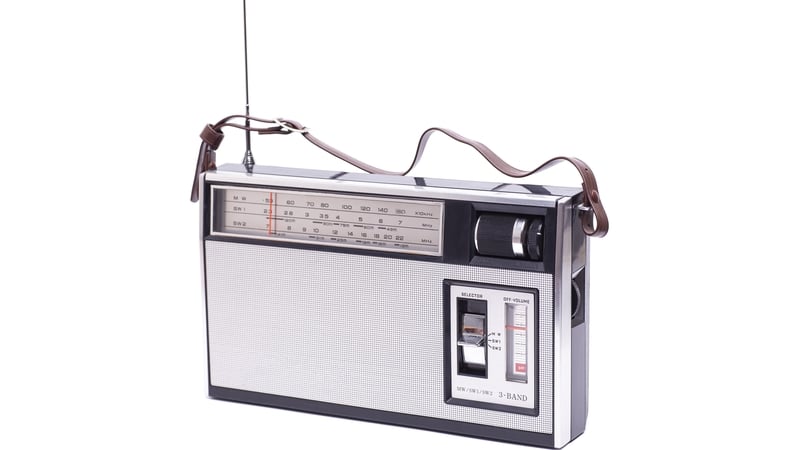
The above description matches what is known as a number station, a brutally simple form of communication. A transmitter broadcasts coded content (often spoken numbers, sometimes tones or short phrases) intended for a receiver who already possesses the key to decipher the message. The receiver does not need an internet connection or a phone. They only need to listen at the right time, decode offline, and disappear back into ordinary life.
From Ringway Manchester, Iran's mystery numbers station is being targetted, but is it really Iranian?
The advantage is easiest to grasp through a lighthouse analogy: the beacon is visible to everyone, but it cannot see who is watching from the dark sea. In the same way, a state can broadcast a signal widely without knowing which specific listener is receiving it. Anyone can hear the signal, but only someone with the key can make sense of it.
To most people, this feels impossibly archaic. Why would anyone use Cold War radio tricks in an era of encrypted messaging apps, satellites, and always-on surveillance? The unsettling answer is that war has a way of making technological progress circular. When a conflict turns the digital environment hostile, when networks are monitored, degraded, jammed, or shut down, states reach for communications that are hard to kill, hard to trace, and cheap to sustain.
'A transmitter broadcasts coded content (often spoken numbers, sometimes tones or short phrases) intended for a receiver who already possesses the key to decipher the message'
Number stations are not the whole story, but they are a perfect symbol of what the Iran war is bringing back: espionage methods designed for resilience when digital certainty collapses. That asymmetry is seeing a revival because modern communication leaves footprints, even when it is encrypted. A phone call produces records. A message generates metadata. Even when content is unreadable, patterns remain: who contacted whom, when, how often, and from where. By contrast, a shortwave listener does not need to transmit anything. There is no handshake, no reply, no obvious conversation to map. In espionage terms, it is a method that produces very little to seize.
Consider for a moment our dependence on readily available technologies. Modern societies depend on this infrastructure, yet at the same time this reliance can be pressured without firing a shot. Connectivity can be throttled. Mobile networks can be jammed. Platforms can be monitored. Messaging services can be infiltrated. War makes these possibilities routine. In that environment, communication becomes less about convenience and more about survivability. A method that looks quaint in peacetime becomes valuable in crisis because it does not rely on local telecoms, SIM cards, or cooperative service providers.
We need your consent to load this rte-player contentWe use rte-player to manage extra content that can set cookies on your device and collect data about your activity. Please review their details and accept them to load the content.Manage Preferences
From RTÉ 2fm's Jennifer Zamparelli Show, science and technology journalist Elaine Burke on how your car, doorbell and even washing machine could be spying on you
Old tradecraft is thus resurfacing in very modern forms. Number stations are the clearest illustration because they work precisely when digital infrastructure becomes fragile. But the deeper point is broader than radio. Official UK oversight reporting describes Iran's preference for operating through layers of separation like dead drops, proxy organisations, criminal networks and private cyber actors, because they provide a deniable way to apply pressure while reducing attribution and retaliation risk. When the digital environment is saturated with surveillance, tradecraft shifts from hiding the content of messages to minimising the trace that a message happened at all.
But the most interesting twist in the numbers-station story is the audience and not the technology. A shortwave broadcast is, by design, publicly audible. It's not a private message and anyone with a receiver can hear it, record it, replay it and argue about it. That means a single transmission can have two audiences at once: an intended recipient with a decoding key, and an unintended crowd with curiosity.
From France 24, Dr. Aviva Guttmann, Lecturer in Strategy and Intelligence at Aberystwyth University, on how Mossad infiltrated Iran's security apparatus over the past 20 years
In a conflict where official information is partial and propaganda is constant, that second audience starts to matter. Public audibility creates a darker possibility: the format can be used as theatre. A numbers-style broadcast can be deployed not only to communicate, but to signal that communication is happening. It can plant uncertainty: are there agents on the ground, is an operation underway, is a network being directed? In a high-tension environment, that ambiguity has value. Even if nobody decodes the message, the existence of the signal can rattle adversaries, amplify paranoia, and feed a media cycle that will happily repeat the mystery. In modern war, psychological effects do not require deception to be provable; they only require it to be plausible.
Yet the signal is not just performance, its real value is that it fits a discipline of operating under silence. When communications are risky or contested, intelligence operations don’t simply hunt for another channel. They are designed to require as little communication as possible. Classic tradecraft works through pre-arranged schedules, triggers, contingency trees, and pre-authorised actions: if A happens, do B; if you do not hear from us for X days, move to Y. A numbers station fits this approach because it can deliver a short "go / no-go / change plan" instruction without building a live relationship that can be mapped or exposed.
In a world saturated with data, the most useful message may be the one that cannot be easily proven, decoded or even traced
This is why the Iran war reports are revealing even where attribution remains uncertain. The Financial Times has framed the timing of the broadcast as consistent with a contingency method for maintaining contact during blackout conditions, while Radio Farda highlighted the rapid emergence of competing theories in the monitoring community. Together, they point to a war environment where operational tempo depends on preparation for silence, where the side that can act with minimal communication keeps moving while others wait for clarity.
This is not to say that the future of espionage is old radios. Rather, it is that modern conflict is reviving an older logic: signals designed to be heard but not understood, to be noticed but not attributed, and to deliver just enough instruction for actions already set in motion. In a world saturated with data, the most useful message may be the one that cannot be easily proven, decoded, or even traced to a sender, only detected, logged, and feared.
Follow RTÉ Brainstorm on WhatsApp and Instagram for more stories and updates
The views expressed here are those of the author and do not represent or reflect the views of RTÉ