

Analysis: Opening a standalone women's museum in Ireland in 2026 risks reinforcing separation at a time when integration should be the goal
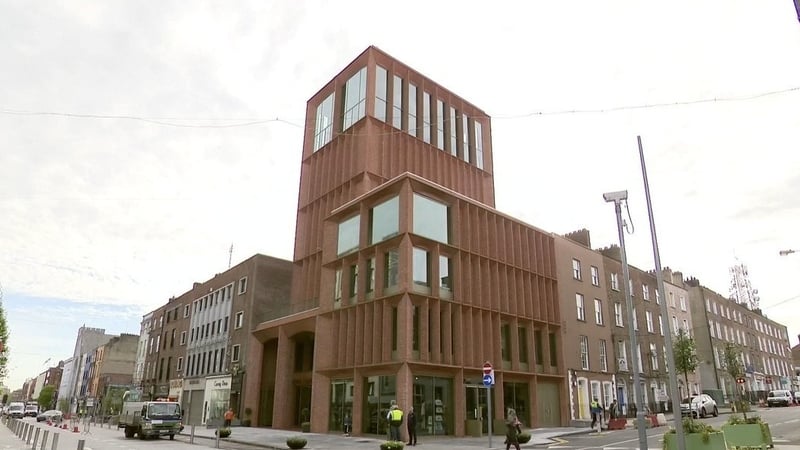
The recent announcement by Minister for Arts, Culture, Communications, Media and Sport Patrick O’Donovan that the state will open a regional branch of the National Museum of Ireland dedicated to telling women’s stories has generated understandable interest. The site for the new museum is the former International Rugby Experience building in Limerick, which is set to be gifted to the state by JP McManus.
At first glance, the proposal is attractive. The underrepresentation of women in museum collections and exhibitions is well documented, and addressing this imbalance should be a priority across Ireland’s cultural sector. Yet creating a dedicated women’s museum in this particular building – largely because it happens to be available – risks producing a symbolic gesture rather than a meaningful solution.
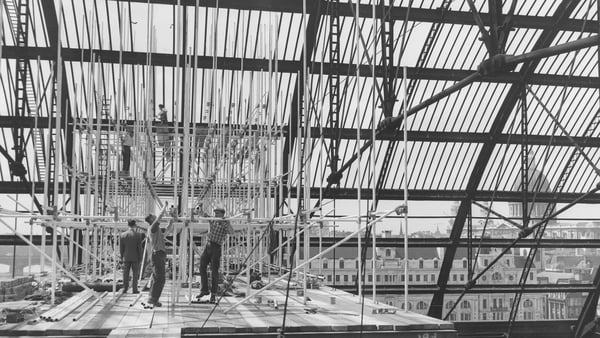
There are significant practical considerations. For example, the building was not designed to house significant physical collections. Museums that display objects require controlled environmental conditions, secure storage and conservation facilities. The tower layout of the building, with relatively small floors stacked over several levels, creates obvious circulation challenges. Retrofitting the infrastructure required for a collections-based museum would be both difficult and expensive.
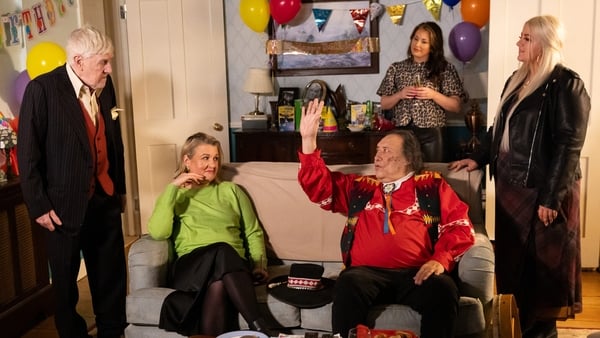
From RTÉ Archives from 2007, commemorating the women who fought for Irish freedom between 1916 and 1923
A museum of this kind may unintentionally silo women's history instead of embedding it within the broader narratives presented in museums across the country. A more fundamental question also arises: who exactly is the museum for? A museum devoted to women’s stories inevitably raises questions about identity and belonging. How would such an institution represent people whose identities do not fit neatly into traditional gender categories – intersex, non-binary, trans or agender individuals, for example? Would their stories be incorporated or excluded?
There is also a risk that the museum might appear to exclude men, who are often precisely those who most need to engage with women's history. These are not peripheral issues but central curatorial questions for contemporary museums, which increasingly recognise gender and identity as complex and evolving.
The proposal must also be viewed in the context of Ireland’s wider museum sector. Funding streams are limited, and many institutions rely on support from the Department of Culture, Communications and Sport or the Department of Housing, Local Government and Heritage. Additional funding sometimes comes through tourism bodies such as Fáilte Ireland or Tourism Ireland, who prioritise tourists rather than supporting the less visible work that sustains museums and heritage centres.
We need your consent to load this rte-player contentWe use rte-player to manage extra content that can set cookies on your device and collect data about your activity. Please review their details and accept them to load the content.Manage Preferences
From RTÉ Radio 1's The Business, journalist and editor Clodagh Finn brings us the story of Belinda Mulrooney.
Because so many organisations depend on these limited funding sources, open criticism of new cultural initiatives can be difficult. Yet moments like this require honest discussion about priorities. The state is already committed to developing the National Centre for Research and Remembrance at the former Magdalene Laundry site on Sean McDermott Street in Dublin, which will include a museum under the auspices of the National Museum of Ireland. That project alone will require substantial long-term investment.
Ireland also already has a significant network of museums reaching large audiences. The four sites operated by the National Museum of Ireland attract close to 1.5 million visitors annually. Alongside them are 12 local authority museums across the country, from Donegal to Kerry and from Waterford to Galway. Between them, these institutions welcome well over two million visitors each year. By comparison, the International Rugby Experience attracted about 60,000 visitors in its first year, significantly less than the 100,000 visitors anticipated.
If the aim is to ensure women’s histories are widely encountered, investing in exhibitions and interpretation across existing museums would reach far more people than concentration resources in a single new institution.
Historical precedents for women’s museums also need to be understood in context. Institutions such as the National Museum of Women in the Arts in Washington D.C., founded in 1981, or the Women's Library in Glasgow, established in 1991, emerged when women were largely absent from mainstream museum narratives. Dedicated institutions were often the only way to preserve and present those histories.
But the challenge today is much different. Museums increasingly seek to integrate gender, class, ethnicity and identity into shared narratives rather than isolating them. Opening a standalone women’s museum in Ireland in 2026 risks reinforcing separation at precisely the moment when integration should be the goal.
We need your consent to load this rte-player contentWe use rte-player to manage extra content that can set cookies on your device and collect data about your activity. Please review their details and accept them to load the content.Manage Preferences
From RTÉ Radio 1's The History Show, Women and the Irish Revolution
There is also an unavoidable political dimension. Cultural infrastructure has often been shaped by regional considerations, but decisions about national heritage should ideally be guided by long-term cultural strategy rather than the opportunity to repurpose a recently vacated building.
More broadly, focusing investment on one new museum risks overlooking deeper structural issues within the sector. The real cost of running a museum lies not in opening a building but in sustaining it: staffing, collections care, conservation, storage and programming. These long-term commitments rarely attract the attention that accompanies new announcements, yet they are what allow museums to research collections, develop exhibitions and tell richer stories.
If the goal is to ensure women’s lives and experiences are properly represented, there are more effective approaches. A national audit of museum collections would help identify gaps relating to women’s history and guide future collecting, while also enabling older catalogued material to be reinterpreted in new ways. Investment in exhibitions, research and public programmes across the existing museum network would ensure that women’s stories appear everywhere rather than being confined to one location.
We need your consent to load this rte-player contentWe use rte-player to manage extra content that can set cookies on your device and collect data about your activity. Please review their details and accept them to load the content.Manage Preferences
From RTÉ Podcast HerStory - Ireland's Epic Women, Mary Lee: The trailblazer down under
Museums are not neutral spaces, but they should be inclusive ones. A women’s museum in Limerick might well present thoughtful exhibitions once visitors step through the door. Yet its very premise risks separating women’s stories from the broader narrative of Irish history. Ireland would be better served by ensuring that women’s voices are present in every museum, not just one.
The minister is right that creating a new museum is a 'sensitive and complex process’. If handled carefully, this moment could strengthen Ireland’s cultural institutions nationwide. But investing millions to tell women’s stories in a single repurposed building is unlikely to achieve that goal.
Follow RTÉ Brainstorm on WhatsApp and Instagram for more stories and updates
The views expressed here are those of the author and do not represent or reflect the views of RTÉ