



Analysis: Business parks can deliver strong performances and spread opportunities across the country, but success requires a regional-first mindset
By John Paul Clifford and Frank Crowley, UCC
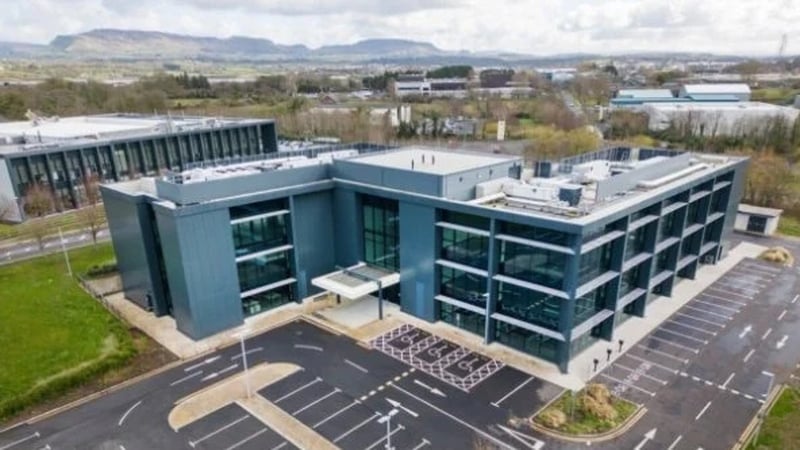
Ireland's debates about record corporation tax receipts, huge infrastructure plans and the ambition of balanced regional development often run on separate tracks. But one policy sits at the crossroads of all three: state developed Business and Technology Parks where ready-to-go, serviced sites are used to attract foreign direct investment, often determining where investment and jobs locate across the country.
IDA Ireland’s strategy is simple. It removes uncertainty for investors by providing quick start sites that already have zoning, planning permission and key infrastructure in place. Combined with a skilled workforce, EU market access and a pro-business environment, these parks are a central part of Ireland’s foreign direct investment strategy.
Our research, recently published in the Regional Studies journal, sheds new light on the role these parks play in local job creation. It reveals an important tension that policy makers face when presenting locations to potential investors.
We need your consent to load this rte-player contentWe use rte-player to manage extra content that can set cookies on your device and collect data about your activity. Please review their details and accept them to load the content.Manage Preferences
From RTÉ Radio One's News At One, IDA chief executive Michael Lohan on how 2025 saw a record number of investments
Ireland’s long running regional development challenge is how to support rural and peripheral regions, particularly in parts of the Midland, West and Northwest that have struggled to attract investment and replace lost industries.
Rural electoral divisions, defined in the research as areas with fewer than 150 people per square kilometre, within 20 kilometres of a park generate measurable employment gains, including in hinterlands surrounding regional centres such as Athlone, Tullamore and Letterkenny. In higher unemployment areas, these investments appear to stabilise local labour markets by attracting new employers.
However, the research also makes clear that more urban electoral divisions, over 150 people per square kilometre, like in the cities of Cork, Galway and Dublin generate larger employment gains from the same type of investment. That puts Ireland’s regional dilemma into sharp focus. The places most in need of jobs are not always the places where investment produces the biggest economic impact.
We need your consent to load this rte-player contentWe use rte-player to manage extra content that can set cookies on your device and collect data about your activity. Please review their details and accept them to load the content.Manage Preferences
From RTÉ Radio One's The Business, architect and lecturer Roisin Murphy on why we're so bad at building infrastructure in this country
These patterns reflect a wider national reality about where overall employment growth is concentrated. When viewed as a single city region, Dublin and the Mid East continue to drive by far the largest share of national job growth over the past decade, widening the long-standing gap between the capital and the rest of the country.
The findings of this new research reveal a clear tension in national policy. Locating new parks in struggling rural areas can strengthen communities that have faced long periods of economic decline. Yet the data also shows that the strongest and fastest employment gains occur in urban areas, where firms can draw on deeper labour pools, transport links and established business networks. This means policy makers must decide whether the priority is to narrow regional disparities or to maximise overall national job creation.
The study also shows that the characteristics of parks matter. Larger parks generate stronger employment effects, suggesting that the scale of investment is a significant factor in determining success. Parks with a high concentration of pharmaceutical and information and communications technology firms create the largest gains.
We need your consent to load this rte-player contentWe use rte-player to manage extra content that can set cookies on your device and collect data about your activity. Please review their details and accept them to load the content.Manage Preferences
From RTÉ Radio 1's Morning Ireland, RTÉ Economics and Public Affairs editor David Murphy, speaks to former US Commerce Secretary Wilbur Ross about the future for the Irish pharma industry.
These sectors have been central to IDA targeting for many years and represent high added value, high quality jobs. The results therefore provide direct empirical support for a strategy that focuses on promising high growth sectors with high paid jobs, a so-called 'picking winners’ approach that is often criticised internationally for being overly top down or blind to local context. In the Irish case, the evidence shows that this approach works.
International experience makes this even more notable. Property based interventions aimed at lifting lagging or rural regions have often produced mixed or uncertain results in other countries. The fact that Irish parks generate positive employment effects in both urban and rural settings places the state in a distinctive position. It has a regional development tool that consistently delivers measurable gains.
In Ireland, there has always been a belief that this policy worked, but until now the evidence base was limited. That lack of evidence has often fuelled criticism of the state’s approach to foreign direct investment with questions about why multinational attraction is prioritised over indigenous enterprise, and what the counterfactual impact of these investments could be.
We need your consent to load this rte-player contentWe use rte-player to manage extra content that can set cookies on your device and collect data about your activity. Please review their details and accept them to load the content.Manage Preferences
From RTÉ Radio 1's Morning Ireland, Seamus Coffey from the Irish Fiscal Advisory Council on the very high level of corporation tax paid by just three multinationals.
By providing clear evidence of the employment effects of Business and Technology Parks, this research helps to address those concerns. It shows that securing high-quality, well-paid jobs through targeted investment does bring stability and growth to local areas. With that evidence now in place, Ireland has a clearer opportunity to use these parks more deliberately, aligning their scale, specialisation and location with the national goals set out in Ireland 2040.
Balanced regional development has long been an ambition in Ireland, but one that has struggled to move beyond aspiration. The National Spatial Strategy, the state’s previous attempt to guide long term development, never received the political or investment backing needed to succeed. Ireland 2040 was created in part to correct that history and to provide a more robust and enforceable framework.
What has been lacking is a proven policy lever with the capacity to shift economic activity on the ground. This research suggests that Business and Technology Parks may be one of the few instruments capable of doing so.
We need your consent to load this rte-player contentWe use rte-player to manage extra content that can set cookies on your device and collect data about your activity. Please review their details and accept them to load the content.Manage Preferences
From RTÉ Radio One's News At One, Deptartment of Finance is predicting a population of 7.59 million over the next 40 years.
If used strategically, Business and Technology Parks can help deliver both strong national performance and a more even spread of opportunity across the country. The evidence shows that the model is effective. But on their own, parks will not close Ireland’s regional gaps. That requires a wider regional-first mindset, one that places the reduction of spatial disparities at the centre of national decision making.
At present, Ireland 2040 has too often operated as a Dublin first strategy, with major projects and per capita investment continuing to favour the capital over the very regions the plan was meant to lift. A genuine rebalancing would mean committing to large scale infrastructure and investment projects in the West, the South, the Midlands and other regions that have waited longest for them, ensuring that future national investment reflects the spatial ambitions set out on paper.
If Ireland is serious about balanced regional development, then Business and Technology Parks must form part of a broader shift in political priorities that finally gives the regions the support they have long been promised.
Follow RTÉ Brainstorm on WhatsApp and Instagram for more stories and updates
Dr John Paul Clifford is a Post-Doctoral Researcher at Cork University Business School at UCC. He is a Research Ireland awardee. Prof Frank Crowley is Professor of Economics at Cork University Business School at UCC.
The views expressed here are those of the author and do not represent or reflect the views of RTÉ
