


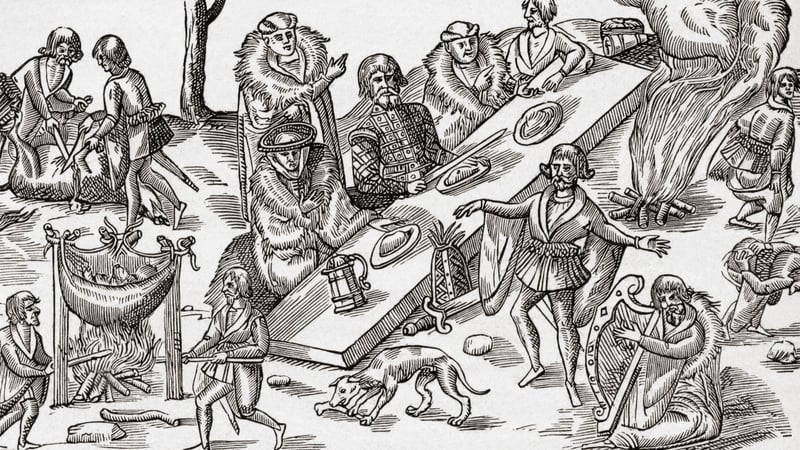


Analysis: An Ceithearnach Caoilriabhach was a rule-breaking trickster in Early Modern Irish culture, a figure who caused chaos wherever he went
Throughout literature, mythology and culture, one of the most recognisable types of character is that of the trickster. We can call this type of character an 'archetype', which means that different depictions of tricksters in different cultures have common traits or characteristics. Playing tricks, wearing distinctive dress, shapeshifting, being antisocial and transcending spatial or temporal boundaries are just some of the characteristics associated with trickster figures around the world.
Although there are many examples of the trickster in modern culture, such as Bart Simpson or Deadpool, the trickster archetype goes back centuries. Well-known examples from previous eras include Coyote, a North American mythological character based on the coyote animal, and Prometheus, a deity found in Greek mythology. There are also a great number of tricksters in Irish literature, mythology and culture, from the troublemaker Bricriu to the sea god Manannán mac Lir.
One of the most notable of these Irish tricksters is a character called An Ceithearnach Caoilriabhach, which can be translated as ‘the narrow-striped foot soldier’.
An Ceithearnach Caoilriabhach is the main character in the Early Modern Irish tale Eachtra an Cheithearnaigh Chaoilriabhaigh (‘The adventure of the narrow-striped foot soldier’). This story tells of An Ceithearnach Caoilriabhach’s escapades as he travels around Ireland visiting the houses of other characters, some of whom are real-life historical figures.
The best evidence available to us suggests that Eachtra an Cheithearnaigh Chaoilriabhaigh was originally composed sometime between the mid-16th and early 17th century, though the identity of the author is unknown. As is true of other tales from the period, it was composed with the purpose of being read aloud or performed to an audience. Stories of this kind were recorded in manuscripts, and scribes would produce new written versions of stories by drawing from existing manuscripts.
We need your consent to load this rte-player contentWe use rte-player to manage extra content that can set cookies on your device and collect data about your activity. Please review their details and accept them to load the content.Manage Preferences
From RTÉ Six One News, ancient Irish book about saints and sagas returns home to Cork
Versions of Eachtra an Cheithearnaigh Chaoilriabhaigh survive today in over 60 manuscripts which date from the late 17th to the late 19th century and which are held in libraries in Ireland, Britain, Germany and Italy. The fact that so many manuscript copies of this story exist is an indication of its popularity among scribes and audiences alike.
Much like our favourite Netflix dramas of today, Eachtra an Cheithearnaigh Chaoilriabhaigh consists of a series of episodes, each of which outlines An Ceithearnach Caoilriabhach’s encounter with a particular character.
An Ceithearnach Caoilriabhach is a magical and mysterious figure who enjoys playing tricks and usually causes chaos in the places he visits. Unsurprisingly, humour is a central feature of this tale, as many of An Ceithearnach Caoilriabhach’s encounters are comical and absurd.
We need your consent to load this rte-player contentWe use rte-player to manage extra content that can set cookies on your device and collect data about your activity. Please review their details and accept them to load the content.Manage Preferences
From RTÉ Radio 1's Arena, Dr Kelly Fitzgerald from UCD on the enduring importance of fairy tales.
One example of this absurd humour is found in the episode of the story in which An Ceithearnach Caoilriabhach visits a man named Tadhg Ó Ceallaigh. Towards the end of this episode, An Ceithearnach Caoilriabhach beheads a young man with his sword, which annoys Tadhg Ó Ceallaigh, as he does not like such a violent act being done in his presence.
In his haste to right this wrong, our protagonist places the young man’s head back on his body, only to realise that it is back to front. He then puts the young man’s head the right way round, leaving him alive and well as he was before.
Other parts of the story see An Ceithearnach Caoilriabhach going against the established norms of Irish society at the time, such as by insulting members of the noble class. In one episode, he rejects the gifts and hospitality of Gaelic chieftain Aodh Ruadh Ó Domhnaill, causing uproar in Ó Domhnaill’s house which leads to a violent (and humorous) melee. These comical events feature a ridiculous form of slapstick humour that would not be out of place in an episode of Father Ted.
They also reinforce the identity of An Ceithearnach Caoilriabhach as a rule-breaking, antisocial trickster.
An Ceithearnach Caoilriabhach’s mischief is not the only thing that makes him a great example of the trickster archetype. Another archetypal feature of his character is his distinctive striped outfit, referred to in the word caoilriabhach (‘narrow-striped’) in his name. This form of dress resembles that of the traditional knave in a pack of cards, and indeed the author of this story may well have been directly inspired by that image when creating the protagonist.
It is clear that generations of readers, right up to the present day, have found enjoyment in the character of An Ceithearnach Caoilriabhach. In the late 19th and 20th century, prominent Irish scholars such as Standish Hayes O’Grady, Énrí Ó Muirgheasa, An tAthair Peadar Ó Laoghaire, and Pádraig Ó Siochfhradha all produced their own versions of Eachtra an Cheithearnaigh Chaoilriabhaigh, ensuring that the story was not forgotten about.
In 2001, the fiction writer Darach Ó Scolaí published a retelling of the story aimed at the contemporary reader. Ó Scolaí's version, written in modern Irish and featuring amusing illustrations, gave new life to this centuries-old trickster tale.
An Ceithearnach Caoilriabhach is one of the iconic and enduring characters of Irish literature, and has captivated audiences and readers over the centuries. Anyone looking for some entertainment, sprinkled with a measure of social satire, could do worse than turn to the tale of this rule-breaking trickster and his travels around Early Modern Ireland.
Follow RTÉ Brainstorm on WhatsApp and Instagram for more stories and updates
The views expressed here are those of the author and do not represent or reflect the views of RTÉ
