



Analysis: High workload and under-appreciation are driving burnout, which may explain why over 300,000 Irish patients are currently waiting for diagnostic scans
If you have ever waited weeks for a scan or sat in a hospital corridor wondering when your X-ray results would come through, this research may help explain why. More than 300,000 people are currently waiting for diagnostic scans in Ireland, with the number rising year on year.
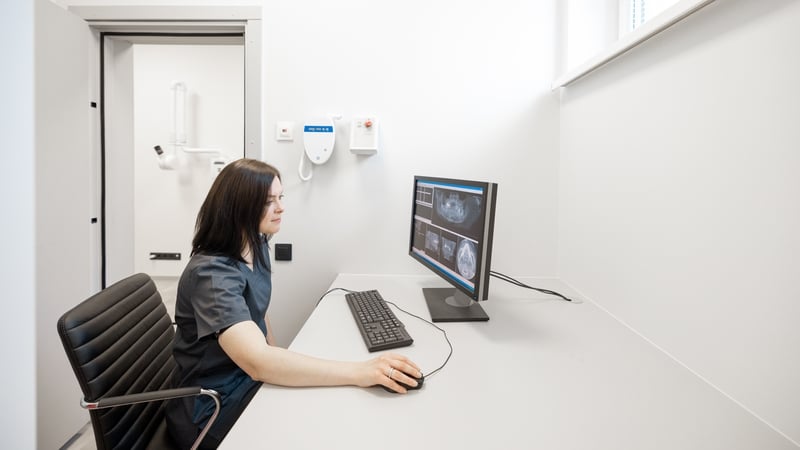
When a patient is sent for an X-ray, CT scan or MRI, the professional operating that equipment is a radiographer. Without them, doctors cannot see inside the body to diagnose a broken hip, detect a tumour, or monitor how a treatment is working. They are the reason a diagnosis happens at all.
We need your consent to load this rte-player contentWe use rte-player to manage extra content that can set cookies on your device and collect data about your activity. Please review their details and accept them to load the content.Manage Preferences
From RTÉ Radio 1's Morning Ireland in June 2024, Kieran Dineen reports that demand for certain medical scans covered under the National Treatment Purchase Fund is close to exceeding supply
A study, published recently in the Radiography journal, surveyed 245 radiographers across 21 countries, with two-thirds based in Ireland. Only 12.1% report being satisfied with their jobs overall. For patients, this matters directly: research consistently links healthcare worker burnout to increased medical errors and longer waiting times.
Good news: radiographers still love their work
One finding offers some reassurance. 66.4% of radiographers remain satisfied with the nature of their work itself. The skill of capturing diagnostic images, the contribution to patient care, and the technical expertise required continue to attract dedicated professionals.
Relationships with colleagues emerged as the most powerful positive influence on job satisfaction, with patient interactions close behind. One respondent put it simply: "It is the love of the profession that keeps me going and the love of working with patients." Radiographers are not burning out because they have lost passion for their work, but because of the conditions surrounding that work.
We need your consent to load this rte-player contentWe use rte-player to manage extra content that can set cookies on your device and collect data about your activity. Please review their details and accept them to load the content.Manage Preferences
From RTÉ Radio 1's News at One in December 2023, Consultant Radiologist at the Mater Hospital Prof. Peter McMahon, about the successful use of AI to assess patient scans
So what are the conditions driving them away?
Pay is a major concern, with 77.1% dissatisfied with their remuneration. The private sector pay gap trails the HSE by nearly 20%, adding to recruitment challenges. Opportunities for career progression prove equally problematic (68% dissatisfied), alongside fringe benefits (73.5% dissatisfied) and recognition for good work (76.4% dissatisfied).
When participants ranked factors reducing job satisfaction, three emerged clearly: poor management, staff shortages, and excessive workload. The responses were direct. One participant wrote: "Huge staff shortages with the same workload expected." Another described feeling "undervalued" with managers who "do not care when I raise concerns."
Nearly half of participants (48.6%) scored high on depersonalisation, detachment from patients and colleagues that represents a key warning sign of professional exhaustion. For patients, this can mean interactions that feel rushed or impersonal, not because the radiographer does not care, but because they are stretched beyond capacity.
We need your consent to load this rte-player contentWe use rte-player to manage extra content that can set cookies on your device and collect data about your activity. Please review their details and accept them to load the content.Manage Preferences
From RTÉ News, INMO report on the number of nurses dealing with exhaustion, burnout and stress
Younger staff are most affected
The research reveals a pattern across age groups. Radiographers aged 25 to 34 showed significantly higher depersonalisation than their colleagues aged 45 to 54. Those with five to 10 years experience demonstrated higher depersonalisation than those with over 20 years in the profession. This mirrors findings among Irish junior doctors, where burnout rates were found to be higher than among US medical residents.
This suggests younger radiographers may face more on-call hours and higher workloads, while having had less time to develop coping mechanisms. A survey among medical residents in Ireland found that 64% of those experiencing burnout symptoms also reported making a medical error, compared with 22% of those without such symptoms. New research indicates that more than two-thirds of health workers are actively considering leaving their role. If early-career professionals continue to leave, the workforce pipeline narrows, and waiting times for scans could grow longer still.
What would help?
The World Health Organisation now classifies burnout as an occupational phenomenon requiring organisational attention. Our participants were clear about what would make a difference: adequate staffing so that workloads become manageable, recognition for the skilled work they do, career pathways that reward expertise, and management practices that reflect clinical realities rather than just budget targets.
We need your consent to load this rte-player contentWe use rte-player to manage extra content that can set cookies on your device and collect data about your activity. Please review their details and accept them to load the content.Manage Preferences
From RTÉ Radio 1's Brendan O'Connor Show, Dr Emily O'Conor, Consultant in Emergency Medicine, talks about her experience of coming back from burnout
The Government's recent publication on Ireland's Future Health and Social Care Workforce acknowledges the challenge, setting out a 15-year strategic direction. The HSE's own Radiology Workforce report notes that the number of radiologists in Ireland per capita is substantially below European norms. Since 2022, more than 1,300 additional training places have been delivered across priority health and social care disciplines, with a further 600 places planned for 2026. The Irish radiology services market is projected to nearly triple by 2030, indicating significant investment ahead.
Internationally, the NHS Long Term Workforce Plan has identified diagnostic radiographers among the allied health professions with the greatest projected shortfalls, reinforcing the global nature of this challenge. AI-powered imaging tools are also being deployed to handle routine diagnostics, potentially allowing radiographers to focus on complex cases. The HSE Healthy Workplace Framework provides a structure for addressing staff wellbeing, and recruitment is actively underway with radiographer positions advertised across the country.
Why this matters for patients
When radiographers are exhausted and demoralised, patients wait longer for scans, diagnoses are delayed. and treatment starts later than it should. As systematic reviews have consistently shown, burnt out clinicians are more at risk of making errors or of practising unsafely. The person who might catch an early-stage cancer on a scan is the same person working their third consecutive weekend because there is no one else available.
The solutions require recognising radiographers not as a background support function but as an essential part of patient care
Addressing radiographer burnout is not simply a workforce issue. It is a patient care issue. Every improvement in their working conditions translates directly into better, faster, more accurate diagnostic services for the public. Recent Fórsa research found that staff shortages and public perception are leading to burnout across the healthcare sector, with a disconnect between workers and management cited as a contributing factor.
The solutions require recognising radiographers not as a background support function but as an essential part of patient care deserving investment to match their contribution. Ireland is not alone in facing these challenges, but acknowledging the problem clearly is the necessary first step toward addressing it.
This article is drawn from a study conducted by Prof Mark E McEntee, Éadaoin Kennedy and Dr Andrew England) (Medical Imaging and Radiation Therapy, UCC); Dr Marie Ryan (Cork University Business School, UCC); Bernice Sarkodie (University College London Hospitals, NHS Foundation Trust) and Professor Ricardo Khine (Institute of Health Sciences Education, Queen Mary University of London)
Follow RTÉ Brainstorm on WhatsApp and Instagram for more stories and updates
The views expressed here are those of the author and do not represent or reflect the views of RTÉ
