



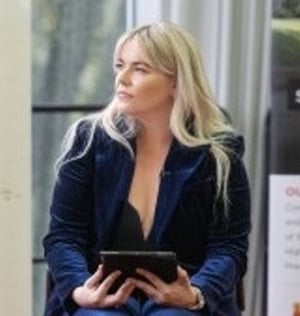

Analysis: Workers may be more connected than ever before, but such accessibility means they're more mentally stretched across multiple tasks and conversations
Have you ever caught yourself checking your emails on your phone while replying on your computer? I was at an in-person meeting recently, physically present at the table but discreetly checking emails, glancing at notifications and replying to messages. I had been in the room for an hour, but my attention had been scattered across multiple digital spaces. As far as everyone was concerned, I was present in the room, but I was not present at all.
As hybrid and digital work becomes steadfast in Ireland, many of us find ourselves more connected than ever. Yet, being accessible is also why we may appear more mentally stretched across multiple tasks and conversations. This raises a fundamental question for modern workplaces: what does it really mean to be present at work?
We need your consent to load this rte-player contentWe use rte-player to manage extra content that can set cookies on your device and collect data about your activity. Please review their details and accept them to load the content.Manage Preferences
From RTÉ Radio 1's The Business, psychologist Leisha McGrath on how to deal with distractions during the working day
Digital presence without cognitive presence
One of the paradoxes of modern work is that we are more reachable than ever, but does this mean that we are always mentally available? A recent Work Trend Index Special Report found that the average worker receives 117 emails daily, most of which are skimmed in under 60 seconds. Emails are checked on the go, between tasks and responses are sent while walking between meetings or commuting. We may reply quickly, but not deeply.
This constant task-switching comes with a cost. Every time we shift attention between tasks, our brain expends energy to reorient itself. Over time, this fragmentation can reduce concentration, increase errors and leave us feeling mentally exhausted. In other words, being digitally present does not mean we are mentally present. We may appear responsive, but our capacity for meaningful engagement is often diluted.
Physical presence without psychological presence
The same paradox appears in physical spaces. Many of us sit in meetings while monitoring email, Teams, Slack or WhatsApp. We may be physically in the room yet mentally divided across multiple conversations and responsibilities, with people both within and outside the room.
We need your consent to load this rte-player contentWe use rte-player to manage extra content that can set cookies on your device and collect data about your activity. Please review their details and accept them to load the content.Manage Preferences
From RTÉ Radio 1's The Business, Dr. Tom McDonnell from the Nevin Economic Research Institute on their new study which suggests that Irish workers may be among the least productive in Europe
This is not necessarily about poor manners or lack of commitment. It reflects a broader cultural pressure to always appear reachable and productive. In hybrid environments, being offline, even briefly, can feel risky, as if visibility equates to value or monitoring or surveillance of employees is par for the course.
The result is a form of what might be called a "presence theatre": we are in the meeting, but only partially engaged; we are at our desks, but mentally elsewhere. This can weaken collaboration, reduce creativity and undermine genuine connection between colleagues.
The hidden weight of cognitive load
Underlying these behaviours is a growing cognitive burden. Modern workers juggle multiple communication channels, constant notifications and the implicit expectation of rapid response. Even when not actively working, many carry a mental list of unread messages, pending tasks and potential interruptions.
Psychologists describe this mental burden as cognitive load; the total effort our brain uses to process information and complete tasks. When cognitive load is high, our ability to think deeply, make decisions and regulate emotions is reduced. Over time, this can contribute to fatigue, frustration and burnout.
We need your consent to load this rte-player contentWe use rte-player to manage extra content that can set cookies on your device and collect data about your activity. Please review their details and accept them to load the content.Manage Preferences
From RTÉ Brainstorm, are you stuck in the wrong job? 5 signs it's time to move on
Why this matters in Irish workplaces
According to the CIPD, 91% of Irish employers offer flexible working arrangements, with many organisations recognising the benefits for productivity, inclusion and work–life balance. However, flexibility can also blur boundaries and create new pressures to be constantly available.
The "right to disconnect" code of practice signals a growing recognition that availability has limits. The Health and Safety Authority also advise employers to assess and manage psychosocial hazards, such as workplace stress, including workload and work patterns, as part of their risk assessments. But policies alone are not enough. Workplace norms, leadership behaviours and digital cultures ultimately determine whether employees feel safe to log off and focus. For employers, the question is how do we ensure that digital connectivity enhances work rather than erodes attention, well-being, and meaningful engagement?
Rethinking what it means to be present
Presence at work is not just about being logged in, sitting in a meeting or responding quickly to messages. It is about attention, engagement and psychological availability. Being truly present might mean:
- focusing on one task without interruption
- listening fully in a meeting without multitasking
- disconnecting to recover and think deeply
- responding thoughtfully rather than instantly
In a culture that prizes speed and visibility, these behaviours can feel countercultural. Yet they are essential for high-quality work, healthy relationships and sustainable performance.
We need your consent to load this rte-player contentWe use rte-player to manage extra content that can set cookies on your device and collect data about your activity. Please review their details and accept them to load the content.Manage Preferences
From RTÉ Radio1's Today with Claire Byrne, is multi-tasking a myth or the key to productivity?
What can organisations do about this?
Organisations have a significant role to play in redefining presence.
Set clear expectations around availability.
Not every message requires an immediate response. Clarifying response-time norms can reduce pressure and cognitive load.
Model healthy digital behaviour.
When leaders send emails late at night or multitask in meetings, they implicitly signal that constant availability is expected. Modelling boundaries sends a powerful alternative message. And if emails must be sent outside standard working hours, scheduling them can reduce pressure on others.
Create spaces for deep work.
Encouraging device-free meetings, protected focus time, and asynchronous communication can help employees engage more meaningfully.
Constant connection does not guarantee meaningful engagement
Value outcomes over online visibility.
Shifting focus from "being seen" to "delivering impact" reduces the incentive for digital presenteeism and fragmented attention.
Being present in an always-on world
Technology has transformed how we work, offering flexibility, connectivity and opportunity. But it has also changed how we experience presence in subtle ways. As Irish workplaces continue to evolve, we may need to ask not just whether we are present, but how we are present. Constant connection does not guarantee meaningful engagement. Sometimes, being truly present requires stepping back, logging off and giving our full attention to the task, the meeting or the person in front of us.
Follow RTÉ Brainstorm on WhatsApp and Instagram for more stories and updates
The views expressed here are those of the author and do not represent or reflect the views of RTÉ

