

Analysis: The increasing number of destructive floods may mean a move to planned relocations and providing safer alternatives over decades
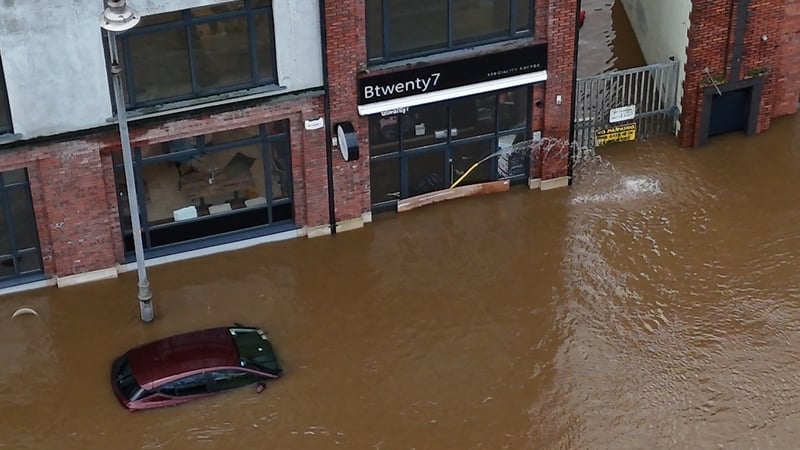
Flooding is becoming one of the most visible signs of climate change in Ireland, yet our response still assumes communities can always be defended in place. Recent flood events have highlighted the weakness of our approach to dealing with growing flood risks. For instance, Storm Babet in 2024 flooded 600 homes and 300 businesses in Midleton and cost €200 million in damages. The true cost of flooding in the east and south of Ireland in the last few weeks won't be known for some time, but it will likely result in damages of tens of millions of euros.
Our current national approach to dealing with flooding remains largely fixated on implementing new or strengthening existing flood defences. This view has again dominated political and media discussions following recent storms, with calls to accelerate delivery of new defences.
We need your consent to load this rte-player contentWe use rte-player to manage extra content that can set cookies on your device and collect data about your activity. Please review their details and accept them to load the content.Manage Preferences
From RTÉ Radio 1's Drivetime, how do we prepare for future flooding events?
For many families, flooding means repeated repairs ,insurance battles and anxiety every time heavy rain is forecast. Continuing to rebuild and defend repeatedly flooded areas may ultimately cost far more than helping communities move to safer locations. Flood defences remain important, but they are increasingly unlikely to provide permanent protection everywhere.
Other countries have recognised that it is not possible to permanently protect the public with flood defences and are considering more transformative approaches like planned relocation. Planned relocation does not mean forcing communities out. In many countries, it involves voluntary buyouts, long-term planning and providing safer alternatives over decades.
Some countries are already permanently moving people away from environmental risks, including New Zealand and the Netherlands. Following the Canterbury earthquakes between 2010 and 2013, government financial assistance resulted in the relocation of 8,000 households to less vulnerable areas at a cost of around €500 million. Relocation was framed as a positive outcome focused on improving outcomes for future generations.
We need your consent to load this rte-player contentWe use rte-player to manage extra content that can set cookies on your device and collect data about your activity. Please review their details and accept them to load the content.Manage Preferences
From RTÉ Six One News in Feb 2017, Government's flooded homes relocation scheme to start in March 2017
The Netherlands have reduced flood risk by working with nature rather than against it. Its flagship flood risk management programme, Room for the River, compensates farmers to transform farm land into an active floodplain. While only 65 homes were relocated, flood risk was reduced for 60,000 people in one region alone. These cases show relocation and land-use change can be implemented and increase long term societal resilience.
In Ireland, the need to plan for relocation was reflected in 2023 by an Inter-Departmental Group recommending that the State plan for proactive relocation as a response to climate impacts. However, little or no progress on planned relocation nationally has been made since this.
Findings from other countries show that successful relocation takes decades to plan and implement. Evidence from the Netherlands demonstrates the value of planning relocation well ahead of anticipated climate impacts to give people time to adjust and voluntarily move. This contrasts with situations where relocation has been undertaken after damaging climate events (e.g. after Hurricane Sandy in New York in 2012 and Hurricane Katrina in New Orleans in 2005). Reactive relocation can increase community stress and costs , limit work opportunities or sometimes lead residents to refuse to leave high-risk areas because of strong place attachment.
We need your consent to load this rte-player contentWe use rte-player to manage extra content that can set cookies on your device and collect data about your activity. Please review their details and accept them to load the content.Manage Preferences
From RTÉ Radio 1's Countrywide, is the way we are farming partly responsible for flooding and what changes might decrease damage in the future?
For communities at risk, planned relocation is likely to result in uncomfortable discussions. Many people have deep connections to where they live and relocation may threaten their identity, livelihoods and community networks, alongside concerns about impacts on health and wellbeing. However, remaining in communities that repeatedly experience flooding in the coming decades is equally likely to cause long-term mental, social and financial distress.
As recent events have shown, our current approach to managing flood risks is increasingly inadequate. Building new or higher flood defences will remain necessary in some places, but we must also begin considering relocation as a longer term option in some areas. Policy and practice on planned relocation is already at least 20 or 30 years behind where it needs to be.
The real question is not whether relocation will eventually happen in parts of Ireland, but whether we plan carefully now or wait until disasters force rushed decisions later. We need a national conversation about proactively moving people away from increasingly unsafe places. There is a lot to learn from other countries that are actively deciding that flood defences alone cannot solve long-term climate risks, and are instead moving people away from such risks altogether.
Follow RTÉ Brainstorm on WhatsApp and Instagram for more stories and updates
The views expressed here are those of the author and do not represent or reflect the views of RTÉ