

Analysis: America's departure from the multilateral principles that NATO was founded upon will force the organisation to redefine its future strategy
What would happen if one NATO country invaded another NATO country? Bizarre as that scenario sounds, this question is being considered in light of recent comments about Greenland from US president Donald Trump and his administration.
Peter Apps' book Deterring Armageddon: a biography of NATO charts the history of that organisation and the existential threats that it has faced since its foundation in 1949. For much of that period, the key threat came from the former USSR. In recent years, NATO has tried to redefine itself to respond to new threats including terrorism, cyber-warfare, and a re-emergent Russia.
We need your consent to load this rte-player contentWe use rte-player to manage extra content that can set cookies on your device and collect data about your activity. Please review their details and accept them to load the content.Manage Preferences
From RTÉ News, European Commissioner for Defence and Space Andrius Kubilius says a US military takeover of Greenland would end NATO
But the first year of Trump's second presidency has seen the US emerge as the number one threat to the future of NATO. Following on from the Venezuelan operation, Trump immediately flagged Greenland as the location for his next intervention. The president has been a frequent critic of NATO, and the proposition of simply seizing Greenland is a potential "double whammy", as it would allow him access to that island’s vast resources, while also punishing and undermining NATO.
Trump’s statement that Greenland is key for US national security is not without merit. The island holds a key strategic position for the defence of America, Canada and the Arctic generally. It is also a key location for the monitoring and control of activity in space: the majority of US units currently stationed there are part of Space Command. But this argument is undermined by America’s consistent reduction in its defence capacity on Greenland since the beginning of this century.
American designs on Greenland are nothing new, and recent discussions have outlined the level of defence potential that would come from increased involvement in the Arctic in general. America has previously offered to buy the island; in 1946, Harry S. Truman offered to buy Greenland from Denmark for $100 million, in gold. The message then was that Greenland was not for sale and this remains the case today.
We need your consent to load this rte-player contentWe use rte-player to manage extra content that can set cookies on your device and collect data about your activity. Please review their details and accept them to load the content.Manage Preferences
From RTÉ News, RTÉ Deputy Foreign Editor Edmund Heaphy on comments by Donald Trump that the US will take Greenland 'whether they like it or not'
It could be argued that the diplomatic route has always brought more success and that the Defence Agreement of 1951 between America and Greenland should be a sufficient starting point in any new conversation. This was the basis for a large American presence during the Cold War, and the conditions of this agreement could surely be renegotiated with the current Greenland and Danish governments. US Secretary of State Marco Rubio is due to meet representatives of both governments this week, and we can only hope that sensible diplomacy will prevail. It is unclear at this time if Greenland’s natural resources are also up for discussion.
At present, the preferred American option would seem to be simply invade and seize the island. This suggestion advertises not only historical illiteracy, but also a lack of understanding of American obligations as part of NATO and, indeed, its own 1951 treaty with Denmark. An armed invasion of Greenland would technically trigger Article 5 of the NATO treaty, of which the US is a signatory. The opening line of the NATO description of the relevant article reads Article 5 of the North Atlantic Treaty states that an armed attack against one NATO member shall be considered an attack against all members, and triggers an obligation for each member to come to its assistance.
To date, Article 5 has only been triggered once, and that was following the 9/11 attacks on America. Among the NATO nations that supported the US at this time, the Danish government deployed troops to Afghanistan and Iraq. Danish troops serving in Afghanistan suffered 44 fatal casualties, which was the highest per capita death rate among coalition members. A further eight Danish soldiers died in Iraq. Recent comments by Trump would suggest he is unaware that NATO did indeed respond to the attack on America by triggering Article 5, which again shows a tragic lack of awareness of his own nation’s recent history.
We need your consent to load this rte-player contentWe use rte-player to manage extra content that can set cookies on your device and collect data about your activity. Please review their details and accept them to load the content.Manage Preferences
From RTÉ News, Belgium recommends NATO operation in the Arctic to address US security concerns
How would NATO respond in Greenland? Due to the increase in Russian and Chinese activity in the Arctic, there has actually been a build-up in NATO presence in the Arctic region in recent years. The growing disenchantment between America and NATO over the last year has resulted in an acceleration of this programme, even before the recent announcements about Greenland.
This effort has largely focused on Standing NATO Maritime Group 1 (SNMG1), which is focused on maritime security and anti-submarine activities in the Arctic and Baltic regions. It is made up of destroyers, frigates and support vessels from the Netherlands, Germany, Portugal, Finland and Sweden, and is currently commanded by Commodore Arjen S. Warnaar of the Royal Netherlands Navy. A further German vessel, the frigate Sachsen, left Wilhelmshaven last week and is en route to reinforce SNMG1. The UK government has also announced an expansion of its mutual defence agreement with Norway, which includes anti-submarine defence operations and an increase in land forces.
As for Denmark, prime minister Matte Frederiksen has confirmed that Denmark would resist any move on Greenland, while the Danish forces have been reminded of a 1952 directive that allows them to respond to any attack on Danish territory, without waiting for orders from higher command. In September 2025, the Danish army held a combined exercise (Arctic Light) with French, Swedish, Norwegian and German forces, focusing on the defence of Greenland.
We need your consent to load this rte-player contentWe use rte-player to manage extra content that can set cookies on your device and collect data about your activity. Please review their details and accept them to load the content.Manage Preferences
From RTÉ Radio 1's Morning Ireland, how do Greenlanders feel about Trump's ambitions to take over their homeland?
More widely, leaders of prominent NATO nations have confirmed their support. The reaction to an American invasion could include economic sanctions, travel bans, ceasing intelligence-sharing and military co-operation, or a request that American forces leave NATO bases across Europe. In the latter case, the US stands to lose much, as the presence of American forces across the NATO countries gives them a substantial strategic reach. Would America be willing to trade its status as a global power to become a regional power?
There has been much comment in the last week that an American move on Greenland would signal the end of NATO. In many ways, America has already departed from the multilateral principles that NATO was founded upon. This latest phase merely underscores that withdrawal and will force NATO to redefine its future strategy. This will require new strategies on all aspects of defence, from the positioning of forces and bases, to weapons production, and to how Britain and France strategise their nuclear deterrents.
As America signals its growing disinterest in NATO, an organisation it was the prime mover in establishing, other nations are signalling their interest in joining, in particular Australia, which has deepened its links to NATO in recent years.
Within all of this geopolitical posturing, the people of Greenland are struggling to be heard
Another consideration is the rebirth of imperial levels of ambition, with a return to the concept of dividing the globe into spheres of interest. Undermining NATO will only increase this trend, and it will embolden Russia and China to consider expanding their territories.
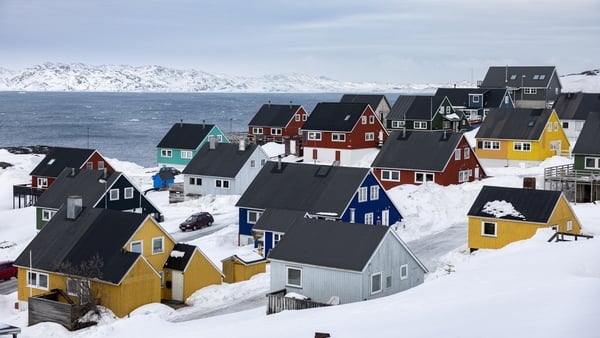
Within all of this geopolitical posturing, the people of Greenland are struggling to be heard. They have signalled that they want the consideration and respect due to an autonomous state, and to be the key voice in any discussions on the future of their highly strategic homeland.
Follow RTÉ Brainstorm on WhatsApp and Instagram for more stories and updates
The views expressed here are those of the author and do not represent or reflect the views of RTÉ