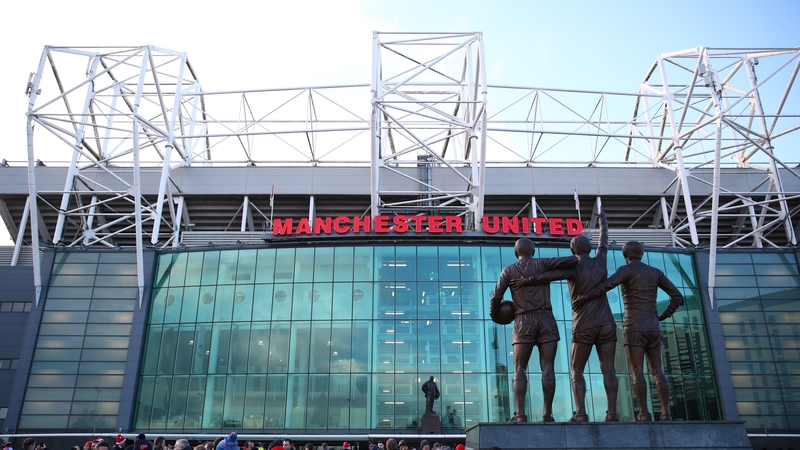


Analysis: The ongoing turmoil at Old Trafford shows how a toxic work environment can quietly destroy performance from the inside out
The facts are stark. 10 managers in 12 years. A rash of controversial cost-cutting decisions, including firing almost 450 staff, swapping free hot lunches for fruit and ending the ambassadorial role held by the club's greatest ever leader. A team branded 'the worst, probably, in the history of the club' by their own manager.
The ongoing turmoil at Manchester United is a case study of a deep, and unfortunately not uncommon, organisational problem that research shows can quietly destroy performance from the inside out. A toxic work environment does not announce itself loudly. It creeps in quietly, disguised as pressure, ambition, or high standards. Left unchallenged, it destroys trust, drains energy, and ultimately sabotages performance.
A toxic environment has four key ingredients. First are abusive leaders who show favouritism, ignore complaints, or prioritise results at any cost. Leaders who fail to intervene, stay silent, or reward high performers who behave badly also contribute to toxicity.
We need your consent to load this rte-player contentWe use rte-player to manage extra content that can set cookies on your device and collect data about your activity. Please review their details and accept them to load the content.Manage Preferences
From RTÉ Radio 1's Today with Davis McCullagh, sports correspondent with The42 Gavin Cooney on the sacking of Ruben Amorim as Manchester United manager
Manager Ruben Amorim's dismissal of players like Kobbie Mainoo (who, aged just 19, started for England against Spain in the Euro 2024 Final) as ‘not good enough’ and his insistence on sticking to a rigid playing system, despite results, show a level of inflexibility that cannot come without consequences.
Second are organisational policies and practices of unrealistic targets, cut-throat competition and non-responsiveness to complaints, all of which signal to employees that that survival matters more than decency. In 2018, former Executive Vice-Chairman of Manchester United Ed Woodward told shareholders that on-field performance did not have a "meaningful impact" on the commercial side of the club.
Next is the organisation’s culture. Stories about "how things really work," unwritten rules, peer pressure, and role models all reinforce the same destructive climate. Ask any Manchester Utd fan and they will give you a long list of the worst signings for the club - with both recent recruits and boyhood stalwarts such as Garnacho, Antony, Jadon Sancho and even Marcus Rashford (now at Barcelona) blamed for destroying workplace harmony (and subsequently bombed out of the club).
We need your consent to load this rte-player contentWe use rte-player to manage extra content that can set cookies on your device and collect data about your activity. Please review their details and accept them to load the content.Manage Preferences
From RTÉ Radio 1's Inside Sport, Marie Crowe assesses a busy day for club sackings with Jamie Jackson, Stephen Kelly and Paul John Dykes
Finally, the stress and power struggles generated by critical events, such as a public scandal or sudden performance crisis, are allowed to run riot rather than curtailed and shut-down. A quick glance at the miles of newsprint and thousands of hours of podcasts dedicated to the firing of Amorim this week gives you an idea of how much content has been generated by the club’s decision - and there’s no sign of it slowing down any time soon.
Over time, these four factors allow a toxic culture to take root and hostility, fear, blame, and mistrust embed themselves into everyday working life. The consequences of such work environments are devastating. Stress levels rise, trust is destroyed, conflict escalates and performance suffers. Once this takes hold, it becomes difficult to change because the problem is not just "one bad apple," but the barrel itself.
One of the most important insights from research on toxic workplaces is that toxicity is shared. In football, the dressing room develops a collective understanding of "how things really work here." If players believe mistakes will be punished rather than coached, that favouritism overrides merit, that accountability is inconsistent or that conflict is handled through blame rather than resolution, toxicity takes hold, even if no one formally endorses it.
We need your consent to load this rte-player contentWe use rte-player to manage extra content that can set cookies on your device and collect data about your activity. Please review their details and accept them to load the content.Manage Preferences
From RTÉ Radio 1's Today with Claire Byrne in February 2025, Manchester Football Correspondent for The Guardian Jamie Jackson on Man Utd closing the club canteen as part of cutbacks
Once that climate forms, behaviours spread quickly. Frustration turns into passive resistance. Confidence gives way to fear. Effort becomes selective. Players stop taking risks, not because they don’t care, but because it feels risky to do so. From the outside, this is often misread as poor attitude or lack of fight. From the inside, it feels like survival.
Old Trafford is not just any workplace, but home to a global brand under relentless scrutiny. Research shows extreme performance pressure is one of the strongest accelerants of toxic climates. When winning becomes the only acceptable outcome, empathy drops, patience evaporates and short-term fixes replace long-term thinking. Leaders become reactive, mistakes are punished rather than learned from and fear quietly replaces trust.
Late last year in an interview with the Sunday Times, former United player Christian Eriksen spoke about how the players felt after being branded "the worst team, maybe, in the history of Manchester United" by Amorim after a loss to Brighton. "I don't think that helped the players at all. Some stuff you can say inside and it's not too clever to say outside, to put extra pressure and put an extra label on the players who were already trying to do their best… if he's right or wrong, whatever, but I think for us it was a bit of like 'oh, here we go again. Another headline'."
We need your consent to load this rte-player contentWe use rte-player to manage extra content that can set cookies on your device and collect data about your activity. Please review their details and accept them to load the content.Manage Preferences
From RTÉ Radio 1's Today with Claire Byrne in April 2025, Manchester Football Correspondent for The Guardian Jamie Jackson on why this Man Utd team could be the worst of all time
One of the most damaging consequences of this kind of environment is silence. People learn quickly that it is safer to keep their heads down than to challenge what is wrong. When co-owner Jim Ratcliffe publicly suggested that some players were "not good enough" and "probably overpaid," it reinforced a blame-downwards culture. In workplaces like this, people stop speaking honestly. They stop challenging bad decisions. Problems go underground and by the time they surface publicly through poor results or scandals, the damage is already done.
Another red flag psychologists take seriously is what happens when people leave. Manchester United has become a case study in this pattern. Players once labelled underperformers have gone on to thrive elsewhere such as Scott McTominay winning Serie A with new club Napoli, followed by Rasmus Højlund also reviving his career in Italy, and Dean Henderson lifting the FA Cup with Crystal Palace. Aforementioned so-called ‘flops’ Garnacho and Antony have gone on to better things at Chelsea and Real Betis respectively and Álvaro Carreras is now at Real Madrid. When this happens occasionally, it is a coincidence, but it’s happening repeatedly at Manchester United.
A common response to toxicity is leadership change. Football culture loves a reset: sack the manager, promise a fresh start. But the research is blunt: removing one leader from a toxic system does not automatically change the climate. If unclear accountability, mixed messages from the top, inconsistent standards, and political interference persist, the same patterns re-emerge.
We need your consent to load this rte-player contentWe use rte-player to manage extra content that can set cookies on your device and collect data about your activity. Please review their details and accept them to load the content.Manage Preferences
From RTÉ Brainstorm, do you work in a toxic workplace? Here's what to do about it
The good news is that toxicity is not inevitable. Because toxic cultures are learned, they can also be unlearned. But prevention requires discipline and consistency, not quick fixes. Here are four things the next manager should keep in mind, be it Ole Gunnar Solskjær, Oliver Glasner or even (though the odds are ever higher) MUTV favourite Roy Keane.
First, leadership behaviour matters more than slogans. Leaders set the tone through what they tolerate, not what they say. Ignoring destructive behaviour when results are good sends a clear message that values are conditional. Over time, that corrodes trust. Instead, leaders can eliminate toxicity by setting clear behavioural standards, modelling respect and accountability themselves, intervening early when behaviour crosses the line, and creating an environment where people feel safe to speak up without fear of blame or retaliation.
Second, organisational systems must align with stated values. Performance metrics, promotion decisions, and reward structures should reinforce respectful behaviour, not undermine it. Mixed signals whereby the talk is about teamwork but the walk rewards aggression are a fast track to toxicity.
We need your consent to load this rte-player contentWe use rte-player to manage extra content that can set cookies on your device and collect data about your activity. Please review their details and accept them to load the content.Manage Preferences
From RTÉ Archives, Tony O'Donoghue reports for RTÉ News in November 2005 on reaction to the end of Roy Keane's playing career at Manchester United after 12 years
Third is something called psychological safety. This means that people must feel it’s okay to speak up without fear of punishment or ridicule. This is not about being "soft"; it is about catching problems early, before they metastasise into crises.
Finally, culture change takes time. Research suggests deeply embedded toxic climates can take years to shift, not months. That is uncomfortable in elite football, where results are demanded immediately. But the alternatives of endless churn, declining performance, and wasted talent are far worse.
The dynamics at Manchester United matter because they reflect something many workers recognise instantly. Organisations that rely on fear, insecurity and symbolic punishment rarely get the best out of their people, no matter how talented they are. The real challenge is not finding the next manager or leader; it is building an environment where the next one has a genuine chance to succeed.
Follow RTÉ Brainstorm on WhatsApp and Instagram for more stories and updates
The views expressed here are those of the author and do not represent or reflect the views of RTÉ