

Analysis: From mummers to wren boys, the practice of rambling from house to house in rural Ireland lifted isolation for many communities at Christmas
The Christmas and new year period sees festivities and celebrations within families and communities all across Ireland. Traditionally in Ireland this time has been associated with a form of music and pageantry performed by a group known as Mummers, who along with 'Wren Boys' and a host of other characters, have long roots in Irish festive culture.
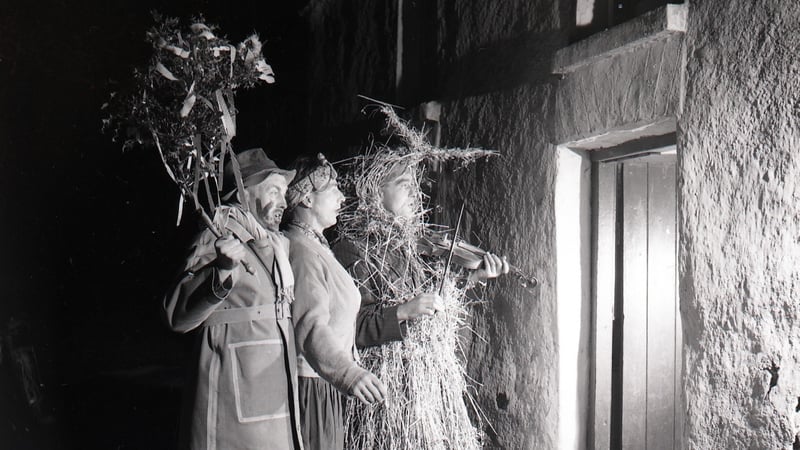
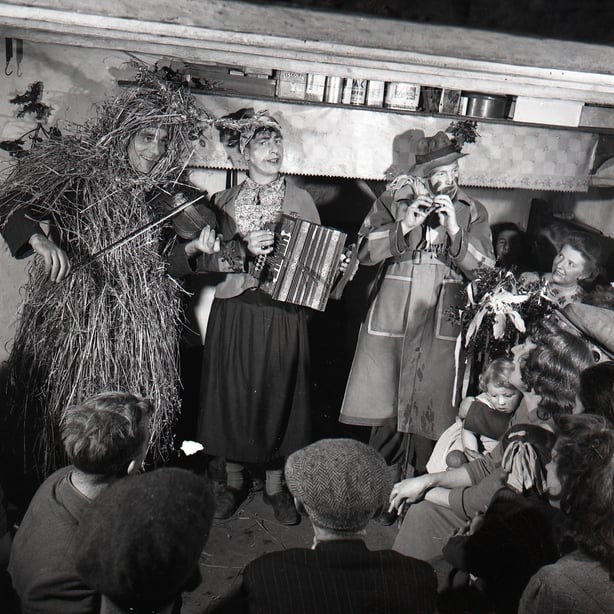
Mumming is a traditional practice once seen all across Ireland generally over the Christmas and new year period. Mummers typically wear straw masks, straw costumes or elaborate outfits. A ‘Captain’ mummer will lead the group from house-to-house where they will seek permission before entering and performing, all elaborately dressed and identities often all but hidden behind decorative straw masks and costumes.
Mummers can also overlap with the Wren Boys who would also dress elaborately in costume, wear make-up or blacken their faces, and carry a branch or bush of holly or ivy decorated with rags or ribbons and have an effigy of a wren. Though revered in song and folklore as "the king of all birds", a wren was hunted and killed in past times. This relates to the practice of 'going on the wren' (pronounced 'wran') on St. Stephen’s Day, or in Irish, Lá an Dreoilín, and is specific to the 26th December.
The wren, the wren, the king of all birds / On Saint Stephen's was caught in the furze / Up with the kettle and down with the pan / And give us a penny to bury the wren.
Various lore tells of various versions, but stories of its origins range from the hiding place of St. Stephen or that of the Irish being betrayed by the wren to their would-be captors and invaders. The wren would then be hunted and buried annually.
Synonymous to both mumming and the wren boys is calling to houses of friends and neighbours for an evening of merriment. Songs were sung, plays performed, and stories told, all in return for a donation of money, food, or drink, to continue the celebrations.
From RTÉ Brainstorm, how the wren became the king of all birds
Mummers can be active at various times in the year, depending on location and local tradition. All Souls Day (2nd November), the early weeks of December, or around harvest time and afterwards in August through October as summer passed into Autumn, as well as Christmas time, were all associated with mummers and mumming.
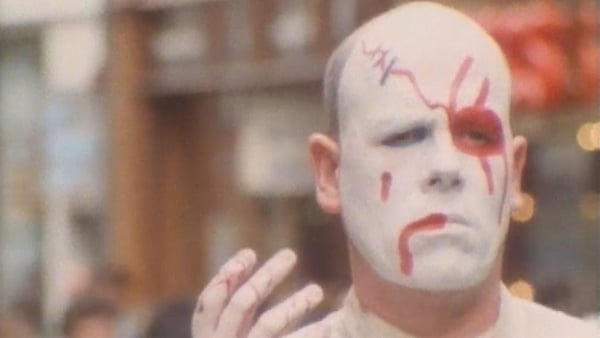
Mumming takes the form of music, song, storytelling and usually a short folk play. There are common traits to the song, music, dance, and the short play performed. An example is recorded as part of a news report in Swords, Co. Dublin in 1964, where both Mummers and Wren Boys feature, performing and playing to a delighted audience of children and adults.
The mummer recounts how the performance would have three characters – an Irish soldier, a doctor, and a Prince George. Within the skit there must be combat, death, and a miraculous recovery. This was said to symbolise the passing of winter and to look forward to the coming of spring and to revival of life in nature.
We need your consent to load this rte-player contentWe use rte-player to manage extra content that can set cookies on your device and collect data about your activity. Please review their details and accept them to load the content.Manage Preferences
From RTÉ Archives, a mummer in Swords explains mumming to reporter Des Keogh in a December 1964 episode of Newsbeat
Other mumming characters feature across different versions and communities, such as Jack Straw, Santa Claus, Dr. Brown, The Green Knight, The Turkish Champion, Big Head, Fiddly Funny, Cromwell, amongst many others.
A number of locations have a long association with the practice of mumming and also of ‘the wran’. In Leitrim, for instance, going for "a join", was a term used for mumming and gathering at local houses. Wexford, Dingle, Donegal, Limerick, Swords, Drogheda, Fermanagh and Tyrone, along with localities all across the island of Ireland have long association and tradition with mumming through the 19th and 20th century (and even earlier according to some sources).
In Wexford, groups including the Carne Mummers, the Rosslare Tóstal Festival and Wexford County Council, elected a 'King of the Mummers' annually as part of its local festival. This practice began in 1959 and continued at least through the 1980s.
We need your consent to load this rte-player contentWe use rte-player to manage extra content that can set cookies on your device and collect data about your activity. Please review their details and accept them to load the content.Manage Preferences
From RTÉ Archives, the new King of the Mummers is crowned at Our Lady's Island in Wexford in 1979
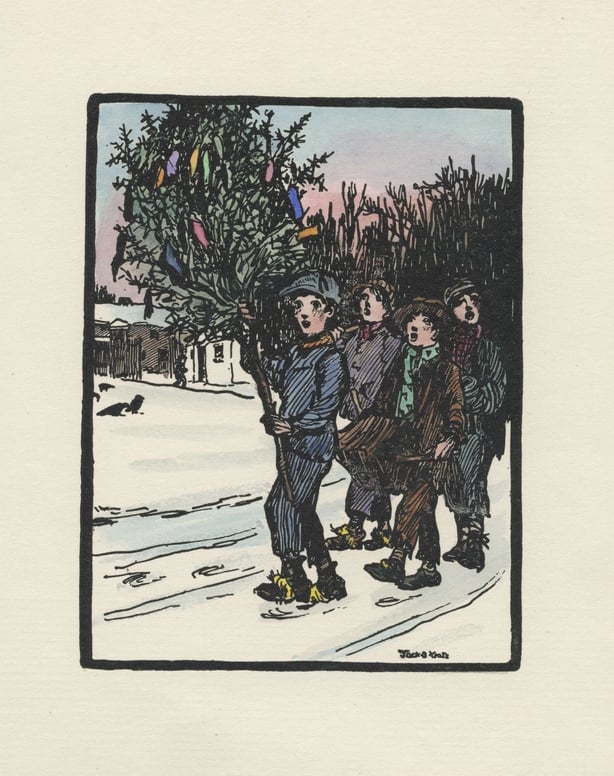
These traditions were picked up and included in work by some of Ireland’s leading artists. Jack B. Yeats drew a scene of the Wren Boys carrying the decorated bush and singing songs in a Christmas scene as part of a hand-coloured and printed broadside published by Cuala Press. Yeats was keenly aware of costume, festivities, children, and families. He also completed an oil painting called ‘The Bang The Door Boys’ (another term for a group raucous visitors to your house) in 1944 that was set at Halloween (or Samhain) and again showed masked young revellers coming to a front door with songs and stories.
In 1991, writer and broadcaster Vincent Woods had his new play At The Black Pig's Dyke premiered by Galway’s Druid Theatre Company. Directed by Maolíosa Stafford, the play is based loosely in Wood’s native Leitrim borderlands and features a group of mummers complete with straw masks, but whose stories and lives are foreshadowed by the threat of sectarianism and violence of the then Troubles and conflict in the north of Ireland.
While the practice of mumming largely died away through the 1980s from its peak in earlier decades, it still has stronghold areas today where the tradition is still maintained, in places like Dingle and in Leitrim for example, where dancer and artist Edwina Guckian is working as part of a wider heritage project to revive mumming in Leitrim.
From mummers to wren boys, the practice of rambling from house to house in rural Ireland lifted isolation for many rural communities at festival time, harvest, Christmas andt the New Year. Synonymous with looking forward to brighter times and renewals, mumming brought neighbours of all ages together and preserved a culture and practice long part of Ireland’s heritage.
Follow RTÉ Brainstorm on WhatsApp and Instagram for more stories and updates
The views expressed here are those of the author and do not represent or reflect the views of RTÉ