



Analysis: Music offers a way for people to meet, participate and feel connected in ways that are enjoyable and sustainable
By Hilary Moss and James Burns, UL
Loneliness is increasingly recognised as a significant public health issue. It affects people at all stages of life and is associated with a wide range of adverse health outcomes, including increased risk of cardiovascular disease, impaired immunity, cognitive decline, depression and anxiety. In other words, loneliness carries measurable health consequences that extend well beyond emotional discomfort.
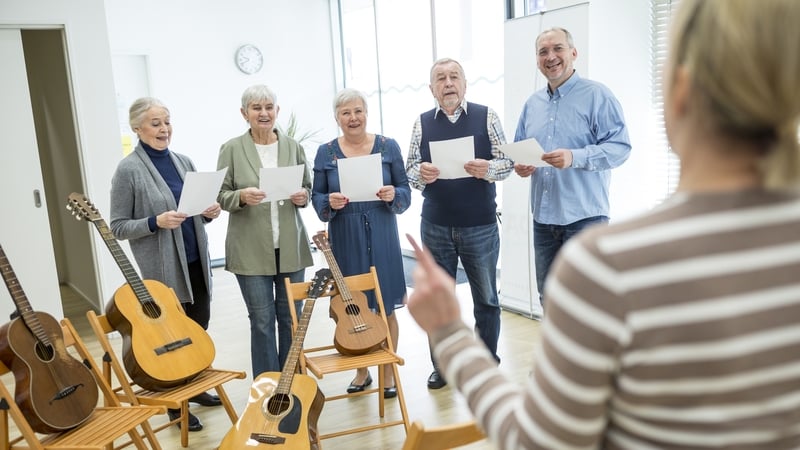
Amid growing concern about social isolation, music has emerged as an especially effective route to connection. Whether experienced through group singing, informal music-making, or online programmes, music can bring people together in ways that are accessible, meaningful and sustainable.
We need your consent to load this rte-player contentWe use rte-player to manage extra content that can set cookies on your device and collect data about your activity. Please review their details and accept them to load the content.Manage Preferences
From RTÉ Radio 1's Today with David McCullagh, freelance journalist Sarah Finnan and Associate Professor in Psychology at Maynooth University Dr. Joanna McHugh Power on how to tackle loneliness
One reason music supports connection is that it offers many ways to take part. Playing, improvising, listening or simply being present while others make music can create a sense of togetherness that feels safe and manageable. People can join at their own pace, without needing to speak or navigate the social demands that some group settings involve. This flexibility makes musical activity accessible to individuals who may feel withdrawn, overwhelmed or unsure how to begin reconnecting with others.
Music also remains accessible for people whose communication has been affected by illness. Many families caring for someone with dementia describe how their loved one may no longer follow a conversation, yet can still hum, tap a rhythm or respond emotionally to familiar songs. These small musical exchanges often create brief but meaningful moments of recognition, allowing relatives to connect in ways that spoken language no longer permit. Similar patterns appear among children recovering from brain injury.
When speech is disrupted, musical interaction can provide an early route back to shared engagement. A simple rhythm, a turn-taking pattern or a familiar melody can help rebuild the foundations of communication long before verbal language returns. What is striking across these situations is that music offers a means of connection when other channels have narrowed. Even when illness has limited someone's ability to communicate socially, music can still open a space for closeness, interaction and presence with others.
We need your consent to load this rte-player contentWe use rte-player to manage extra content that can set cookies on your device and collect data about your activity. Please review their details and accept them to load the content.Manage Preferences
From RTÉ Radio 1's Colm Ó Mongáin Show, Prof Hilary Moss on music therapy as part of the First Fortnight mental health festival
During the pandemic, music became a crucial source of connection for those who were most isolated. Online singing groups and virtual music therapy sessions enabled older adults, family carers and people living with chronic pain or rural isolation to meet others in similar situations. Participants frequently reported that seeing familiar faces each week, even through a screen, reduced their sense of being alone and offered a space for shared experience.
Researchers in Ireland has been exploring these themes in depth. Work at the University of Limerick has examined music-making with older adults at risk of isolation, choirs for people with chronic lung conditions, online groups for individuals managing chronic pain and telehealth music therapy for people with dementia and their carers. Across these varied settings, a consistent finding has emerged: group music-making can create a sense of belonging, improve mood, and provide opportunities for meaningful social connection when other forms of engagement feel out of reach.
Playing, improvising, listening, singing or simply being present while others make music can create a sense of togetherness that feels safe and manageable
In one community group, a simple choice of song opened a powerful conversation. When the group sang Lean on Me, one participant spoke about feeling that they had nobody to rely on. Others in the group responded with empathy and shared local supports that might help. The music created a space where people felt safe enough to speak honestly, something that may not have occurred without the shared experience of singing together.
Music will not solve loneliness on its own. But as part of a wider response to isolation, it offers a way for people to meet, participate and feel connected in ways that are enjoyable and sustainable. Whether through community choirs, online sessions or simply listening with intention, music can support people to reconnect with others, and with themselves, at moments when connection is most needed.
Follow RTÉ Brainstorm on WhatsApp and Instagram for more stories and updates
Prof Hilary Moss is a Professor in the Ageing Research Centre and a memebr of the Health Research Institute and Irish World Academy of Music and Dance at the University of Limerick. Dr James Burns is a postdoctoral researcher at the Irish World Academy of Music and Dance at the University of Limerick. and Senior Music Therapist at the National Rehabilitation Hospital, Dublin. He is a former Research Ireland awardee.
The views expressed here are those of the author and do not represent or reflect the views of RTÉ
