

Analysis: Behind the scenes of treaty negotiations, British military had spent months preparing for a renewed and far more aggressive campaign
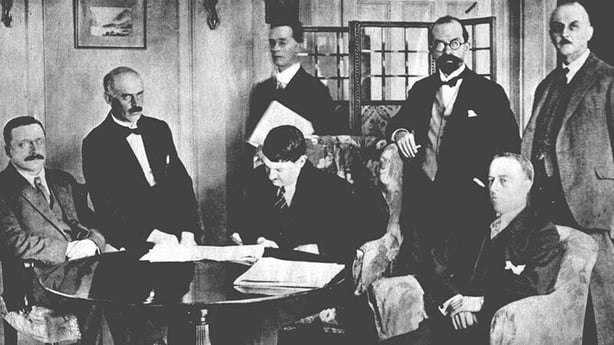
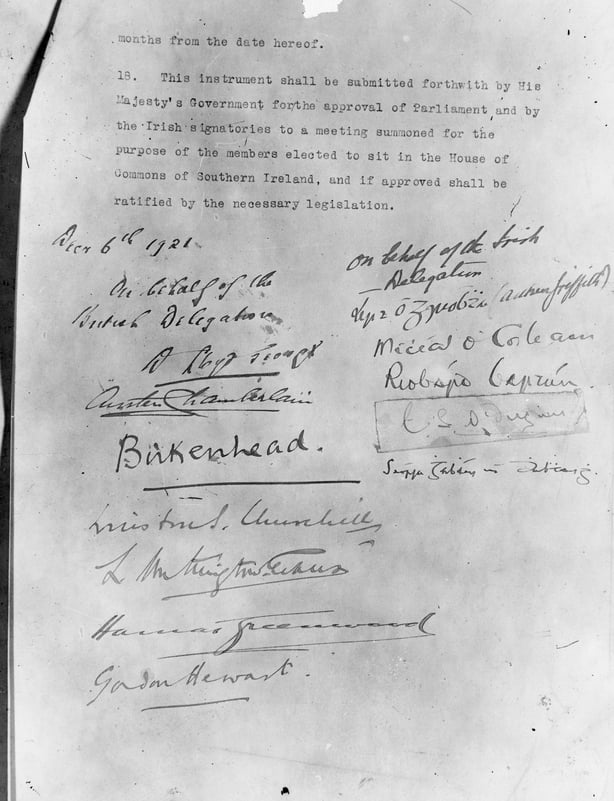
The story is well known. The Irish delegation arrived in Whitehall on 5th December 1921 for the final round of negotiations for the Anglo-Irish Treaty. The British had presented their final offer days previously. It fell far short of Irish aspirations. The draft treaty provided for only a 26 country Irish Free State – which would be a member of the British Commonwealth with a considerable ceremonial role for the British monarch – rather than a 32 country independent republic.
No one in the Irish delegation was particularly enthused. British prime minister David Lloyd George made the stakes brutally clear. The Irish delegation could either accept the treaty or face "immediate and terrible war." They chose the former, but what exactly was entailed in the threat of war and how realistic was it?
The British plans
Behind the scenes, military planners had spent months preparing for a renewed and far more aggressive campaign. ‘Z Day’ – their code name for the resumption of hostilities – would begin with the imposition of martial law across the entire 26-county area. Anyone caught with arms, ammunition, or explosives would be tried by court martial and subject to the death penalty. Those found actively engaged in rebellion were liable to be executed "on the spot". Day-to-day civilian life would be radically curtailed: property could be seized, travel restricted, and public events banned. If considered necessary, rationing and identity cards would be introduced. The civil administration in Ireland would be suspended, replaced by a government "of a purely military character".
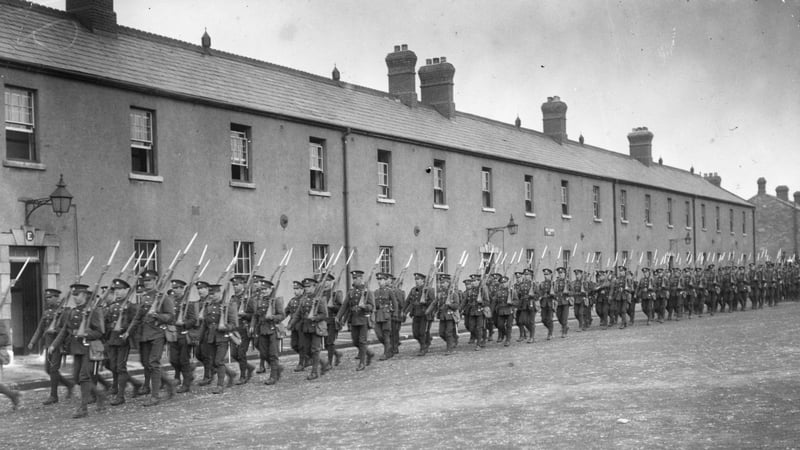
A massive increase in the strength of the British army in Ireland was anticipated. 100,000 additional men were expected to be recruited and transferred to Ireland. Half were needed to bolster the battalions already in Ireland. The other half were needed to act as a reserve force, to provide protection for vulnerable points, and to guard prisoners and internees. After Z Day, up to 20,000 Irish internees were expected to be arrested and transported across the Irish sea to internment camps in Britain. The creation of fortified safe zones for loyalists was also contemplated, with areas like Howth, Bray, and Greystones among the potential sites.
Tactically, the British sought to resume the war on terms more familiar and favourable to them. Wishing to escape from the hit-and-run guerrilla tactics that had proved so effective for the IRA, they sought to force the IRA to stand and fight. In Dublin, for instance, as soon as enough reinforcements arrived (which would take several days), the military would establish a cordon along the Liffey and around the city, allowing only vehicles carrying food and fuel to pass. The military would then begin a sweep of the city, clearing it out section by section, all to force the IRA in the city to gather in a single place where "a decisive blow" could be dealt.
The ensuing battle would have been much more reminiscent of the Easter Rising than anything that occurred in the subsequent five years. Larger and more destructive arms were to be deployed. As explained to British troops in Dublin, "the rebels have experienced rifle fire in a small degree, but at the first opportunity they should be made to experience the combination of tanks with six pounder guns, armoured cars with machine guns, stokes mortars, aeroplane bombs and artillery".
Would Z Day have happened?
These plans represented a massive shift compared to how the War of Independence was fought. While the threat of ‘immediate and terrible war’ would certainly have been made good, how feasible the plans were is questionable. The recruitment of an extra 100,000 servicemen represented a near 200% increase on the forces already stationed in Ireland – a massive and potentially unrealistic increase which would place a substantial burden on the exchequer. The success of the British military’s plans also largely relied on the IRA too. They would be conscious not to become entrapped within a military perimeter, and without a large target of IRA fighters, the military’s tanks, artillery, and aeroplanes would all be quite useless.
Read more: Why did the British army have an artist with them in Northern Ireland?
There was also the political question: would the British cabinet actually have followed through? The government had not formally approved the plans before Lloyd George issued his threat, preferring to wait until negotiations definitively collapsed before making a decision. While there were certainly some in the cabinet who would have supported the plans, others in the government and wider civil society thought such a course would be catastrophic in terms of domestic and world opinion. General Nevil Macready, the British commander in Ireland, had also previously doubted the government’s resolve to escalate the fighting in Ireland. He questioned "does the Cabinet realise what is involved? Will they go through with it? Will they begin to howl when they hear of our shooting a hundred men in one week?"
None of this is to suggest the Irish delegation were wrong to sign the Treaty in the early hours of 6th December. While these plans for a larger, more aggressive, campaign may not have been entirely feasible, even a partial implementation of them would have resulted in far greater collateral damage and an increase in casualties, particularly among civilians. Faced with a choice between the imperfect Treaty and the prospect of a war whose consequences they could not predict, the Irish delegation chose the Treaty.
Follow RTÉ Brainstorm on WhatsApp and Instagram for more stories and updates
The views expressed here are those of the author and do not represent or reflect the views of RTÉ