


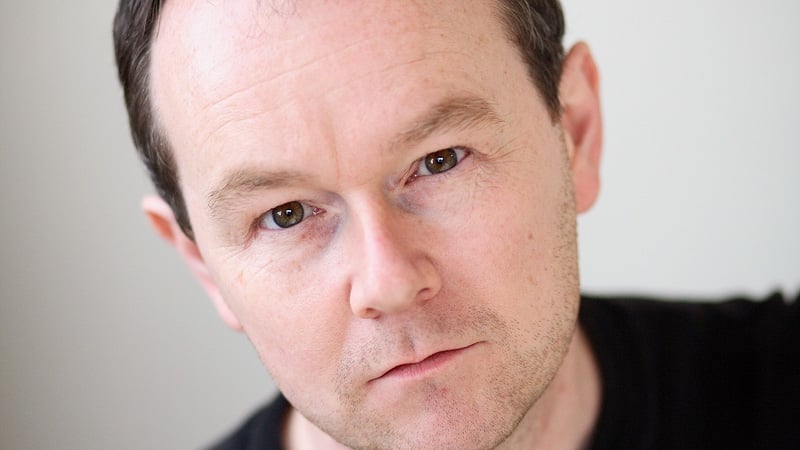
Former TV screenwriter Sean Black is the author of the thrillers 'Lockdown' and 'Deadlock'. Their hero is Ryan Lock, a former member of the British Royal Military Police's Close Protection Unit who now works as a bodyguard for hire. In his first adventure, 'Lockdown', he saved New York; in the just-published 'Deadlock' he must keep a white supremacist gang leader-turned-federal witness alive. The plot is like a mix of 'Assault on Precinct 13', 'In the Line of Fire' and 'The Rock' and the action moves from a prison to a siege in a courthouse to a showdown in San Francisco. Harry Guerin talks to Black about his work.
Harry Guerin: How did you come up with the character of Ryan Lock?
SB: The character of Lock really came from doing a 24-day close protection bodyguard course. I did two weeks [of training] in the UK and a week in the Czech Republic for firearms. The people who gave me the idea for Lock were the two instructors, who were former members of the Royal Military Police Close Protection Unit.
Before I did the course I kind of had in my head what I thought someone who would do that job would be like. All my pre-conceptions were completely wrong. Like most people when you hear the word bodyguard you think of a guy that's six-foot-four and built like a tank with a thick neck. But in order to do the job they're very normal looking because they kind of have to blend into the background.
The other thing I found about them was they were calm, level-headed and the least macho guys I've probably ever met. I think that was because they'd been in terrible situations - one of them had done nine months in Sierra Leone and they'd done Afghanistan - and so I think they felt they didn't need to prove anything to anyone; they didn't have to be the big man. So it was really meeting the people who did the job for real that gave me the idea for Ryan Lock.
HG: And you had gone on the course originally for research for a book?
SB: Originally as an idea for a TV show, because I was writing for TV at the time. Getting a TV show of that nature off the ground... Someone's got to make a massive financial commitment. So we didn't get it off the ground but I had such great material I thought: 'Well, I don't want to waste this'. I'd always had it in my head, like a lot of people I suppose, that I was going to write a novel at some point, so I thought I'd take this material and use it for a book.
HG: For 'Deadlock' your research took you to one of the toughest prisons in the US, Pelican Bay in California. How does a civilian get in there?
SB: [Laughs] It's not easy. The joke was that you had to kill someone to get inside Pelican Bay, but in actual fact even that's not true. Pelican Bay is reserved for prisoners that are violent and disruptive, so even if you commit a terrible criminal offence in California Pelican Bay would not be your first stop.
It took me probably about two or three months of talking and having intermediaries talk to the prison people in California before they decided they would let me in. They were quite reluctant at a high up level to let me inside. A lot of Americans have never heard of Pelican Bay and I think that's quite deliberate to keep it quite quiet. Finally they relented.
Once they'd given me permission to go in they were very forthcoming. I saw every area of the prison I wanted to see.
HG: Did you get to talk to any of the prisoners?
SB: No, there were two rules. One you weren't allowed to talk to the inmates and the second was you weren't allowed wear the colour blue because the inmates wear blue. And they were very tough about it. They said: 'Even if you turn up in jeans you're not getting in'. The reason for that is obviously there's an escape risk - although nobody's ever escaped from Pelican Bay - and the second thing is if there's an incident they've got the sharpshooters in the tower and they don't want to get [shoot] the wrong person.
HG: Thriller author is your second career; you were previously a TV screenwriter. What shows did you work on?
SB: The show probably people would know, or remember the most fondly, was 'Brookside'. I wrote for 'Brookside' from 1999 for four years. That was an absolutely fantastic experience. I know a lot of people are snobby about soaps but in terms of being a writer it's a brilliant apprenticeship. It's why so many of the big TV writers like Jimmy McGovern ['Cracker'], Russell T Davies ['Doctor Who'] and Paul Abbott ['Shameless'] all came up through the soaps because you're constantly working and having to write other people's stories and characters that you might not have chosen to write for.
HG: What else did you work on?
SB: The other show that people would be familiar with was 'Byker Grove'. It was after Ant and Dec, everyone always asks me if I was there for Ant and Dec but I'm not that old. Again, that was great and I'm really proud of some of the stuff I did on that show. We did a lot of issue-based drama and it was a really good way for kids to get their heads around certain things without it being presented in the way 'EastEnders' might do.
HG: So when it came to writing your first book, 'Lockdown', how long did it take you to write it - and get the deal?
SB: I wrote the first draft, which was 80,000 words, and I threw the whole thing out! It was about six months' work and I had stopped writing for TV at the time so I had no money coming in and my wife had gone back to work to support us. I knew halfway through writing that draft that I was going to throw it all out. Like a lot of people I had tried to write novels and got to about 10,000 words and gave up. But this time I thought: 'I'm going to do it'. One of the things I learned from writing scripts is that at some point you think: 'This is the worst thing anyone's ever written'. And so I pushed through and I did that draft and threw it out!
HG: What happened then?
SB: Then we were kind of getting low on money so I wrote the next draft in about four months, and that was much, much better and that was quite close to what we went out with [showed publishers]. Then I started looking for agents and I kind of knew I was on to something because I was just emailing people and very quickly I was getting quite positive responses. I ended up signing with my agent and we worked on it over the summer and I did an extra draft which took me about five weeks and then we went out [to publishers]. Within a week we had our first meeting and within a half-an-hour of the first meeting we had our first offer. And then it just went crazy. In the end we had four publishers who bid and it ended up being a final sealed-bid auction. [It was] Two weeks from the final manuscript going out to the final day of the auction. It was a very, very strange, surreal experience. I was paying my mortgage with a credit card by that time! I was kind of freaked out by the whole thing.
HG: Is it hard getting books out there into the public consciousness and making connections with male readers?
SB: It takes time. It really takes time. Everyone looks at someone like Lee Child, but it was long time before Lee got to Number One - book nine or something. I think with series characters you've just got to keep plugging away. So far sales wise I've got no complaints. We've done great. It's looking like 'Lockdown' will be the best-selling debut thriller in the UK this year. I can't ask for any more than that.
Really as a writer all you can do is write the best book you can at the time and then it's down to the publisher and getting it into the shops and hopefully you make a connection. We've had good feedback. I think the nicest thing for me is when people say: 'Oh normally it takes me a bit longer to read a book but I read yours in two days'. That's the ultimate compliment you can get.
HG: What Irish people who've read your books mightn't know is that you live in Ireland. How did you end up here?
SB: We've got a lot of friends who are Irish. My wife's American and we'd been living in England and we used to come over a lot to visit friends. And we were at a time in our lives where we fancied a change. Our daughter hadn't started school yet and so we thought 'We'll have a bit of an adventure and come over and live in Ireland for a year'. And we just stayed.
We've been here about five years. I managed rather brilliantly to buy a house right at the top of the market so I'm stuck here!
'Deadlock' is published by Bantam.
