Look and Listen About Broadcasting About RTE Archives Sales and Services Our Products
History of RTÉ

Irish Public Service Broadcasting - 1960s

enlarge

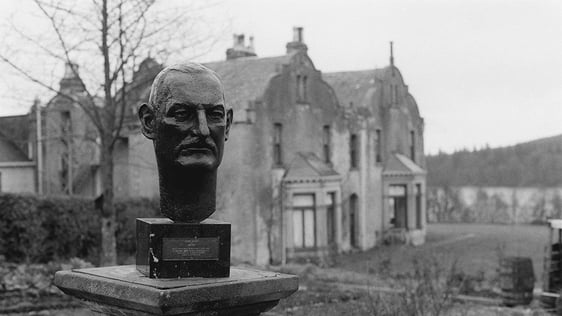
"Weaver's Grave"
Television adaptation
Photographer: Roy Bedell
1963
© RTÉ Stills Library

The Radio Éireann Players win international prize: September 1961

The Radio Éireann Players competed with more than twenty other nations to win the coveted Italia Prize for their production of "The Weaver's Grave". Adapted and produced by Mícheál Ó hAodha, "The Weaver's Grave" was written as a short story by Galway author Seamus O'Kelly. Ó hAodha, when searching for material on the subject of death and burial, decided to select this lesser-known story instead of Joyce's "The Dead". The story is about two old men who search a graveyard for the ancestral grave of a weaver, accompanied by the weaver's widow and two grave diggers. Ó hAodha adapted the descriptive passages into soliloquies, distinguishing them from dialogue by different levels of sound.

Frank Dwyer played the story-teller; Eamon Kelly, the nail-maker; Thomas Studley, the stone-breaker; Peggy Monahan, the weaver's widow; Brendan Cauldwell and Henry Comerford, the grave diggers; Arthur O'Sullivan, the cooper, and Maura O'Sullivan, his daughter.

The play has been broadcast in more than 20 countries and numerous times on RTÉ Radio, and has been produced for television and theatre.


RTV Guideenlarge

"RTV Guide"
Front page
1 December 1961
© RTÉ Stills Library

First edition of "RTV Guide": 1 December 1961

The "RTV Guide" was launched with the promise of "full coverage of all Irish vision and sound broadcasts". The first edition offered listings of Radio Éireann programmes and all BBC television and radio listings. It also carried messages from the Minister for Posts and Telegraphs, Michael Hilliard, and Roibeard Ó Faracháin, the Controller of Programmes at Radio Éireann.

In the first issue of the Guide, the editorial welcomed the timeliness of the publication on the advent of the new television service:

"This magazine fitly appears just as the twin arms of sound and vision prepare together to make our broadcasting service more topical, wide-ranging and enjoyable than ever before".

Not surprisingly, content in the following few weeks' editions of the "RTV Guide" offered readers information on the new television channel. Articles introduced the people who were to be behind the cameras as well as the talent that would appear on screen.

The magazine also carried numerous advertisements for the purchase or rental of television sets.

The "RTV Guide" became the "RTÉ Guide" in 1966.


TV Buildingenlarge

Montrose Studios, Donnybrook
1961
© RTÉ Stills Library

Move to Montrose: 10 December 1961

The News Service was the first department to move to the new Montrose building from the Henry Street studios. The new studios were still being completed, so construction work could be heard during news bulletins.


Eamon Andrewsenlarge

Telefís Éireann, Opening Night
Eamon Andrews
[Freeze-frame]
31 December 1961
© RTÉ

Telefís Éireann, Ireland's National Television Station, Goes On Air: 31 December 1961

New Year's Eve 1961, and the first broadcast of the Irish television service, Telefís Éireann, is made. The first person to address the new television audience was President Eamon de Valera. The President's speech reflected an uncertainty as to what this new medium might bring:

"...I am privileged in being the first to address you on our new service, Telefís Éireann. I hope the service will provide for you all sources of recreation and pleasure but also information, instruction and knowledge. I must admit that sometimes when I think of television and radio and their immense power, I feel somewhat afraid. Like atomic energy it can be used for incalculable good but it can also do irreparable harm. Never before was there in the hands of men an instrument so powerful to influence the thoughts and actions of the multitude."

The opening night formalities also included addresses from An Taoiseach, Seán Lemass, Minister for Posts and Telegraphs, Michael Hilliard and Archbishop of Dublin, John Charles McQuaid, who also gave benediction of the blessed sacrament.

The programmes for the evening included poetry read by Siobhán McKenna and Mícheál MacLiammóir, a look back at the preparations for the television service and an hour of music and song featuring Jimmy O'Dea and Maureen Potter. The highlight of the night was a live broadcast from the Gresham Hotel, Dublin. Cameras filmed the invited guests who dined and danced in the ballroom of the Gresham Hotel, and the public who danced outside in the snow on O'Connell Street.

View an extract from the evening's broadcast here, as Eamonn Andrews wraps up the opening night celebrations for the launch of Ireland's national television station live from the Gresham Hotel.

Programme Title:
Telefís Éireann opening night celebrations
1st Broadcast: 31 December 1961
Clip Duration: 01'50"
Presenter: Eamonn Andrews
Producer: Philip Thompson

TV Clip Look & Listen...


Grace Kellyenlarge

Grace Kelly
[Freeze-frame]
1961
© RTÉ

Visit of Prince Rainier & Princess Grace: Broadcast 31 December 1961

Television crews filmed the state visit of Prince Rainier and Princess Grace of Monaco to Ireland. Thousands turned out to see former Hollywood star Grace Kelly in June 1961. Highlights of the visit were shown on the opening night of Telefís Éireann, Ireland's new television service, on 31 December 1961.

Programme Title:
State Visit of Prince Rainier and Princess Grace of Monaco
1st Broadcast: 31 December 1961
Clip Duration: 1'54"
Note: This clip is mute.

TV Clip Look & Listen...


Cardianal Agaganianenlarge

Cardianal Agaganian
[Freeze-frame]
June 1961
© RTÉ

Patrician Year Celebrations: Broadcast 31 December 1961

As part of the Patrician Year celebrations, the papal legate Cardinal Agagianian blessed the foundation stone to a memorial of Our Lady at Ringsend.

Listen here to William Nelson, Vice-Chairman of the Port Memorial Committee, presenting a silver trowel to Cardinal Agagianian. William Nelson calls on Mary, Mother of God, "...for her continued assistance in our struggle against atheistic communism."

Programme Title:
Patrician Year Blessing at Ringsend
1st Broadcast: 19 June 1961
Reporter: John Ross
Clip Duration: 03'09"

Radio clipLook & Listen...


Charles Mitchelenlarge

Charles Mitchel
Photograph taken: 1971
© RTÉ Stills Library

Charles Mitchel Reads First News Bulletin : 31 December 1961

Charles Mitchel, who would become Ireland's most recognised newscaster, read his first news bulletin on the opening night of Telefís Éireann.


Marie O'Sullivanenlarge

Marie O'Sullivan
Continuity studio
Photographer: Roy Bedell
1962
© RTÉ Stills Library

First Women to appear on Telefís Éireann : 31 December 1961

Marie O'Sullivan, Nuala Donnelly and Kathleen Watkins were the first women to appear on Telefís Éireann.


Irish Derbyenlarge

"Radharc"
Fr Peter Lemass
[Freeze-frame]
09 February 1962
© RTÉ

"Radharc" Religious Television Series begins: 12 January 1962

"Radharc", a series specialising in religious programming, was produced for RTÉ by Radharc, an independent production company run by Catholic priests and lay staff. Founding director Fr Joseph Dunn put together a team of priests, some of whom had received training in television production in London and New York in the late 1950s. The "Radharc" team made their first production in 1960 in Donegal, a short film about customs relating to St Brigid's Day.

The first programme in the "Radharc" series for RTÉ was broadcast on 12 January 1962. Between 1961 and 1996 the "Radharc" team would produce over 400 hundred films from Ireland and around the world. "Radharc" means "view" or "vision", and the films often dealt with issues relating to peace and justice both at home and abroad.

The popular religious affairs series ended production in 1996 after the death of Fr Joseph Dunn. The "Radharc" collection of films is managed by Esras Films for the Radharc Trust.

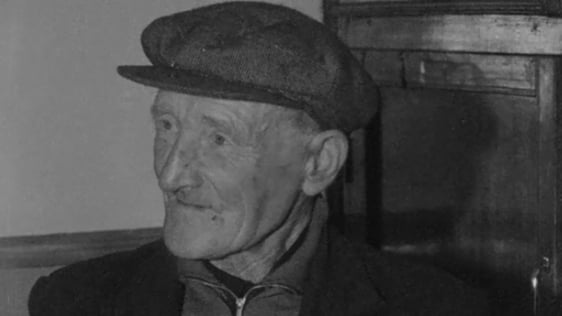
View an extract here from the second "Radharc" programme broadcast by RTÉ. Fr Peter Lemass reports from Glenties, the tidiest town in Ireland.
Programme Title:
Radharc
1st Broadcast: 09 February 1962
Clip Duration: 05'02"
Reporter: Fr. Peter Lemass

TV Clip Look & Listen...


Irish Derbyenlarge

Irish Sweeps Derby
[Freeze-frame]
30 June 1962
© RTÉ

Television Covers the First Irish Sweeps Derby: 30 June 1962

The Irish Derby became the Irish Sweeps Derby in 1962 and also one of the richest horse races in the world. Telefís Éireann covered the Derby from the Curragh; it was also taken live by the BBC and recorded by the ABC network in the USA.
View the closing stage of the 1962 Derby here.

Programme Title:
The Curragh of Kildare
1st Broadcast: 25 June 1976
Clip Duration: 00'34"
Commentator: Micheal O'Hehir

TV Clip Look & Listen...


The Late Late Showenlarge

"The Late Late Show"
Gay Byrne with Floor Manager Michael Lindsay-Hogg
Photographer: Roy Bedell
October 1963
© RTÉ Stills Library

"The Late Late Show" Goes on Air: 6 July 1962

"The Late Late Show" was intended to be a summer "filler" but proved so successful with the public that it became part of the regular schedule. The idea for the programme came from the show's producer, Tom McGrath, who wanted to present an Irish version of the American talk show "The Tonight Show". Gay Byrne was to be the show's presenter and would remain so for the next 37 years.

Tom McGrath's original idea was that the show would be informal and have the feel of people dropping in for chat. "The Late Late Show" became an important forum for the airing and debating of many issues in a changing Irish society.

The first programme of "The Late Late Show" was broadcast at 11.20 pm, 6 July 1962. At the time, it was unusual to have a live talk and entertainment show on so late in the day's viewing. On that first show, the guests were Count Cyril McCormack, Ken Gray, George Desmond Hodnett and Harry Thuillier. McGrath would go on to pioneer many other successful variety shows on Irish television.

The programme is still running today and is presented by Ryan Tubridy.

View a behind the scenes look at a "Late Late Show" from 1965 here.

Programme Title:
Discovery Television Station
1st Broadcast: 2 April 1965
Clip Duration: 01'02"
Producer: Peter Kennerley

TV Clip Look & Listen...


Teilifis Scoileenlarge

"Telefís Scoile"
[Freeze-frame]
1964
© RTÉ

Television for Schools is Introduced: 04 February 1964

"Telefís Scoile", a television programme for schools, was introduced. The programmes covered maths, science and literature. In this clip from 1966, Frank Anderson is explaining mathematical equations.

Programme Title: Telefís Scoile
1st Broadcast: 04 February 1964
Clip Duration: 01'18"
Presenter: Frank Anderson

TV Clip Look & Listen...


The Riordansenlarge

"The Riordans"
Tom Hickey, Frank O'Donovan
[Freeze-frame]
1972
© RTÉ

"The Riordans", RTÉ's First Rural Soap Opera, Goes on Air: 4 January 1965

"The Riordans", Ireland's first rural soap opera, was first broadcast in January 1965. The series was ground-breaking in that it was shot using outside broadcast cameras on a real farm. This innovation would be copied by other broadcasters around the world.

The actual farm was Flat House in Dunboyne, owned by Mr William Connolly. The farm house and yard were to be Tom Riordan's farm, while two of the rooms in the Connolly farmhouse were made into "sets" for the priest's parlour and the Riordans' kitchen.

View an extract here from an episode of "The Riordans".

Programme Title:
The Riordans
1st Broadcast: 17 December 1972
Clip Duration: 02'49"
Credits:
Mary Riordan - Moira Deady
Benjy Riordan - Tom Hickey
Batty Brennan - Frank O'Donovan
Minnie Brennan - Annie D'Alton
Director - Brian Mac Lochlainn

TV Clip Look & Listen...


Cuimhneachain 1916enlarge

"Cuimhneachán 1916"
President Eamon de Valera
[Freeze-frame]
10 April 1966
© RTÉ

50th Anniversary Commemoration of The Rising: 10 April 1966

The 50th anniversary of the Easter Rising was commemorated by a number of official events in 1966. The week of ceremonies began with President Eamon de Valera taking a salute from units of the Defence Forces at the General Post Office in O'Connell Street.

View an extract from the Rising commemoration here.

Programme Title:
Cuimhneachán 1916
1st Broadcast: 10 April 1966
Clip Duration: 01'01"
Directors: Burt Budin, Michael Slevin

TV ClipLook & Listen...


Teilifis Feirmeenlarge

"Telefís Feirme"
[Freeze-frame]
1965
© RTÉ

"Telefís Feirme": 2 May 1965

"Telefís Feirme", a new agricultural series, provided information and instruction for Ireland's farmers. The programme was presented by Justin Keating who also wrote the scripts. As this clip shows, the series was aimed at group viewing by farmers. At a time when not every home had a television set, the Department of Agriculture subsidised the rental of sets so that members of agricultural organisations could come together to watch and discuss the programmes.

Programme Title: Telefís Feirme
1st Broadcast: 30 November 1965
Clip Duration: 0'54"
Presenter: Justin Keating
Producer: Sheamus Smith

TV Clip Look & Listen...


Wanderly Wagonenlarge

"Wanderly Wagon"
Eugene Lambert, Bill Golding, Nora O'Mahony, Judge, Mr Crow and Foxy
1975
Photographer: Eve Holmes
© RTÉ Stills Library

"Wanderly Wagon", The Most Unusual Wagon You ever Saw: 30 September 1967

RTÉ's best-remembered children's programme began broadcasting in 1967. Three adults travelled in a magical horse-drawn caravan with puppets Judge, the dog, Mr Crow, who lived in the cuckoo clock, and Foxy, who lived in a barrel fixed to the outside of the wagon. Puppeteer Eugene Lambert and his family were the driving force behind "Wanderly Wagon".

Eugene Lambert played O'Brien, a jovial character who loved sweets. Nora O'Mahony played Godmother who was the mother figure in the wagon. Bill Golding played Rory who was the swashbuckling handsome hero who had a wonderful singing voice. All of the Lambert children also worked on the show.

It was originally intended that the wagon would travel around Ireland, to feature in outside broadcasts from different towns and villages.

The arrival of colour television meant that the "Wanderly Wagon" became the first programme in RTÉ to exploit the visual possibilities of chroma key. The colour separation overlay allowed the producers to make the wagon fly or travel under the sea.

"Wanderly Wagon" ran until 1982.


7 Daysenlarge

"7 Days"
John O'Donoghue
[Freeze-Frame]
11 November 1969
© RTÉ

"Seven Days" Begins: 10 April 1966

"Seven Days" (later "7 Days"), for ten years RTÉ Television's flagship current affairs programme, began broadcasting on 26 September 1966. The programme's young production team was made up of producer Lelia Doolan, directors Eoghan Harris and Dick Hill, and reporters John O'Donoghue, Brian Cleeve and Brian Farrell. Muiris Mac Conghail became producer of "7 Days" in 1967 when the programme was merged with another current affairs programme, "Division".

The current affairs programme, which often tackled subjects of public controversy in a forthright manner, found itself at the centre of several issues of conflict between RTÉ and the Government in the late 1960s, which would lead to the resignation of one of the RTÉ executives.

This clip shows the opening title sequence and presenter John O'Donoghue.

Programme Title: 7 Days
1st Broadcast: 11 November 1969
Clip Duration: 0'39"
Presenter: John O'Donoghue

TV Clip Look & Listen...


Tom McCaughrenenlarge

Tom McCaughren
© RTÉ Stills Library

Bomb Explosion at RTÉ Studios

An explosion at RTÉ's Montrose studios early in the morning of 5 August 1969 left shattered windows and damage to buildings but no one injured.

Tom McCaughren reports here on the bomb explosion at the RTÉ studios.

Programme Title: News - Bomb explosion at Montrose
1st Broadcast: 05 August 1969
Clip Duration: 01'04"
Reporter: Tom McCaughren

Radio Clip Listen...


RTÉ Broadcasting: | 1 | 2 | 3 | 4 | 5 | 6 | 7 | 8 | 9 |
1970s...
RTE  Shop Archive Products

See RTÉ CDs, DVDs, books, etc., including releases from RTÉ Libraries and Archives. RTÉ Shop...