


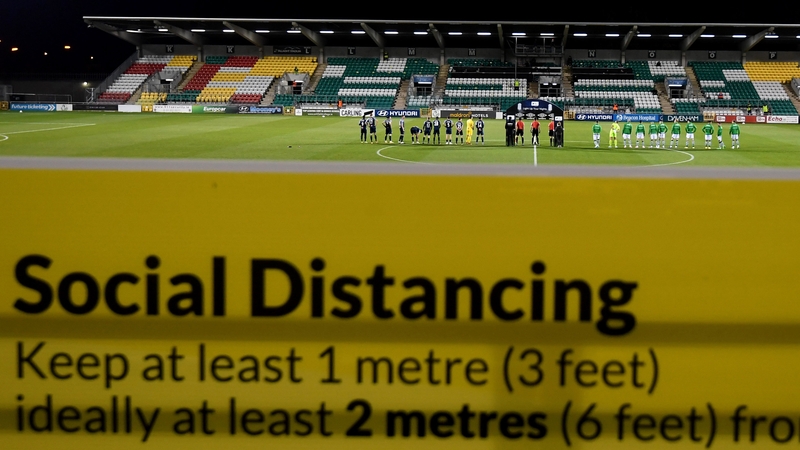
The National Public Health Emergency Team's decision to recommend that the country move to Level 5 restrictions for the next four weeks will have sent shockwaves through the three largest sporting bodies in the country.
Under the terms of the Government's Living with Covid-19 plan, published last month, Level 5 guidelines stipulate that no matches or events take place and that collective training be banned.
As with all other sectors of society, this has great implications for the major field sports in the country, particularly at a time when they had envisioned a heavy programme of activity, in order to compensate for the time lost earlier in the year.
Soccer
The Republic of Ireland team head to Bratislava on Tuesday for their Euro 2020 qualifier with Slovakia and while that game will go ahead, the disclosure that NPHET are to recommend a move to Level 5 has implications for the game at other levels.
The 2020 League of Ireland season, which has been cut in half due to the pandemic, is winding to a close in both divisions, with the majority of teams with just four games left to play in the Premier Division, and with just three left to play in the First Division. The Women's National League, meanwhile, is just reaching the end of its first phase of fixtures and with the second phase still to begin, is only envisioned to conclude in mid December.
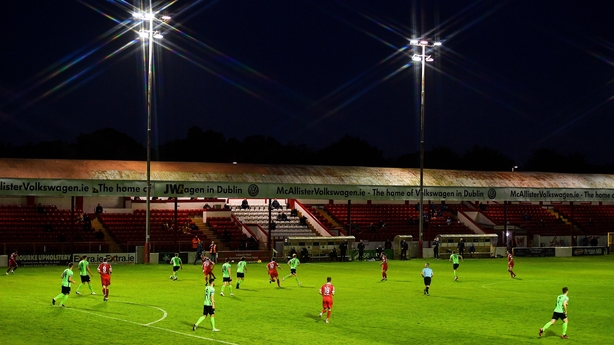
Dundalk last week qualified for the group stage of the Europa League and with UEFA loosening restrictions on crowds on the continent, there was speculation that some fans might be allowed into the Aviva Stadium to watch their group games against Arsenal, Molde and Rapid Vienna.
RTÉ soccer correspondent Tony O'Donoghue said a possible move to Level 5 restrictions could have serious implications, particularly for the domestic game.
"It might be unhelpful to speculate like this in a vacuum because since 8pm last night there has been a level of distress, and anger, and panic and it only adds to the panic," he told Morning Ireland on RTÉ Radio 1.
"It only adds to the panic if we don’t know what’s going to happen.
"In a football context, Ireland are due to play that play-off in Slovakia on Thursday. They’ll be leaving on Tuesday. Most of the players only came in last night.
"After that we’re due to host Wales next Sunday at the Aviva Stadium. We’ll assume for the moment that those games go ahead, but there are lots of other games.
"Dundalk involved in Europa League action and we were only celebrating their success last Thursday evening.
"And then on Friday UEFA said that following the success of the UEFA Super Cup in Budapest that allowed some fans to return, where local laws permit they were hopeful that 30% of stadium capacity could be achieved.
"Now from the Aviva Stadium point of view we were suddenly thinking that maybe 15,000 can come to the Aviva for Dundalk’s games in the Europa League, and for Ireland’s games in the Nations League.
"Now we don’t know if that’s going to happen. So it’s put everything up in a heap, if you like.
"From an SSE Airtricity League point of view they have done, I have to say, a remarkable job to even get their league back. They were the first to come back, the first to return to training - they followed the guidelines and the protocols really well.
"They’ve been strictly observed with mask wearing, social distancing, temperature checking for the media and indeed for all the players. Testing for all the players, and where fans were allowed in there was proper social distancing.
"So they’ve adhered to the guidelines and it would be such a disappointment if we have to rewind and go back.
"It may null and void the entire season."
GAA
With the GAA's inter-county season set to re-commence in just under a fortnight's time, the news that a switch to Level 5 restrictions could be in the offing would cause serious disruption to their plans.
RTÉ GAA correspondent Marty Morrissey stresses that the programme of games contains little wiggle room at present and said the association are watching developments closely.
He said: "For them, it's very much a waiting game. Moving to Level 5 would be a serious development. They're watching developments on a daily basis. The situation is fluid.
"The inter-county season is due to start in less than two weeks. There is no Plan B as far as I'm aware. When you look at the fixtures starting on 25 October and finishing on 19 December, there is no wiggle room in terms of fixtures either."
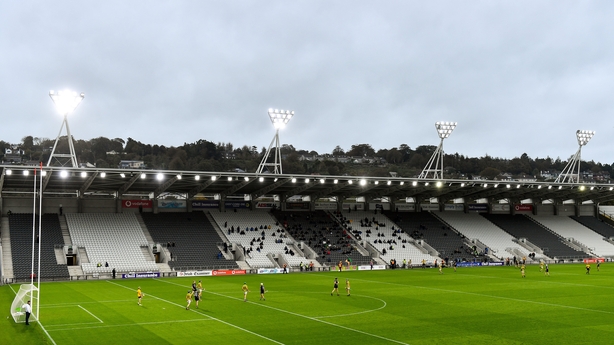
The conduct of GAA supporters has come in for criticism over scenes shared on social media of clubs engaging in raucous celebrations following county championship victories.
"A club winning a championship is obviously a big, emotional event, particularly if it's been quite a while since they won a championship," Morrissey added.
"But homecomings like what we saw on social media in Blackrock in Cork, these kind of things week after week now, are one of the reasons that we are where we are.
"And we really can't make students in Galway the issue but ignore the exact same thing at club homecomings.
"The GAA have done wonderfully well to run off the club championships nationwide. Next weekend is the final round. I've been at games across the country and county boards have been very vigilant in terms of logistical arrangements, announcing continuously that no one should come on the pitch at the final whistle.
"Then the homecomings happen as we see on social media. It is an issue. We've got to heed the advice of our medical experts. There's an element of personal responsibility because we are in this together.
"Definitely what we see on social media with clubs' homecomings is worrying."
Rugby
The new Guinness Pro 14 season began this weekend, kick-starting what was envisioned to be a busy end to the year for the oval ball game.
The final two rounds of Ireland's Six Nations campaign are due to take place at the end of October. Following that Andy Farrell’s Ireland are due to play four games in the Autumn Nations League.
IRFU CEO Philip Browne issued a stark warning last month that the future of professional rugby was in jeopardy unless crowds were allowed to return to games in 2021.
"The implications for the professional game are absolutely huge," said Donal Lenihan, the former Ireland player and manager.
"The opening rounds of the Guinness Pro14 took place over the weekend. All four Irish provinces won their respective games but it would now mean that they couldn’t fulfill their fixtures over the next few weeks, while the participants from the other countries continue to play.
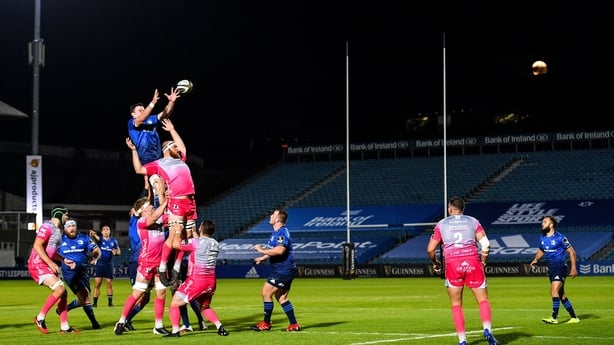
"On the international stage, at the end of the month, in less than three weeks’ time, the game against Italy, which was cancelled back in March in the Six Nations is due to go ahead, plus the game against France in Paris the following week.
"That would mean that while the other countries can participate Ireland wouldn’t be able to so that would have a huge knock-on effect from a financial perspective, both broadcasting and prize money, in terms of where Ireland would have finished.
"Philip Browne, the IRFU CEO, is on record already as to the massive implications of no crowds for the November series.
"It was accepted that these would be played behind closed doors but now a massive cloud must hang over those games as well.
"[Ireland head coach] Andy Farrell was due to have six internationals games between 24 October and 5 December so this casts a big shadow over all those games at the moment.
"It’s a question whether if professional rugby in this country could survive that blow or what level of support would be required from the Government in order to ride out the storms."
