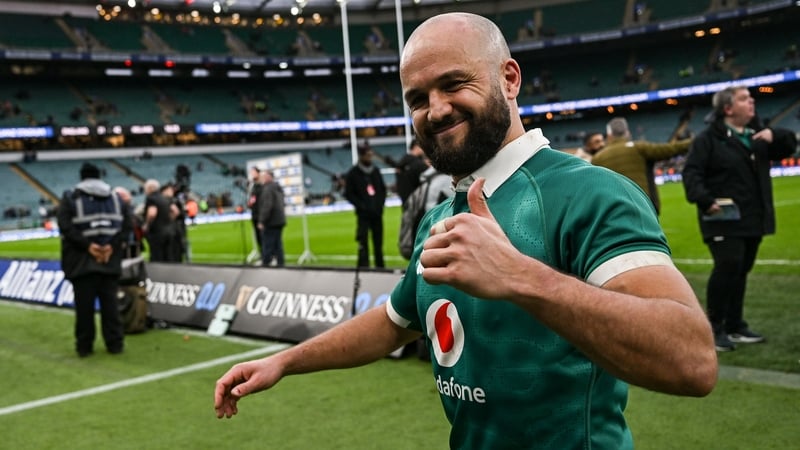

If you thought there was a different energy to Jamison Gibson-Park's performance against England two weeks ago, you'd be right.
The Leinster scrum–half had spoken of his frustration at being left out of the starting team the previous week against Italy. Whether it was a dropping or a bit of squad rotation, it worked.
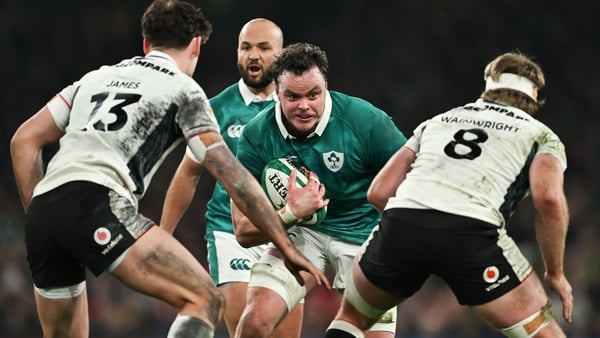
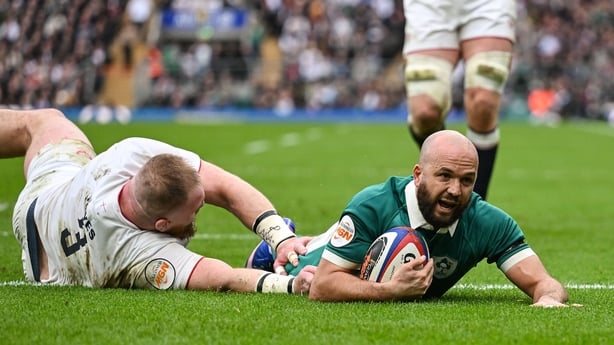
He and Jack Crowley helped flip that game against Italy when they came off the bench in the second half, and after being restored to the starting team at Twickenham, Gibson-Park put in arguably the best performance of his 49 Test career to date.
His quick-tap penalty gave Ireland their first try of the game, and it was his kick, chase and jackal that won Ireland a penalty that built them the platform to score the fifth.
In between it all, the pace of his delivery and arrival at the ruck contributed to two England yellow cards.
In total, he carried the ball 13 times, the most he or any Irish scrum-half has carried in a Test since he made his Ireland debut in 2020, and almost three times higher than his usual rate of 4.8 carries in games that he has started.
Not bad numbers for someone who turned 34-years-old a few days later.
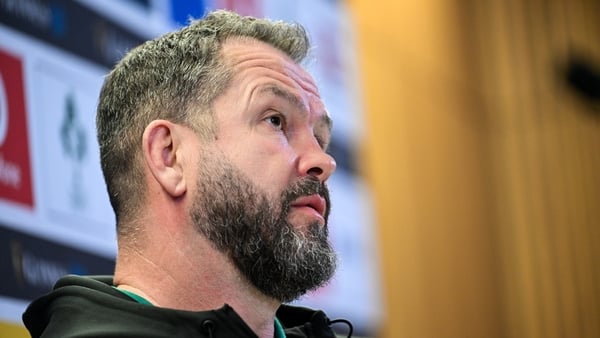
"Everyone thinks it’s the pace of the game that he plays at," Ireland head coach Andy Farrell said this week, when asked what sets his scrum-half apart from others.
"He plays quick because he’s unbelievably fit, but because of that speed and that fitness, he’s able to play nice and calm within his head and see things that others don’t.
"I think that’s the definition of fitness, really – that the game becomes easy for you when everyone else is struggling and he seems to be a step apart as far as that’s concerned."
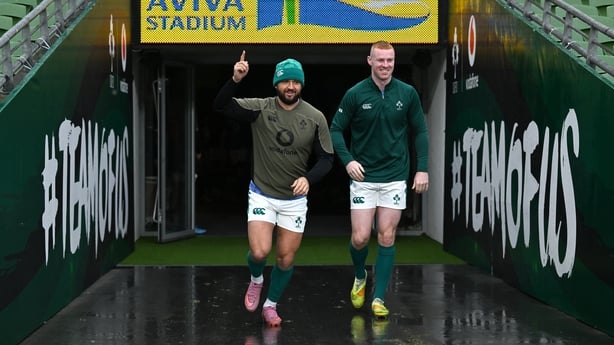
Gibson-Park will win his 50th Ireland cap in tonight’s meeting with Wales at Aviva Stadium (8.10pm), a milestone appearance for a player who only made his debut at the age of 28.
Born on the remote Great Barrier Island off New Zealand, Gibson-Park was 24-years-old when he joined Leinster in the summer of 2016.
Unlike some other foreign signings around those years, there wasn’t a sense at the time that the scrum-half was going to become another iconic 'Project Player’.
Having backed up TJ Perenara in a Super Rugby-winning season for the Hurricanes the previous year, the nippy but admittedly shy Kiwi arrived at Leinster and spent his early years very much as number two in Leinster’s depth chart behind the scrum, as Luke McGrath had the 9 jersey under lock and key.
Before he and James Lowe would become Irish-qualified, and while Australian Scott Fardy was also around, the province would often have to juggle which two of the three they could have in Champions Cup matchday squad, something which went against Gibson-Park in the 2019 final when he had to watch from the stands.
He qualified to play for Ireland in time for the 2019 World Cup, but it wasn’t until after the Covid-19 break in 2020 that Farrell brought him in, and he made his debut off the bench against Italy in the rearranged Six Nations meeting that October (below).

Within a year he had pipped Conor Murray as the starting 9 for Ireland, creating an unusual situation where he was first-choice for country but not club, with McGrath still the preferred option by Cullen until midway through the 2021/22 season.
Remarkably, the province’s Champions Cup Round of 16 second leg against Connacht was only the second time he had started a knock-out game in the competition. The previous occasion, a semi-final against Scarlets in 2018, only happened because of an injury to McGrath.
"Certainly when I first got here, I wouldn't have seen myself getting to this level and playing for Ireland," Gibson-Park said in a 2022 interview.
For someone who didn't have Test rugby on their radar, 50 Ireland caps (and counting) and a British and Irish Lions tour is decent going, with all but 10 of those internationals coming after the age of 30.
Speaking last year, he reflected on how much he has changed as a player since he moved to Ireland with his now-wife, Patti, in 2016.
There have been plenty of tweaks and upgrades in that time, but one element of his game – in his own words – has "improved out of sight".
"I couldn’t kick snow off a rope when I arrived," he revealed.
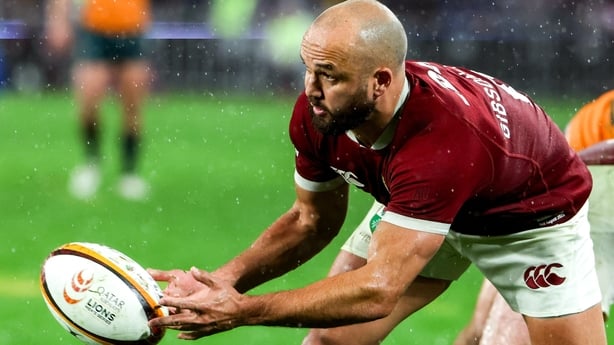
"It’s been a slow kind of progression. I kick pretty much every day off in Leinster with our kicking coach Emmet Farrell and the other 9s and 10s as well, so it’s been a gradual progression and as you say an area of growth in my game.
"It certainly has become more of a thing [in New Zealand] now but not really when I was coming through."
The more players and coaches talk about him, the more it becomes apparent that the 34-year-old has the full package for a scrum-half, with only France’s Antoine Dupont ahead of him on his day.
As mentioned above by Farrell, his fitness and skill allow him to play the game at pace, but that’s matched by his ability to read the game at a similar rate.
"If you look at his head movement, it's a little bit like watching Xavi or Iniesta playing in central midfield," Harlequins’ Danny Care said, after Leinster thrashed them 62-0 in the Champions Cup last year.
"Constantly head on a swivel the whole time, scanning defenders, seeing space, looking at backfield, checking blindsides, he does that within in one or two seconds. That's for me why he's one or two steps ahead of most scrum-halves at the moment."
At 5ft 9in and around 80kg, he fits the old-fashioned profile of a scrum-half, but as Farrell stresses, there’s a lot more to his game than sniping runs and zippy passing.
"He’s hard as nails, like. You wouldn’t like to compete against him," said the head coach.
"Somebody asked the question the other day, ‘If someone broke into your house, who would you want protecting your house?’ It was probably John Fogarty, a stupid question or something like that. And I thought straight away, ‘Jamison’.
"Because somebody would underestimate him, you know? He’d probably bite their ankles off first and then do whatever he wanted.
"He’s that type of competitor. He’s the full box of tricks."
Out of contract at the end of this season, Gibson-Park's performance against England reaffirmed his importance to how Ireland play the game, and while there is a reassuring succession plan with Craig Casey, Nathan Doak and others coming through, it’s hard to see Farrell allowing the IRFU cut the beating heart of their attack loose before the 2027 Word Cup in Australia.
On current form, they’ll have to pay to keep him.
Listen to the RTÉ Rugby podcast on Apple Podcasts, Spotify or wherever you get your podcasts, and email us at sportpodcasts@rte.ie
Watch Ireland v Wales in the Six Nations on Friday from 7pm on RTÉ2 and RTÉ Player. Follow a live blog on the RTÉ News App and on rte.ie/sport. Listen to commentary on an extended Inside Sport on RTÉ Radio 1