



We can park the out-half succession plan for now, because there's very little we can say that hasn't already been said.
To skim over it briefly, Johnny Sexton is comfortably the best out-half in the country, but he's 36-years-old and will be 38 by the time the next World Cup rolls around.
There's a long list of potential suitors who could challenge him either now or take over the job in the future, some of whom have had their progress stalled with injury, others have fluffed their auditions, and some are yet to even get their chance.
But out-half is just one area of the pitch to worry about, and if it comes to pass that a 38-year-old Sexton leads Ireland into a World Cup in 2023, protecting him will be key.
That's where the forwards come into play.
It's no coincidence that the Leinster skipper looked back to his best in the November wins against Japan and New Zealand, and Joey Carbery's performance against Argentina had been his strongest of a previously middling season.
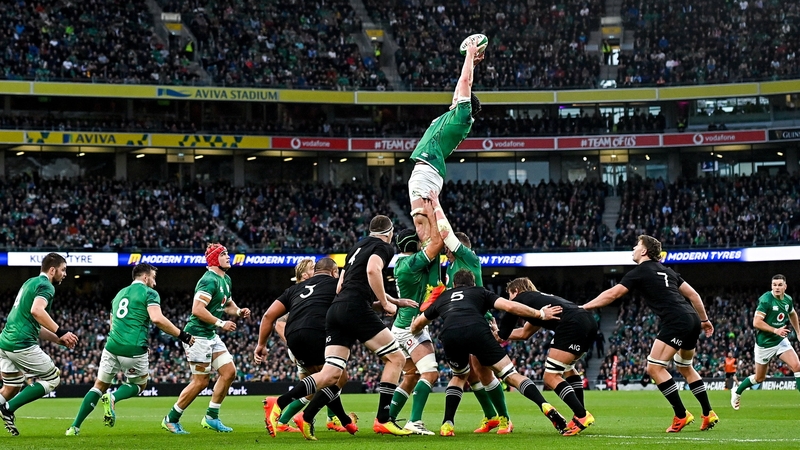
In all three games Ireland's forwards dominated. They moved the ball consistently, and when they carried they generally had gainline success. Their defence was physical and hard, and they relentlessly competed for the ball on the ground.
And while their scrum wasn't necessarily dominant, it was perfectly functional, as Andrew Porter gained valuable experience back on the loosehead side.
Had it not been for a late injury to Jack Conan before the win against Los Pumas, Andy Farrell would have picked an identical front and back row for all three games, with James Ryan, Iain Henderson and Tadhg Beirne sharing the second row duties.
The expectation for the Six Nations is that barring injury the starting forward pack will continue as it was in November: Porter, Kelleher and Furlong in the front row, with Ryan and likely Beirne in the second row given Henderson's recent injury struggles, and a back row of Doris, Van der Flier and Conan.
Just over 18 months out from a World Cup, it's also a starting pack with a well-balanced age profile.
Assuming either Henderson or Beirne will partner Ryan at lock, it's currently working with an average age of 26.75, moving to just over 28-years-old by the time September 2023 comes around.
Of that starting group, either Henderson or Beirne would be the oldest of the crew at 31-years-old for the World Cup, and while some of the potential back-ups like Peter O'Mahony, Rob Herring, Cian Healy and Dave Kilcoyne may be on the other side of 30, three of those are veteran front rowers, and all of whom are more likely to be used off the bench.
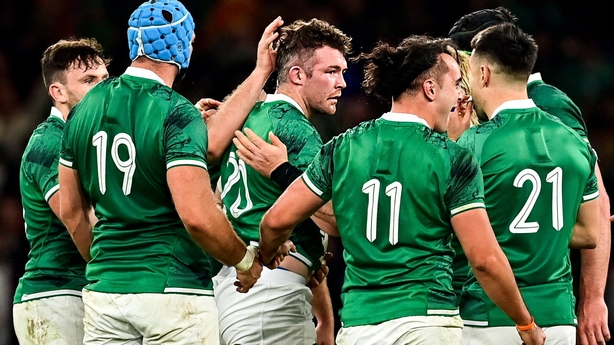
In an ideal world, the current group will age nicely together over the next 18 months, but rugby rarely plays out like an ideal world.
Injuries and suspensions are bound to force Farrell's hand either in the coming weeks or the summer tour of New Zealand where they are also hoping to arrange some non-Test matches to further blend the squad.
In his 19 games to date Farrell has been able to build a large bank of depth, but there are still some areas that are potentially vulnerable in the event of a couple of injuries.
In particular, the second row is open to exposure.
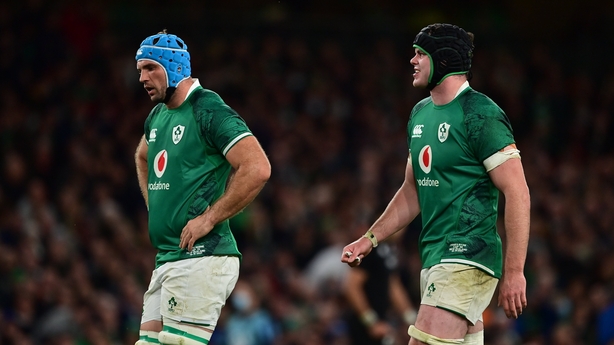
When everyone is fit and available there's a selection headache, with Farrell picking two from Ryan, Henderson and Beirne.
Ryan has started 17 of Farrell's 19 games with Henderson and Beirne sharing the time beside him, nine starts for Henderson and seven for Beirne (excluding back row starts).
It's often times been dictated by a Henderson injury, with the Ulster captain again on the return from a knock, which will likely see Beirne getting the nod for the opener against Wales, at the very least.
But after those standout three, there's a gulf in experience.
Ryan Baird would almost certainly be next man up for a starting place in the event of injuries, but while the 22-year-old has been involved in squads for the last two years he's only picked up one start in the course of his six caps.
Of the other second rows to have started games, Quinn Roux is now in France with Toulon, while Ultan Dillane is soon to follow him to the Top 14 and as a result become unavailable.
Devin Toner earned a recall at the start of 2020, but it seems unlikely the 35-year-old is returning to camp any time soon.
In the back row, Ireland have options to withstand even the most frightening injury crisis. Ten different players have started Test matches for Ireland in the back row across Farrell's 19 games in charge, with four of those making their debuts inside the last two years.
It's not to say Ireland lack options in the second row. As well as Baird, Kieran Treadwell was recently brought back into camp to add some bulk on the tight side of the scrum. Munster's Fineen Wycherley was capped last summer, while Leinster's Ross Molony is having the best year of his career.
Getting some major minutes into a fourth second row has to be a major priority for Farrell and his coaching staff during 2022.
Likewise, loosehead prop is the other area that needs to be fleshed out during this season.
With Andrew Porter almost certain to be Ireland's long term option in the 1 jersey, either Dave Kilcoyne or Cian Healy will be supporting him off the bench in the Six Nations.
Healy was preferred to the Munster man in November, but crucially in the New Zealand game, Porter played the full 80 minutes, an indication that when a game is close Farrell will be reluctant to experiment.
Healy's future is uncertain due to being in a contract season, although even if he was to retire, Kilcoyne is a perfectly reliable and experienced option.
They may well have enough cover to make it to the World Cup, with Ed Byrne picking up experience here and there in recent seasons. Either way, there's a gap in the market for an younger loosehead to supplement Porter in the next cycle, with Josh Wycherley and Eric O'Sullivan among the contenders.
That same issue doesn't exist at tighthead where Ireland are looking well stocked for both the short and medium term.
Furlong and Porter account for 17 starts of the 19 Farrell has been in charge for and while Finlay Bealham and Tom O'Toole have only had one each in that time, Porter's switch across the scrum means both players should see their game time jump over the course of the next 12 months.
In the event of injuries, Marty Moore's previous Test experience could be a vital fallback option, with the 30-year-old having a fine season for Ulster.
At hooker, Herring (11) and Ronan Kelleher (eight) are the only two players to have started under Farrell.
Herring was the safer choice in last year's Six Nations, but Kelleher has gone to a new level since the summer and looks almost certain to start for the foreseeable future.
Will Connors was a Farrell-favourite in 2020 and 2021, playing nine of 10 matches prior to his long-term knee injury, while Munster's Jack O'Donoghue looks more than capable of stepping up to international rugby, nearly five years on from the most recent of his two caps.
Experience looks light beyond those two, but Dan Sheehan impressed in his two cameo appearances in November, and looks ready to step up if needed.
Beyond that, Connacht's Dave Heffernan has been in and out of Irish camps in recent years, while Niall Scannell has plenty of Test experience, even if he seems to be quite far down Farrell's chart.
In the back row, Ireland have options to withstand even the most frightening injury crisis. Ten different players have started Test matches for Ireland in the back row across Farrell's 19 games in charge, with four of those making their debuts inside the last two years.
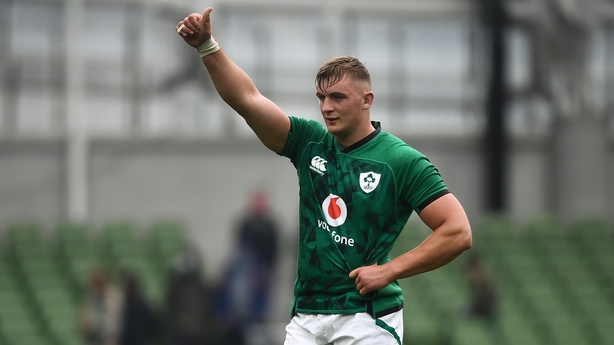
CJ Stander's retirement is the perfect example of the depth Ireland have afforded themselves in this area. The Munster man started 13 of Farrell's first 14 games, but in spite of such a high-profile retirement, Doris, Conan and Gavin Coombes (below) have ensured his absence hasn't even been noticed.
Currently, Doris, Van der Flier and Conan are providing the perfect starting blend, and with injuries forcing Farrell to constantly chop and change his back row during his first 18 months in charge, he will be expected to stick with a settled trio if given the opportunity.
But there are multiple options across each position, most of whom are bedded internationals.
If Doris was to pull up injured in Round 1, Peter O'Mahony is a comfortable and experienced swap, and should he not be available Beirne could also slip back, having started three games for Farrell at six.
O'Mahony has also featured on the openside plenty in the last couple of seasons, while Nick Timoney has impressed in his couple of outings so far for Ireland.
And that's even before you start dipping into the pool of players outside the squad: Will Connors was a Farrell-favourite in 2020 and 2021, playing nine of 10 matches prior to his long-term knee injury, while Munster's Jack O'Donoghue looks more than capable of stepping up to international rugby, nearly five years on from the most recent of his two caps.
The queue of players waiting to come in at number 8 is also quite healthy, with Conan currently the man in possession and Coombes waiting patiently for his chance, as well as the likes of Doris and Timoney who can flitter between the flank and eight.
While the temptation may be there to shuffle the pack this spring, it seems more likely that Farrell will draw from a limited number of forwards where possible in the Six Nations, having been forced into so much chopping and changing in previous campaigns.
Follow all of Ireland's Six Nations games via our live blogs on rte.ie/sport and on the RTÉ News App or listen to live radio coverage on RTÉ Radio 1. Watch live TV coverage of Ireland v Wales (5 February, 2.15pm) and England v Ireland (12 March, 4.45pm) on RTÉ2 and the RTÉ Player.
