


To listen to RTÉ.ie's radio and podcast services, you will need to disable any ad blocking extensions or whitelist this site.
0
00:00
00:00
Episode Notes
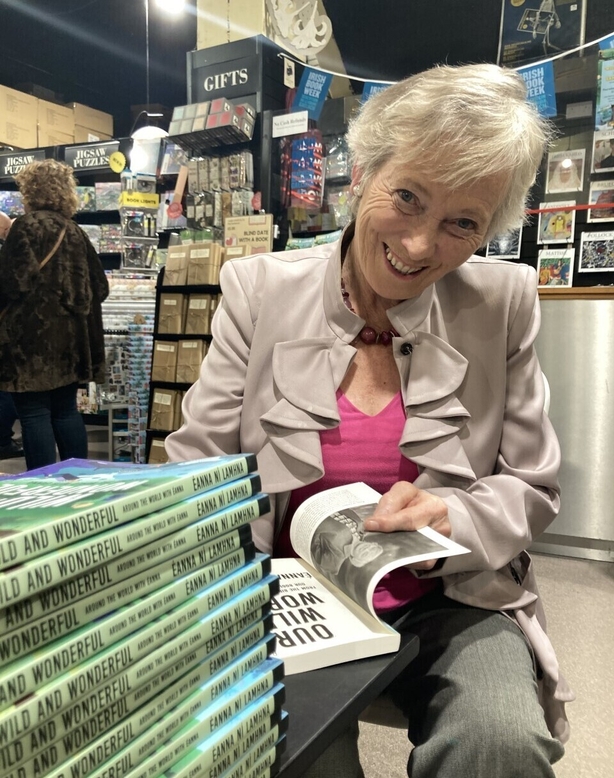
Panel: Éanna Ní Lamhna & Niall Hatch
Interview: Richard Collins
Reporter: Terry Flanagan
In addition to listening to Mooney Goes Wild on RTÉ Radio One at 22:00 every Monday night, don't forget that you can also listen back to each of our programmes any time you like at rte.ie/mooney. There, you will find an extensive archive of past broadcasts, conveniently split into different topics and segments.
As tonight’s programme includes an item about the landmark birth of the first ever baby Indian Rhinoceros in Ireland, this week’s suggestion from our archives is a documentary entitled Dürer’s Rhinoceros, which was first broadcast in December of last year. Albrecht Dürer is undoubtedly the most famous artistic figure of the German Renaissance, and this special programme tells the tale of one of his most celebrated woodcuts: an image based largely on a written description of an Indian Rhinoceros, as Dürer had never actually set eyes on the real thing. Though anatomically inaccurate, it is nonetheless a stunning and accomplished piece of art, and for many years formed the basis for the standard European idea of what a rhinoceros looked like.
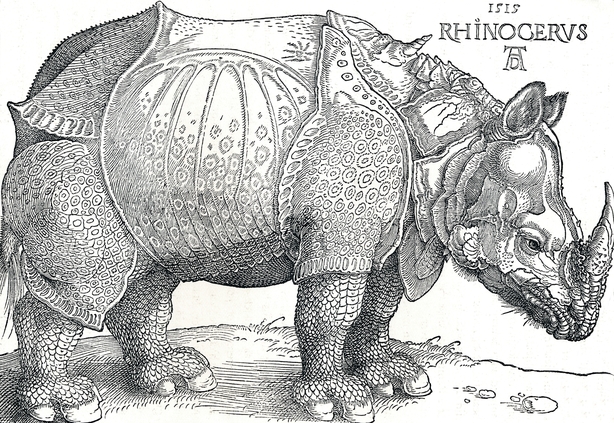
We also get up close and personal with a real, live Indian Rhinoceros at Cork’s Fota Wildlife Park and examine what Dürer got right and what he got wrong. We will also discuss some rather different inaccurate beliefs about rhinos, which sadly have brought these magnificent creatures to the brink of extinction today.
You can listen back to this fascinating documentary at https://www.rte.ie/radio/radio1/mooney/programmes/2021/1226/1268498-mooney-goes-wild-sunday-26-december-2021/
Looking forward to Nature Nights
From Monday 31st October to Friday 4th November, RTÉ Radio One will be turning the airwaves over to wildlife each evening between 22:00 and 23:00. Called Nature Nights, it will be a celebration of nature and biodiversity in Ireland, the people who dedicate their lives to studying and protecting the natural world, and the artists whose work is inspired by the Irish landscape and those creatures that inhabit it.
Mooney Goes Wild is playing its part, of course, and amongst a wide range of fantastic Nature Nights content, Derek and his team have prepared a very appropriate one-hour documentary for Halloween, as well as three Creatures of the Night features, produced by Derek, that will air during the week.
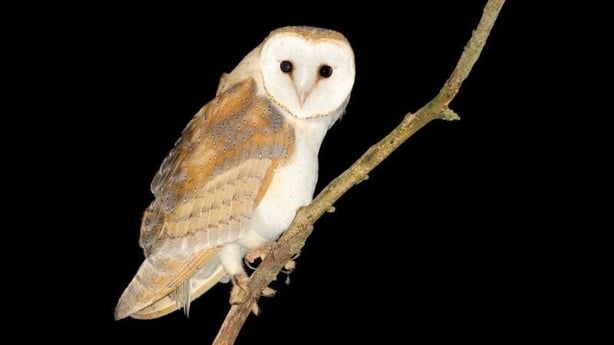
What better way to kick off this special Nature Nights week than with a celebration of one of our most beloved nocturnal creatures of all, the Barn Owl? This gorgeous bird of prey, long a staple of Irish myths and legends, is a favourite of many of us, yet despite its popularity, its population has suffered serious declines. As you will hear in this special documentary, presented by Terry Flanagan and produced by Derek Mooney, at long last, efforts to conserve these ultimate night-time hunters seem finally to be paying off. Don’t forget to tune in at 22:00 on Halloween night, Monday 31st October.
The Nocturnal Life of Plants (Creatures of the Night – 22:35 on Tuesday 1st November): We know that many animals prefer to venture out at night, but did you know that there are also plenty of plants that only really spring into action under cover of darkness? Relying on pollinators such as moths and bats, there are even some flowers that bloom solely at night: a true wealth of botanical wonder that goes unnoticed by most of us. Éanna Ní Lamhna talks to Dr. Matthew Jebb, Director of the National Botanic Gardens in Glasnevin, all about the nocturnal life of plants.
Urban Foxes (Creatures of the Night – 22:35 on Wednesday 2nd November): Many nocturnal mammals have evolved exceptional powers of hearing and smell, depending far less on eyesight than diurnal creatures such as us humans. A case in point is the Red Fox, a common creature all across Ireland, yet one that can be hard to spot . . . unless you happen to live in a city. Somehow, many have become accustomed to urban life, with some even dwelling right in the heart of our capital and thriving side by side with people. For this Nature Nights segment, Niall Hatch travelled to the bustling grounds of Trinity College Dublin, long home to generations of these wild canines, to speak to the university’s Environmental Services Coordinator, David Hackett, and Dave Wall of the National Biodiversity Data Centre about the secret life of the urban fox.
Night Sky (Creatures of the Night – 22:35 on Thursday 3rd November): Our ancestors were highly accustomed to spending significant portions of their lives in darkness. Like most creatures on the planet, we evolved physical, mental and behavioural changes triggered by the setting and the rising of the sun. These circadian rhythms, as they are called, consist of natural processes that respond to predictable patterns of light and dark. In our modern world, however, over-exposure to light at night has become something of a problem, both for us and for our fellow animals. Dr. Richard Collins speaks to Etta Dannemann, founder of Visit Dark Skies, about the fundamental importance of our relationship with the night sky.
For more information about these and the rest of RTÉ’s fantastic Nature Nights line-up, visit https://www.rte.ie/radio/radio1/info/2022/1017/1329664-about-nature-nights-on-rte-radio-1/
Ireland’s biodiversity emergency: reflecting on the Prime Time special report
On Thursday 20th October, Prime Time, RTÉ One’s flagship current affairs programme, aired a special report about the catastrophic collapse of nature in our country. As it brought home very strongly, Ireland is in the midst of a biodiversity emergency, something that we here at Mooney Goes Wild have discussed many times in recent years.
On tonight’s programme, Éanna and Niall reflect on some of the key statistics highlighted on Prime Time. These include the truly alarming discovery that 63% of Ireland’s wild birds are now officially classed as threatened, as well as the shameful fact that our tree-cover is the lowest in Europe, standing at just 11% . . . which is the same level it was at 30 years ago.
To watch this special Prime Time segment on Ireland’s biodiversity emergency, visit https://www.rte.ie/news/primetime/2022/1020/1330452-nature-is-dying-irelands-biodiversity-emergency/
First ever baby Indian Rhinoceros born in Ireland
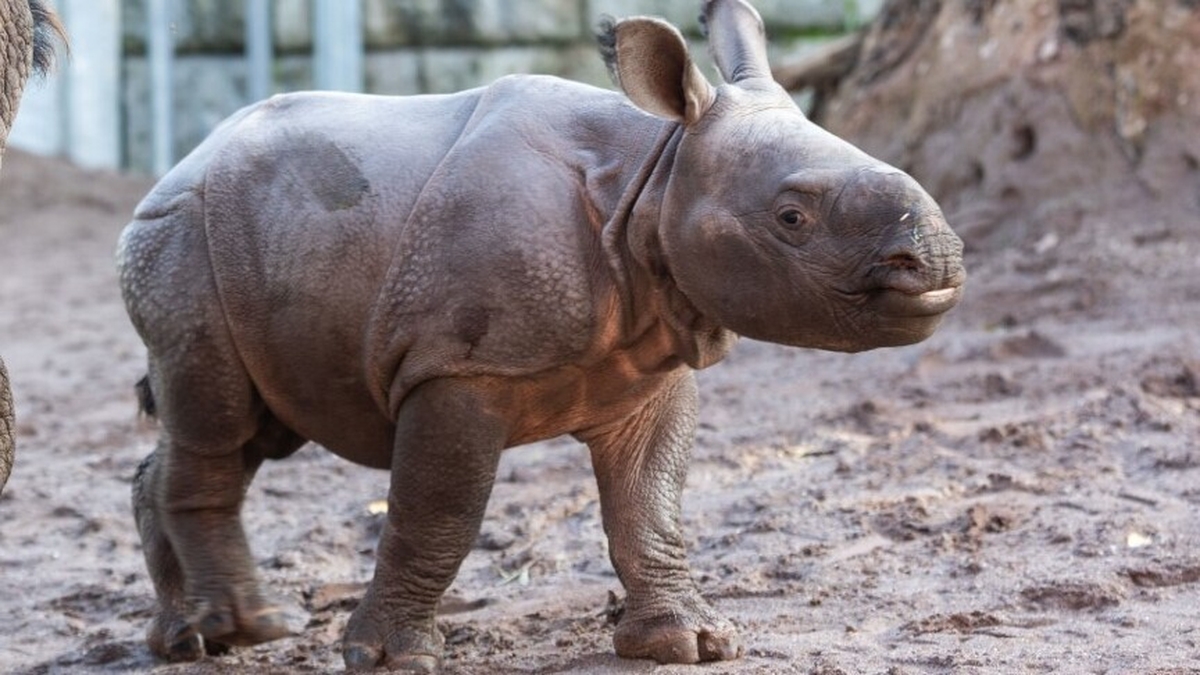
All of us at Mooney Goes Wild were delighted to see the recent announcement from Cork’s Fota Wildlife Park of a first in its 39-year history, as well as a first for Ireland; a baby Indian Rhinoceros was born there on 19th September 2022, after a gestation period of 16 months, to mother Maya and father Jamil.
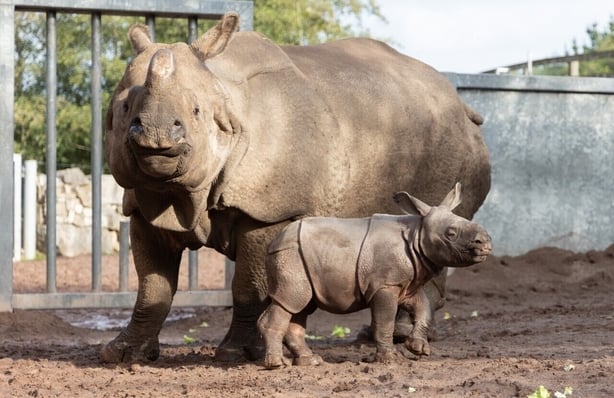
The yet-unnamed male calf is the second of only three Indian Rhino calves born in any zoological institution this year. The Indian Rhino is listed as vulnerable by the International Union for Conservation of Nature, with just 3,300 currently living in the wild. The illegal trade of poaching rhino horn for traditional medicine poses the biggest threat to the species.
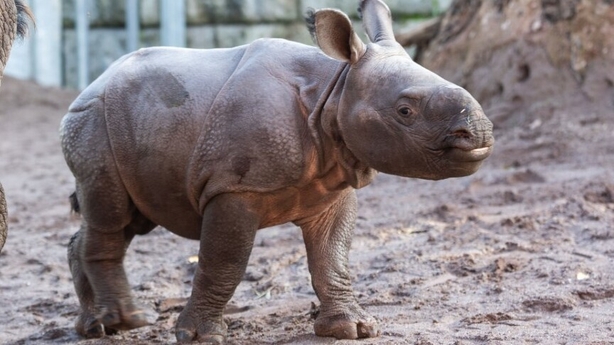
On tonight’s programme, we talk to Aidan Rafferty, Lead Ranger at Fota, about the significance of this very welcome new arrival, the plight of the world’s rhinos and the importance of the park’s conservation and captive-breeding efforts.
For more information about Fota’s adorable new arrival, visit https://www.fotawildlife.ie/news/first-ever-baby-indian-rhino-born-in-ireland/
Halloween fireworks and their impact on animals
One of the most obvious features of the Halloween season in Ireland is the prevalence of fireworks being set off across the country. Though it is illegal for anyone to use fireworks in this country without a proper licence, we all know that the law is widely flouted almost everywhere. The resultant loud bangs and blinding flashes can be upsetting enough for many of us humans, but spare a thought for the animals, both wild and domestic, in whom they all-too-frequently induce sheer terror and panic, as well sometimes as horrible injuries.
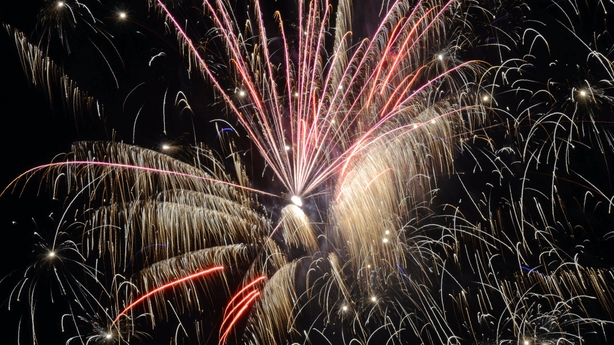
On tonight’s programme, roving reporter and biologist Terry Flanagan speaks to vet Dr. Andrew Byrne, a long-standing friend of the programme, about the problems that fireworks pose for wild creatures and pets alike at this time each year, as well as ways to try to lessen their impact.
For more information about the distress and injuries that fireworks can cause to animals, visit https://www.ispca.ie/news/detail/launch_of_a_national_fireworks_awareness_raising_campaign
Learning more about squirrels in our cities
The Urban Squirrel Survey is a new citizen science project which aims to gather information on the populations of these furry little mammals which live in the seven most populated cities on the island of Ireland. It is a collaborative project between researchers in NUI Galway and the National Biodiversity Data Centre.
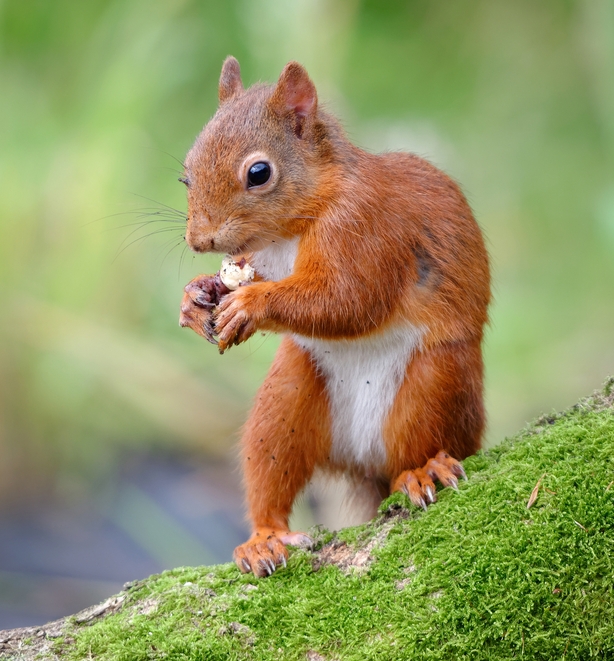
The survey has already produced some noteworthy findings, such as that there are still no records of invasive Grey Squirrels having breached the River Shannon, no sightings of Red Squirrels in Belfast City and, as they are now being so widely hunted by Pine Martens in rural areas, that urban parks could be set to become the final refuge for Ireland’s Grey Squirrel populations.
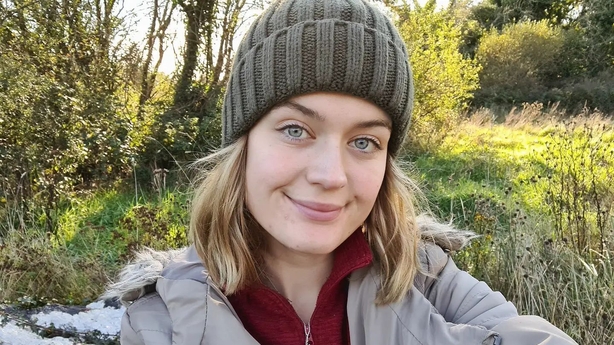
On tonight’s programme, Richard speaks to Emma Roberts, Head of Research with the survey, about its aims and findings. She also explains how researching Red Squirrel populations in and around urban landscapes will teach us more about the importance of green spaces and ecological corridors in protecting this recovering native species.
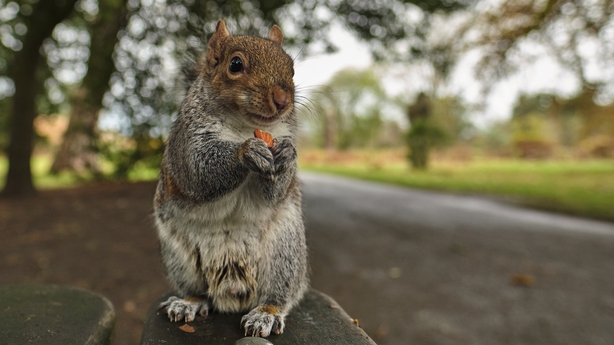
Emma also puts out a call to you, our Mooney Goes Wild listeners, to pitch in with your own squirrel sightings from the cities of Belfast, Cork, Dublin, Derry, Galway, Limerick and Waterford.
For more information about the Urban Squirrel Survey, visit https://biodiversityireland.ie/surveys/the-urban-squirrel-survey/