


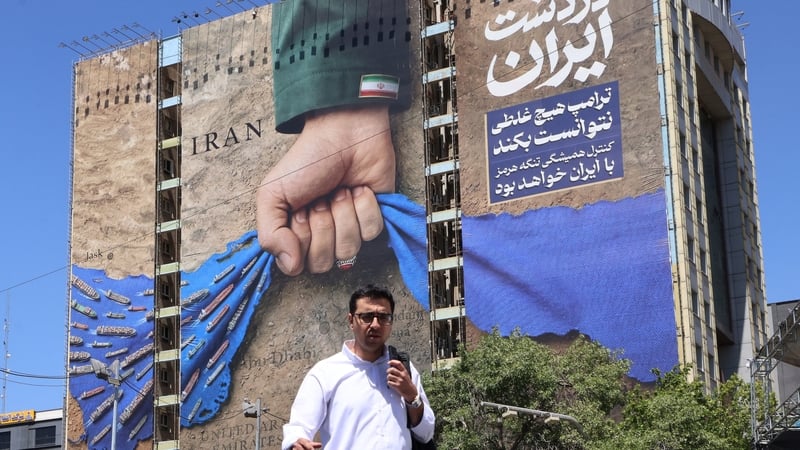
US forces have attacked missile sites in southern Iran and boats trying to lay mines, US Central Command said, as top Iranian negotiators arrived in Doha for talks to end the war.
"US forces conducted self-defence strikes in southern Iran today to protect our troops from threats posed by Iranian forces," Tim Hawkins, a US Central Command spokesman, said in a statement.
It gave no details of the attacks and said only that the targets included missile launch sites and boats trying to "emplace mines."
The strikes threatened an already fragile ceasefire that began 8 April as the US and Iran struggle to reach an accord to end a war that has rattled the global economy with a severe disruption of energy flows.
Hopes for an accord in recent days were dealt another blow when Israeli Prime Minister Benjamin Netanyahu vowed to "crush" Iran-backed Hezbollah in Lebanon.
Iran has demanded that any peace accord apply to the fighting in Lebanon as well.
Mr Trump also said in a social media post he expected Iran to hand over its enriched uranium to the US to be destroyed, or have it destroyed in Iran with an international witness.
"The Enriched Uranium (Nuclear Dust!) will either be immediately turned over to the United States to be brought home and destroyed or, preferably, in conjunction and coordination with the Islamic Republic of Iran, destroyed in place or, at another acceptable location, with the Atomic Energy Commission, or its equivalent, being witness to this process and event," Mr Trump wrote.
It was not clear whether he meant this is part of an emerging accord with Iran.
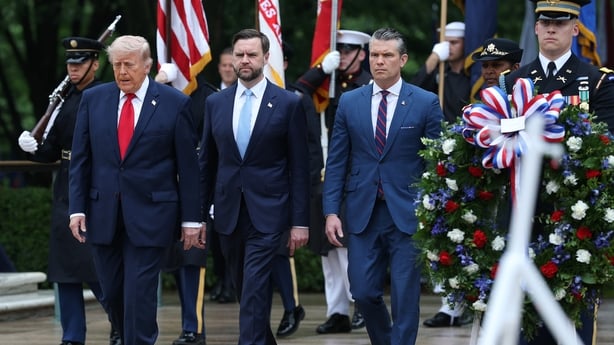
The Atomic Energy Commission that Mr Trump cited was abolished in 1974 and its functions were divided between two successor bodies.
Earlier, Mr Trump said it should be mandatory for Saudi Arabia, the United Arab Emirates, Qatar, Pakistan, Egypt, Turkey, Bahrain and Jordan to sign up to the Abraham Accords, a set of agreements brokered in 2020 with nations historically hostile to Israel, as part of a peace deal with Iran.
Mr Trump said he had spoken to the leaders of those countries on Saturday about efforts to end the war with Iran.
Bahrain and the UAE have already signed the accords, along with Morocco and Sudan.
US and Iranian forces have observed a ceasefire since 8 April while diplomats push for a negotiated settlement, although Iran has maintained controls on Gulf shipping through the Strait of Hormuz and the US Navy has sought to blockade Iran's ports.
While the Abraham Accords were welcomed by some, they remain deeply unpopular in many parts of the Middle East - in part because they fail to address the Israeli-Palestinian conflict.
Gulf heavyweights like Saudi Arabia and Qatar have said they will never normalize ties with Israel unless an independent Palestinian state is created.
'Going crazy'
Anna Jacobs of the Arab Gulf States Institute in Washington said Mr Trump's latest demand added to the disaster that has been the war on all fronts for Gulf nations.
"The national security of the Gulf states has been threatened more than ever before because of President Trump's reckless decisions, and he expects Arab states to thank him and to normalize relations with Israel, which they will not do at this stage," she said.
"These expectations and assumptions from this US administration shows how little they understand the Middle East."
Mr Trump's maximalist demand came after Secretary of State Marco Rubio suggested a deal could be reached within the day, causing world oil prices to tumble based on renewed optimism about an agreement.
"We thought we might have some news last night, maybe today," Mr Rubio told reporters during a visit to New Delhi, referring to hopes for a deal.
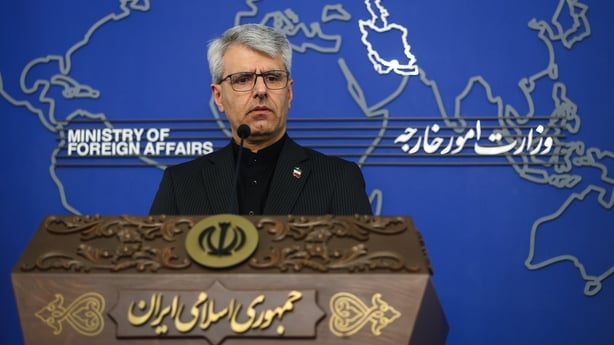
But Iran's foreign ministry spokesman poured cold water on hopes for a quick final settlement.
"It is correct to say that we have reached a conclusion on a large portion of the issues under discussion," he told a weekly news briefing.
"But to say that this means the signing of an agreement is imminent -- no one can make such a claim."
'Critical moment'
On another front of the war, Mr Netanyahu said that he had ordered the military to intensify its offensive in Lebanon in an effort to "crush" Hezbollah, accusing the group of targeting Israeli forces with drone attacks.
"I have ordered an even greater acceleration of our operations," Mr Netanyahu said in a video statement posted on his Telegram channel.
The Israeli leader said on Sunday that he and Mr Trump had agreed that "any final agreement with Iran must eliminate the nuclear threat entirely" before peace was reached.
Iranian officials have stressed that, despite the long-standing US demand for an end to its uranium enrichment, talks on the issue of the Islamic republic's nuclear program have been deferred until after an initial agreement.
We need your consent to load this rte-player contentWe use rte-player to manage extra content that can set cookies on your device and collect data about your activity. Please review their details and accept them to load the content.Manage Preferences
