


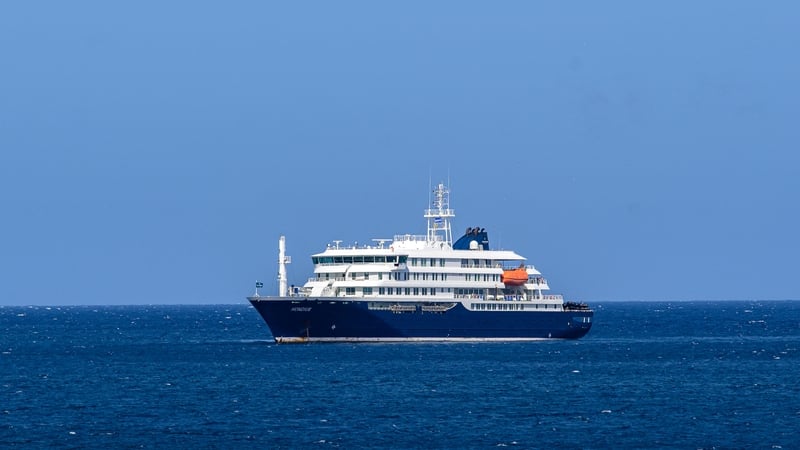
Two Irish people are among 149 people on board a cruise ship, where a case of hantavirus has been confirmed.
The vessel's operator, Oceanwide Expeditions, said there are 149 people on board, representing 23 different nationalities and that it was still dealing "with a serious medical situation" on board MV Hondius.
It said strict precautionary measures are in process on board the vessel, including isolation measures, hygiene protocols and medical monitoring.
A spokesperson for Oceanwide Expeditions told RTÉ News that they are negotiating with authorities in Cape Verde but they do not know when the ship might be allowed to dock or when passengers can disembark.
The Department of Foreign Affairs has said it is aware of two Irish citizens on board the vessel and is providing consular assistance.
The company has confirmed three deaths among those on the cruise, which was travelling from Ushuaia in Argentina to Cape Verde off the coast of west Africa.
A British passenger was in intensive care in Johannesburg and two crew members - one British and the other Dutch - required "urgent medical care", the company said.
Hantavirus is an illness usually transmitted to humans from rodents and presents a low risk to the public, the head of the World Health Organization Europe said.
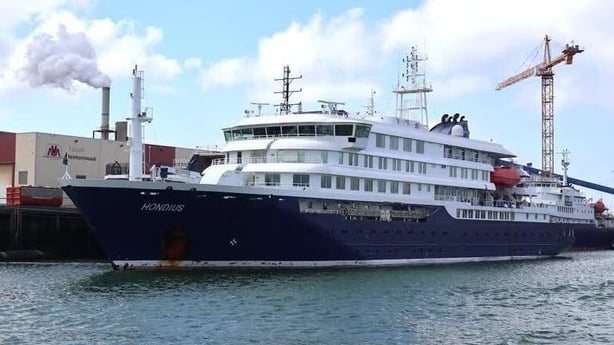
Passengers and crew desperately hunkered down in isolation on a ship stuck off Cape Verde, after local authorities barred it from docking following the death of three people in a suspected hantavirus outbreak.
The island nation's refusal to allow them to disembark came even as WHO Europe said the risk to the wider public remained low.
Passengers from Britain, Spain and the United States, as well as crew from the Philippines, were among the 23 nationalities aboard the MV Hondius, which was carrying 149 people.
Those on board are under "strict precautionary measures", the ship's operator Oceanwide Expeditions said in a statement, including isolation, hygiene protocols and medical monitoring.
Read more: What is hantavirus and how deadly is it?
"At the present time, there are no other symptomatic people on the ship but this is being carefully monitored," added the WHO's epidemic and pandemic preparedness and prevention director, Maria Van Kerkhove.
"Passengers are being asked to stay in their cabins and limit their risk while disinfection and other measures are being taken," she said in a video.
Visibly shaken in what appears to be his cabin, Jake Rosmarin, a passenger who posted regularly about the trip before the health crisis, said that those on board desperately wanted to leave.
"What is happening right now is very real for all of us here", he said on Instagram.
"There is a lot of uncertainty and that's the hardest part. All we want right now is to feel safe, to have clarity and to get home."
Hantavirus 'probably underdiagnosed'
Adam Taylor, a Professor of Anatomy at the University of Lancaster, said hantavirus is "incredibly rare and probably underdiagnosed".
Speaking on RTÉ's News at One, he said there were at least 38 recognised species of hantavirus across the globe.
"It's considered incredibly rare, although it's probably underdiagnosed because we have to understand that not everybody who catches hantavirus will end up with symptoms, will end up with severe symptoms, or will end up with any at all," he explained.
"There is a huge spectrum of how hantavirus affects people across the world. We get typically about 150,000 200,000 cases reported a year, but there's probably unreported or underreported or underdiagnosed cases, so there's probably many more cases out there."
Prof Taylor said there was no specific cure for hantavirus.
"What we can do is manage the symptoms, depending on whether you've got a strain of virus that affects the kidneys or you've got a strain of virus that affects the heart and the lungs," he said,
"A lot of that is treatment with fluids, ensuring that respiratory capacity is maintained."
Prof Taylor said it was difficult to track the virus because it can take time for symptoms to develop.
"It's usually two to three weeks, but it can be one and a half months before people display symptoms," he said.
"Often they forget where or they won't recall where they've been exposed potentially to rodents or rodent nesting material or bedding material and therefore remember exactly where they may have picked up the virus."
