


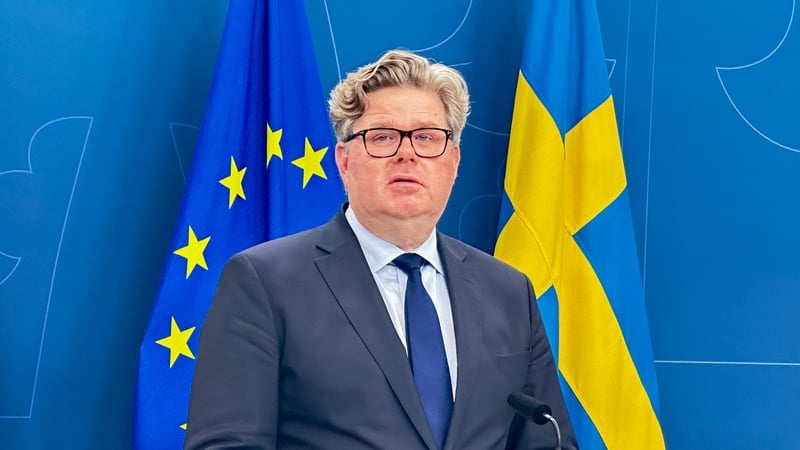
Sweden's government has said it planned to introduce legislation requiring social media platforms like TikTok and Snapchat to take down criminal gangs' 'murder adverts' within an hour or face hefty fines.
Criminal gangs active in Sweden increasingly use social media to recruit people to commit murders and other violent acts amid a surge in "crime as a service".
The recruits are often children under the age of 15, Sweden's age of criminal responsibility - meaning the kids cannot be prosecuted and fall under the responsibility of social services, making them valuable assets to the gangs.
"We will be first (in the European Union) with this kind of legislation targeting organised crime's recruiting of children and youths," Swedish Justice Minister Gunnar Strommer told a press conference.
The minority right-wing government, propped up by the far-right Sweden Democrats, has been pushing through a rash of proposals cracking down on crime and immigration in the run-up to Sweden's general election on 13 September.
If the proposal is adopted by parliament, social media sites would as of 15 July face fines of up to five million kronor (€460,000) if they fail to take down the adverts in time.
"Today, murder contracts are openly posted on social media platforms such as TikTok, Instagram and Snapchat," Pontus Andersson Garpvall, a Sweden Democrats member of parliament's justice committee, told the same press conference.
He said bombings and shootings were coordinated by criminals on "various digital services".
"Those who are drawn into this serious criminality and take on these criminal assignments are often children and young people who have no connection to either the instigator, the victim or the place where the crime is intended to be carried out," Mr Garpvall said.
The Nordic country has struggled for over a decade to contain a surge in organised violent crime, linked primarily to gang wars and control of the drug market.
The government has previously announced plans to lower the age of criminal responsibility from 15 to 13 as of 1 July for crimes punishable by at least four years in prison.
The proposal has sparked fierce criticism across the country, with many of the organisations and authorities consulted during the drafting of the legislation expressing opposition, including police and prison authorities.
