


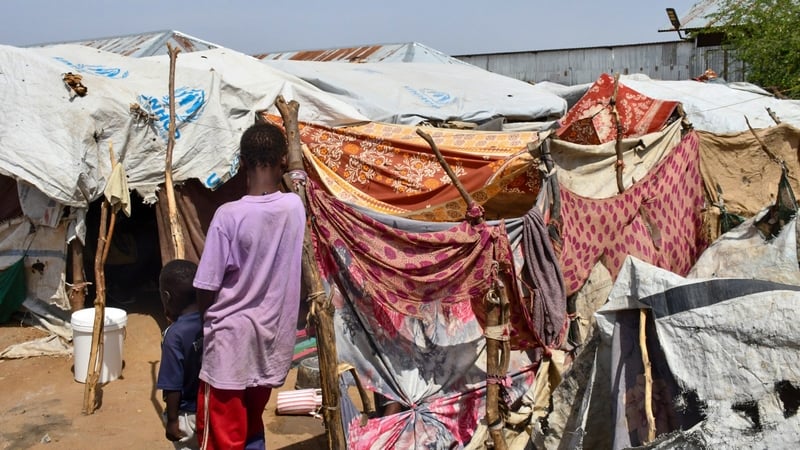
Almost two-thirds of South Sudan's population - some 7.9 million people - face acute hunger, authorities have said, amid a resurgence of fighting between government and opposition forces.
The violence is particularly intense in Jonglei State where government troops under President Salva Kiir have been battling militias allied to his longtime rival Riek Machar since December.
Hundreds of thousands have been displaced in a country that was already among the poorest and the most corrupt in the world.
"An estimated 7.9 million people will face high levels of acute food insecurity... Additional resources are urgently required," said acting agriculture minister Lily Albino Akol at a press conference to release the latest food security report compiled by the government, the United Nations and NGOs.
Four counties in Jonglei and Upper Nile states were at risk of famine, the UN said, with 2.2 million children under five projected to be acutely malnourished.
The crisis was worsening despite billions of dollars in oil revenue and foreign assistance, said US embassy senior assistance coordinator Charles Vetter.
"The transitional government continues to wage conflict throughout this country that is displacing people (and) continues to refuse to invest national resources in delivering public services," Mr Vetter said.
"The continued obstruction, interference, theft and denial of access is limiting the effectiveness of anybody trying to help," he added.
The findings were "a warning and a roadmap", said UN acting Humanitarian and Resident Coordinator Noala Skinner.
"We must save lives now," she said, calling on the government to urgently invest in agriculture, livelihoods and resilience.
South Sudan gained independence in 2011 but soon descended into civil war and remains mired in extreme poverty and insecurity.
