


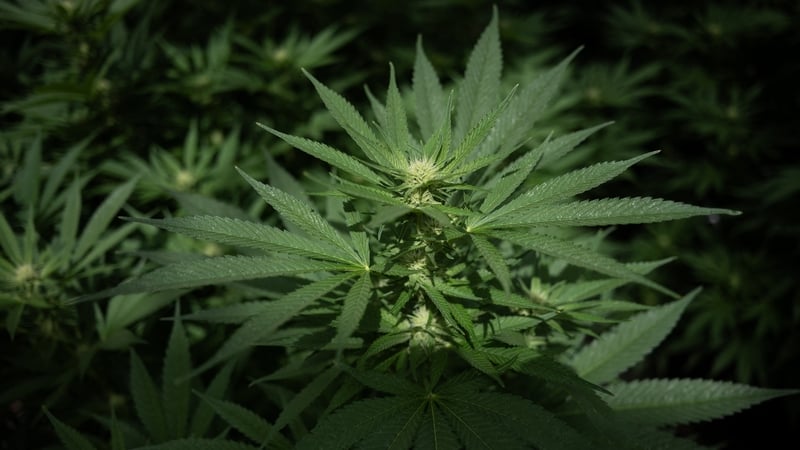
The US Department of Justice has said it was immediately loosening restrictions on some marijuana products and accelerating the process of reclassifying the drug as less dangerous in one of the biggest changes to US drug policy in decades.
The Trump administration immediately moved FDA-approved marijuana products and state-regulated medical marijuana from a group of drugs classified as highly addictive to one that has a low to moderate potential for abuse.
Acting Attorney General Todd Blanche said the US government would also fast-track a broader consideration of marijuana under federal law, moving the psychoactive plant from a so-called Schedule I drug to a Schedule III.
The move would list marijuana alongside common painkillers, ketamine and testosterone rather than its current status with drugs like heroin and LSD.
The measures are likely to reshape the pot industry, lowering barriers to researching the drug's potential health benefits, easing tax burdens and making it easier for firms to secure funding. The announcement does not legalise marijuana across the United States.
"This rescheduling action allows for research on the safety and efficacy of this substance, ultimately providing patients with better care and doctors with more reliable information," Mr Blanche said in a statement.
The move follows a December executive order from President Donald Trump directing the Justice Department to loosen marijuana restrictions.
The measure is expected to be a boon to a growing cannabis industry in the United States, benefiting companies like Canopy Growth, Tilray Brands, Trulieve Cannabis.
US-listed shares of cannabis companies jumped following the decision. Shares of Cronos Group, Aurora Cannabis, Canopy, and Tilray jumped between 6% and 13%.
"Today marks a pivotal moment for the United States. With President Trump's action to reschedule cannabis, federal policy is finally aligning with science, medicine, and most importantly, patient needs," Irwin Simon, the chairman and CEO of Tilray, said in a statement.
Marijuana's continued status as a Schedule I drug, meaning it has a high potential for abuse and no accepted medical use, has been widely criticised as anachronistic, particularly as nearly half of US states moved to legalise cannabis. The drug is legal in some form in about 40 states.
Legal sales are expected to top $47bn in 2026, according to market researcher BDSA.
Marijuana is the most widely used illicit drug in the world and the United States. Nearly one in five US residents use it a year, according to the US Centers for Disease Control and Prevention.
Millions of Americans have been arrested for possession of the drug, even while growing businesses listed on stock exchanges sell cannabis-related products.
The Biden administration embarked on a similar move in 2024 but the measure was not finalised when Mr Trump returned to office and the US Drug Enforcement Administration scrapped the effort.
