


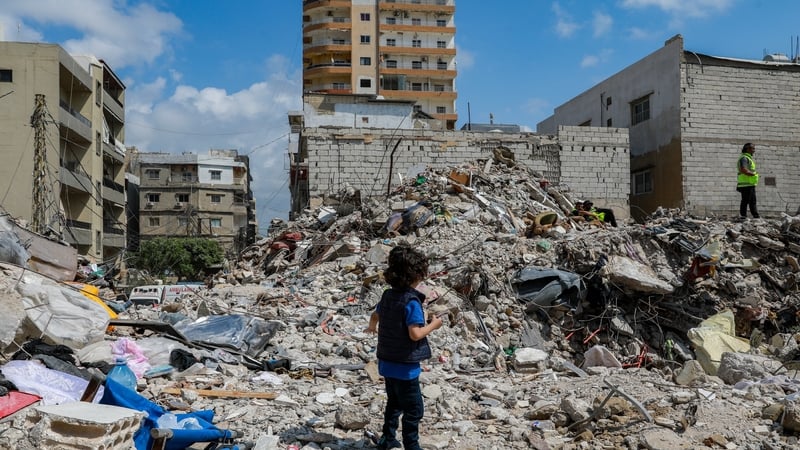
The United States will host new talks Thursday between Israel and Lebanon aimed at encouraging an agreement, a US official said, after the start of a shaky US-brokered ceasefire.
The talks will take place at the State Department in Washington, again at the level of ambassadors.
"We will continue to facilitate direct, good-faith discussions between the two governments," the State Department official said on customary condition of anonymity.
The ambassadors of Israel and Lebanon, which have no diplomatic relations, met on 14 April at the State Department.
Three days later, US President Donald Trump announced a 10-day truce pausing the war between Israel and Hezbollah, the Shia armed movement that has fired rockets in response to the Israeli-US attack on its patron Iran.
Sporadic violence has continued despite the truce.
Iran has said it had yet to decide whether to attend a new round of peace negotiations with the United States, casting uncertainty on a push to stop the Middle East war from resuming.
After initial talks in Islamabad ended without a deal earlier this month, both sides have accused the other of breaching a temporary truce that is now in its final days.
"We have no plans for the next round of negotiation, and no decision has been made in this regard," Iranian foreign ministry spokesman Esmaeil Baqaei said.
"The US is carrying out behaviours that do not in any way indicate seriousness in pursuing a diplomatic process," he added, calling an ongoing US blockade of Iranian ports and its recent seizure of a ship "clear violations of the ceasefire".
We need your consent to load this rte-player contentWe use rte-player to manage extra content that can set cookies on your device and collect data about your activity. Please review their details and accept them to load the content.Manage Preferences
Mr Trump has similarly accused Tehran of violating the truce - set to lapse overnight on Tuesday - by firing on ships in the crucial Strait of Hormuz trade route, which Iran has all but shut.
The accusations have thrown into fresh doubt the bid to end the war.
Oil prices have jumped sharply over fears hostilities could resume in the weeks-long war, after Iran closed the Strait of Hormuz again following a brief reopening over the weekend.
The pessimism in the markets was mirrored in Tehran, despite the capital reopening its main airports on Monday.
"Let's see what happens by Tuesday. The only thing that the 50 days of war has shown is that no one cares about the Iranian people," said one 30-year-old doctor on condition of anonymity.
Saghar, 39, said there was little hope for Iranians squeezed by the government and the war's impact.
"The economy is horrible. They detain people for nothing," she said, declining to give her family name.
Security tight
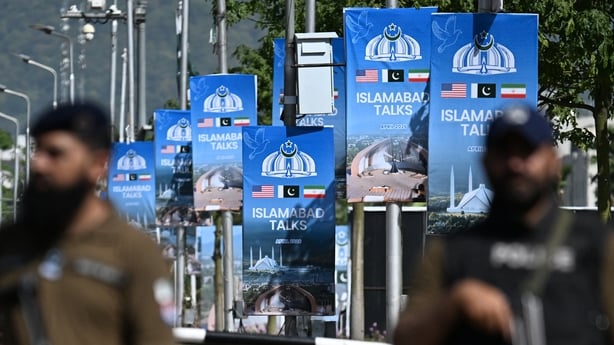
In spite of the uncertainty surrounding the talks in Pakistan, security has been visibly stepped up in the capital Islamabad.
Authorities announced road closures and traffic restrictions across the city, as well as in neighbouring Rawalpindi.
The US president said his negotiators, whom he did not name, would arrive in Islamabad on Monday, though as of the evening local time, there had still been no announcement of their departure.
A White House official said Vice President JD Vance would lead the delegation after Mr Trump said he would not, citing security concerns.
He would be joined by Middle East envoy Steve Witkoff and Mr Trump's son-in-law Jared Kushner, the official said.
Mr Trump has been under pressure to find an off-ramp since Tehran moved to choke off the Strait of Hormuz.
But the naval blockade to cut off Iran's oil revenues and the seizure of the cargo ship allegedly trying to evade it have drawn renewed threats from Tehran instead of pressuring them back to the negotiating table.
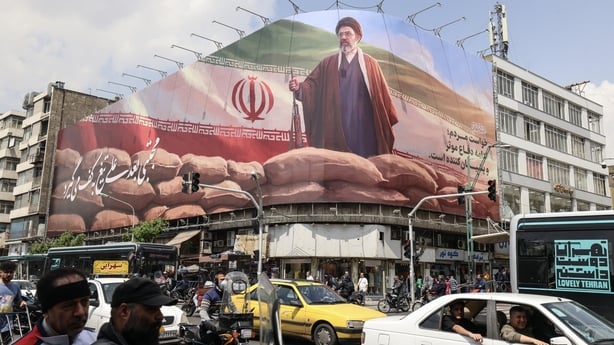
The ISNA news agency cited a spokesperson for Iran's central command centre as warning that the military "will soon respond and retaliate against this armed piracy", while Tasnim reported Tehran had sent drones in the direction of US military ships.
Iran's Revolutionary Guards for their part warned that any attempt to pass through the Strait of Hormuz without permission "will be considered cooperation with the enemy, and the offending vessel will be targeted".
Chinese President Xi Jinping told Saudi Arabia's Crown Prince Mohammed bin Salman in a phone call that "normal traffic" through the vital conduit for oil and gas shipments "should be maintained", state media said.
Sticking points
Iran's foreign ministry said delays in implementing a ceasefire in Lebanon, where Israel has been fighting militant group Hezbollah, were also a violation of the Middle East truce.
A separate ceasefire agreed between Israel and Lebanon took effect on Friday and included Hezbollah, whose rocket fire in support of Iran drew Lebanon into the war.
Israel's military warned Lebanese civilians against returning to dozens of villages in southern Lebanon, claiming Hezbollah's activities were violating the agreement.
Nonetheless, thousands of displaced residents have begun making their way back to southern Lebanon since the truce began.
Israeli Defence Minister Israel Katz said on Sunday that the military would use "full force" against any threats in Lebanon, even during the ceasefire.
Hezbollah lawmaker Hassan Fadlallah told AFP his group would work to break the "Yellow Line" that Israel has established in southern Lebanon, even as he said it wanted "the ceasefire to continue".
Another major issue in the US-Iran negotiations has been Tehran's stockpile of enriched uranium, which Mr Trump said on Friday it had agreed to hand over.
But Iran's foreign ministry has said the stockpile, thought to be buried from US bombing in last June's 12-day war, was "not going to be transferred anywhere".
Mr Baqaei said that the issue was not discussed with US negotiators.
"It was never raised as an option for us," he said.
