


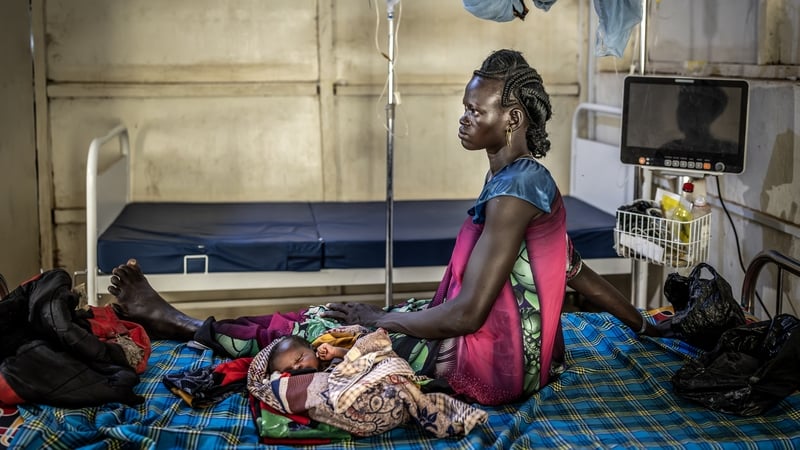
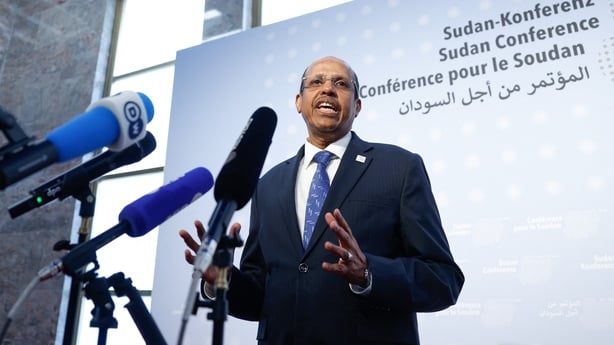
Donors pledged about €1.3 billion for Sudan at an international meeting held in Berlin to mark three years of a war that has killed tens of thousands and displaced millions.
"This nightmare must end," said UN Secretary-General António Guterres, calling the anniversary "a tragic milestone in a conflict that has shattered a country of immense promise".
"The consequences are not confined to Sudan. They are destabilising the wider region," he told the gathering via a video message.
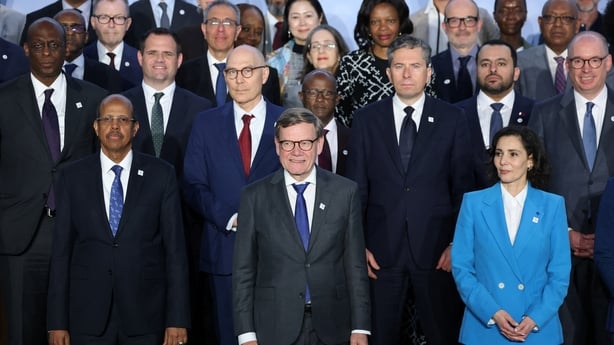
The conference host, German Foreign Minister Johann Wadephul, said that "largely beyond the public eye, the world's greatest man-made humanitarian catastrophe is unfolding in Sudan", adding that Germany would contribute €230 million in aid.
"The fact that, in a world of dwindling humanitarian resources, participants have already pledged more than €1.3bn in support is a good sign," he said.
As well as rallying donors, the conference aimed to help revive faltering peace talks, although the two sides fighting the war, the Sudanese army and the paramilitary Rapid Support Forces, have been excluded.
The Sudanese government in Khartoum, have described the Berlin conference as an "unacceptable" interference in its internal affairs. It said Germany, as the host country, did not consult with Sudan before convening the gathering.
The vast majority of Sudanese people have been plunged into poverty by the conflict, which has spawned numerous war crimes allegations and left many millions uprooted from their homes and facing hunger.
"People are exhausted," said Amgad Ahmed, 42, in Omdurman, Khartoum's twin city.
"Three years of war have worn people down. We have lost work, savings and any sense of stability."
Lethal drone strikes
The Berlin meeting brought together governments, aid agencies and civil society groups and followed similar conferences hosted by London and Paris over the past two years.
The war between Sudan's army and the RSF has killed tens of thousands of people.
Nearly 700 civilians have been killed in drone strikes since January alone, with attacks escalating on both sides, particularly in the southern Kordofan region and Blue Nile State, according to the United Nations.
A semblance of normality, however, has taken root in the capital since the army retook control of Khartoum last year.
In parts of the city, reconstruction has already begun. Markets have reopened, traffic has returned to streets that were once largely empty, while national secondary school exams were held this week after nearly two years of widespread school closures.
According to the UN, around 1.8 million people have returned to Khartoum.
But danger still lurks among the soot-stained buildings, with authorities slowly working to clear tens of thousands of unexploded bombs left behind by the fighting.
Al-Basheer Babker al-Basheer, 41, who visited Khartoum twice this year after three years away, said the city would need years to recover.
"I was happy to come back," he told AFP. "But when I went into the city centre, it was heartbreaking.
"The road to the university where I studied is no longer the same. The walls are black. They are not the same places we used to go to."
Stalled diplomacy
Diplomatic efforts towards peace led by the United States, Saudi Arabia, the United Arab Emirates and Egypt - referred to collectively as the Quad - have so far failed.
Saudi Arabia, Egypt and Turkey back the Sudanese army, while the UAE is accused of arming the RSF. All sides deny direct involvement.
Quad-led talks stalled after army chief Abdel Fattah al-Burhan accused the group in November of bias because of Abu Dhabi's membership.
UN rights chief Volker Türk told the Berlin meeting that he was "alarmed by the sharp increase in the use of drone warfare in recent months" in the conflict.
"Drone strikes were responsible for three-quarters of the civilian deaths we documented in the first three months of this year," he said.
Mr Turk said most of these drones were not produced in Sudan and that "external powers are providing advanced weapon systems and finance while promoting their own agenda".
UN officials lament an 'abandoned crisis'
Sudan has been described as the world’s largest humanitarian challenge, notably in terms of displacement and hunger. The conflict has displaced 13 million people.
Earlier, United Nations humanitarian chief Tom Fletcher said: "This grim and chastening anniversary marks another year when the world has failed to meet the test of Sudan."
At least 59,000 people have been killed. At least 6,000 died over three days as the RSF rampaged through the Darfur outpost of el-Fasher in October, according to the UN, with UN-backed experts concluding the offensive bore "the defining characteristics of genocide".
More than 11,000 people were missing over the course of the war, the Red Cross says.
The war has pushed parts of Sudan into famine. The number of people with severe acute malnutrition, the most dangerous and deadly kind, is expected to increase to 800,000, the world’s foremost experts on food security, the Integrated Food Security Phase Classification, said in February.
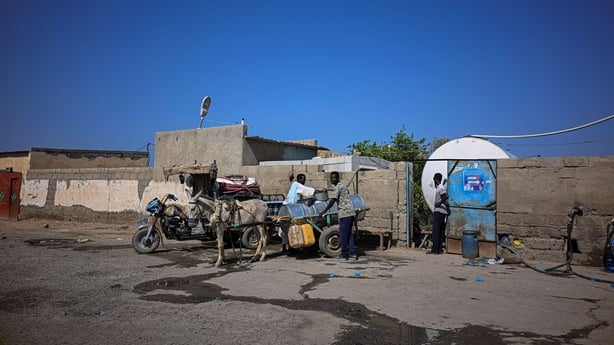
Around 34 million people, or almost two of every three Sudanese, need assistance, the UN says. Only 63% of health facilities remain fully or partially functional amid disease outbreaks including cholera, according to the World Health Organization (WHO).
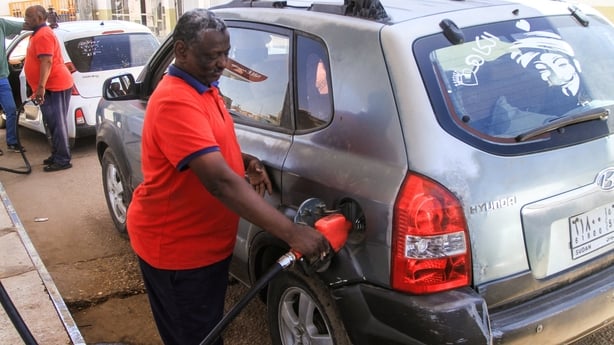
And now fuel prices in Sudan have increased by more than 24% because of the Iran war and its effects on shipping, driving up food prices.
"A plea from me: Please don’t call this the forgotten crisis. I’m referring to this as an abandoned crisis," the top UN official in Sudan, Denise Brown, said, criticising the international community for failing to focus on ending the fighting.
The war exploded from a power struggle that emerged following Sudan’s transition to democracy after an uprising forced the military ousting of longtime dictator Omar al-Bashir in April 2019.
The tensions sparked between military chief Mr Burhan, who chairs the ruling sovereign council, and RSF commander Genernal Mohamed Hamdan Dagalo, who was Mr Burhan's deputy there.
Neither side can achieve a decisive victory, said Shamel Elnoor, a Sudanese journalist and researcher, adding that Sudanese people "have become powerless and are subjected to foreign dictates".
We need your consent to load this rte-player contentWe use rte-player to manage extra content that can set cookies on your device and collect data about your activity. Please review their details and accept them to load the content.Manage Preferences
Additional reporting: PA
