


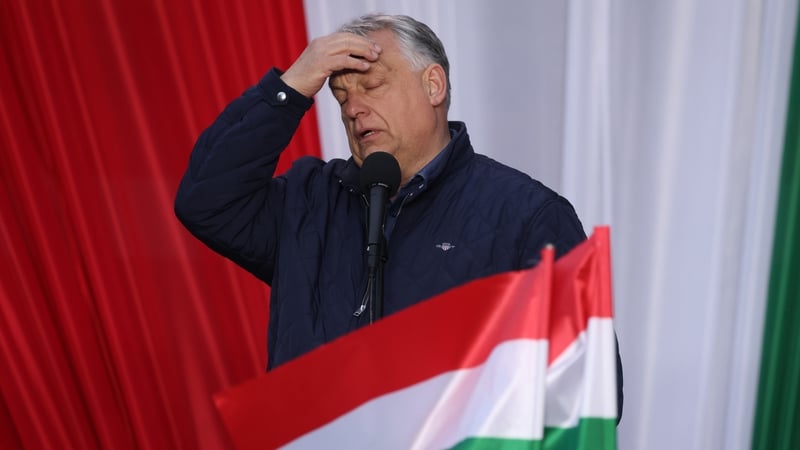
After years of holdups, EU leaders breathed a resounding sigh of relief at Viktor Orban's crushing defeat in Hungary's elections.
Mr Orban, the country's nationalist prime minister, conceded defeat yesterday in parliamentary elections to conservative Peter Magyar, a former government insider and political newcomer who has promised "system change".
From support for Ukraine to sanctions on Russia, Mr Orban repeatedly stalled some of the EU's key initiatives.
Now, as his replacement Peter Magyar gears up to take power vowing to reset ties, the question is how quickly could these dossiers get unlocked?
Here are five areas to watch:
€90 billion for Ukraine
Most pressing is a desperately needed €90bn loan for Ukraine that Mr Orban took hostage as he made opposition to helping Kyiv a key campaign component.
His veto - which he tied to a row with Ukraine over a damaged pipeline pumping Russian oil - enraged his EU counterparts as it came after he gave his initial green light.
Conservative Mr Magyar is no major cheerleader for Kyiv, but if Mr Orban does not budge in his remaining weeks in office then unblocking the loan could be an easy way for the newcomer to win over hearts and minds in Brussels.
It will also take two to tango and Ukraine's President Volodymyr Zelensky will have to play ball over the pipeline and soften his rhetoric as well.
"Sooner or later this has to resolve itself. Hopefully sooner," said one EU diplomat, talking as others on condition of anonymity.
Sanctions on Moscow
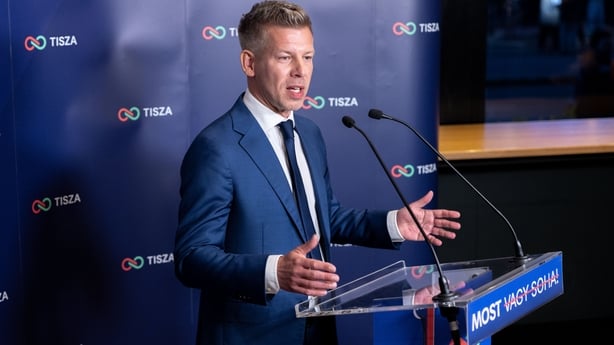
In a similar vein, Mr Magyar could also signal a shift in Budapest's approach to Russia by backing a stalled package of sanctions on Moscow over the Ukraine war.
Mr Orban - who maintained good ties with Russia's Vladimir Putin despite the invasion - was slammed by critics as acting like a trojan horse for the Kremlin inside EU summits.
Hungary repeatedly held up previous rounds of punishment on Moscow and, as the electioneering heated up, Mr Orban threw a spanner in the fresh round of sanctions.
By changing tune, Mr Magyar can showcase a switch from Budapest.
That would then leave Slovakia's Prime Minister Robert Fico - the other most Moscow-friendly leader in the EU - as the only holdout.
Read more: Tusk hails Hungary vote as blow to authoritarian rule
Test over Ukraine's EU membership push
A longer-term test will be over Ukraine's EU membership push.
Mr Orban was an implacable opponent of Kyiv's bid and to the chagrin of Brussels and Ukraine was vetoing any progress.
Now he is on his way out, Mr Magyar could show willing by greenlighting the opening of so-called negotiating "clusters" that EU officials insist Kyiv has long been ready for.
But Mr Magyar, who has vowed a referendum on Ukraine's membership, is no pushover and there are still plenty of steps down the road for the push to be held up.
"We shouldn't expect Hungary to become super pro-Ukraine membership all of a sudden," said a second senior EU diplomat.
Also, other countries cautious about Kyiv joining had hidden behind Mr Orban's opposition.
They may now have to come out of the shadows more.
"The end of Hungarian obstruction to Ukraine's accession does not mean it will accelerate," summed up Sebastien Maillard from the Jacques Delors think tank.
Frozen funds for Hungary
It is not just a one-way street for Mr Magyar: he will be desperate to show that his promise to reset ties with Brussels can bring fast benefits to Hungary and its flagging economy.
The EU has frozen some €18bn in funds earmarked for Budapest over Mr Orban's democratic backsliding, tackling graft and the treatment of LGBTQ issues.
Mr Magyar has until the end of August to start pushing through reforms to try to secure the €10bn left over from Covid-19 recovery funds or lose them for good.
Brussels could be willing to move fast on EU funds as it did for Polish Prime Minister Donald Tusk after he took power a few years ago.
"It would give Magyar an enormous boost to say, 'look I'm coming back from Brussels with these funds'," said another EU diplomat.
A new mood in Hungary following election
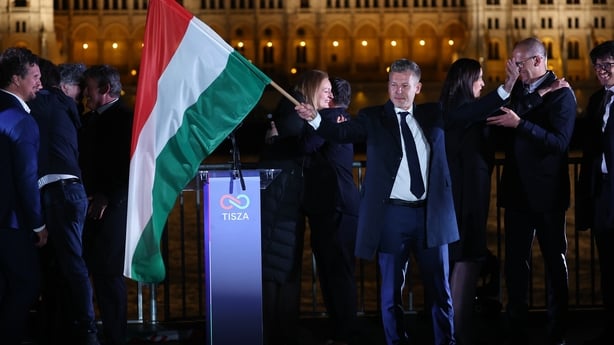
It may be a little harder to gauge, but EU officials will also be hoping for a more constructive atmosphere around the bloc's top table.
While they had learned to live with his grandstanding, Mr Orban's hardening stance towards the end - and proximity to Moscow - had seriously strained trust between leaders.
"I think everyone will welcome Magyar with renewed enthusiasm," an EU official said.
That is not saying that all will now be joy and harmony. EU leaders will still fight their corners tooth and nail, Mr Magyar included.
"Magyar will want, as he did during the campaign, not to be caricatured as being a pawn of Brussels; do not expect him to say yes to everything," said the second EU diplomat.
